Columbus taking new approach to bike, scooter rentals

Add Axios as your preferred source to
see more of our stories on Google.
Illustration: Tiffany Herring/Axios
Columbus' pool of bike and scooter rental services will be replaced next spring by a single vendor while the city begins a long-term plan to add and improve bikeways, shared paths and urban trails.
Why it matters: The city promises to rein in scooters littering our sidewalks while expanding transit alternatives to driving.
Driving the news: On Monday, City Council authorized the Department of Public Service to make VeoRide, Inc. an exclusive vendor, replacing the assortment of CoGo bikes and Bird, Lime and Spin scooters.
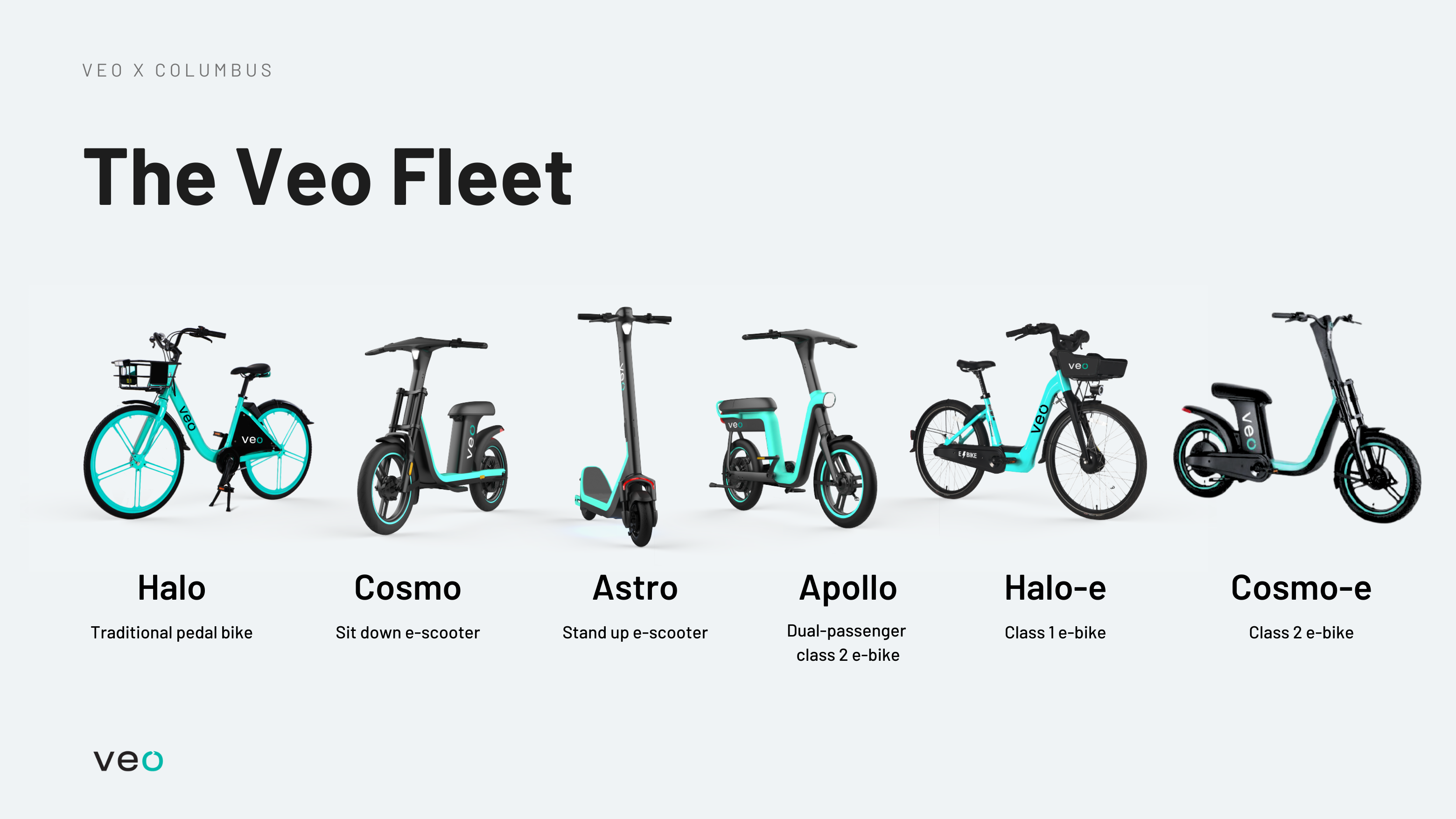
How it works: Veo operates a variety of traditional bicycles and e-bikes, plus standing and seated scooters. It will use a "hybrid parking system" designed to keep devices out of the way.
- Justin Goodwin, Columbus' mobility and parking division administrator, tells us a main goal is "resolving these recurring issues we have had around devices blocking the sidewalk and ADA ramps."
By the numbers: Scooter usage dwarfed CoGo bike usage in 2024. The city saw about 65,000 CoGo rides and about 915,000 scooter rides across all vendors, Goodwin says.
Follow the money: The city hopes to turn an expense into a money-maker.
- The CoGo bike stations became a notable expense, with the city paying $65 monthly per individual dock for a system that grew to more than 1,300 across Columbus — around $1 million over the course of a year.
- Columbus also earned negligible revenue from scooter permits, which cost $500 per company, and a $75 fee per device operating in the city.
Under the new plan, Veo will pay annual device fees and share the revenue from rides within city limits.
- The exact agreement is not yet finalized, but Goodwin estimates that the city will make at least six figures annually from the deal.
- The money will be reinvested into parking structures for the devices and program management.
Zoom out: Council also approved its Bike Plus plan, which calls for adding 189 miles of on-street bikeways, 270 miles of shared-use paths, and 28 miles of urban trails and greenways.
- The plan will prioritize 20 miles of bikeways over the next five years, including protected lanes on North Fourth Street and Frebis Avenue along with protected intersections on Summit Street.