Threats of violence in schools spike in Ohio and around the U.S.

Add Axios as your preferred source to
see more of our stories on Google.
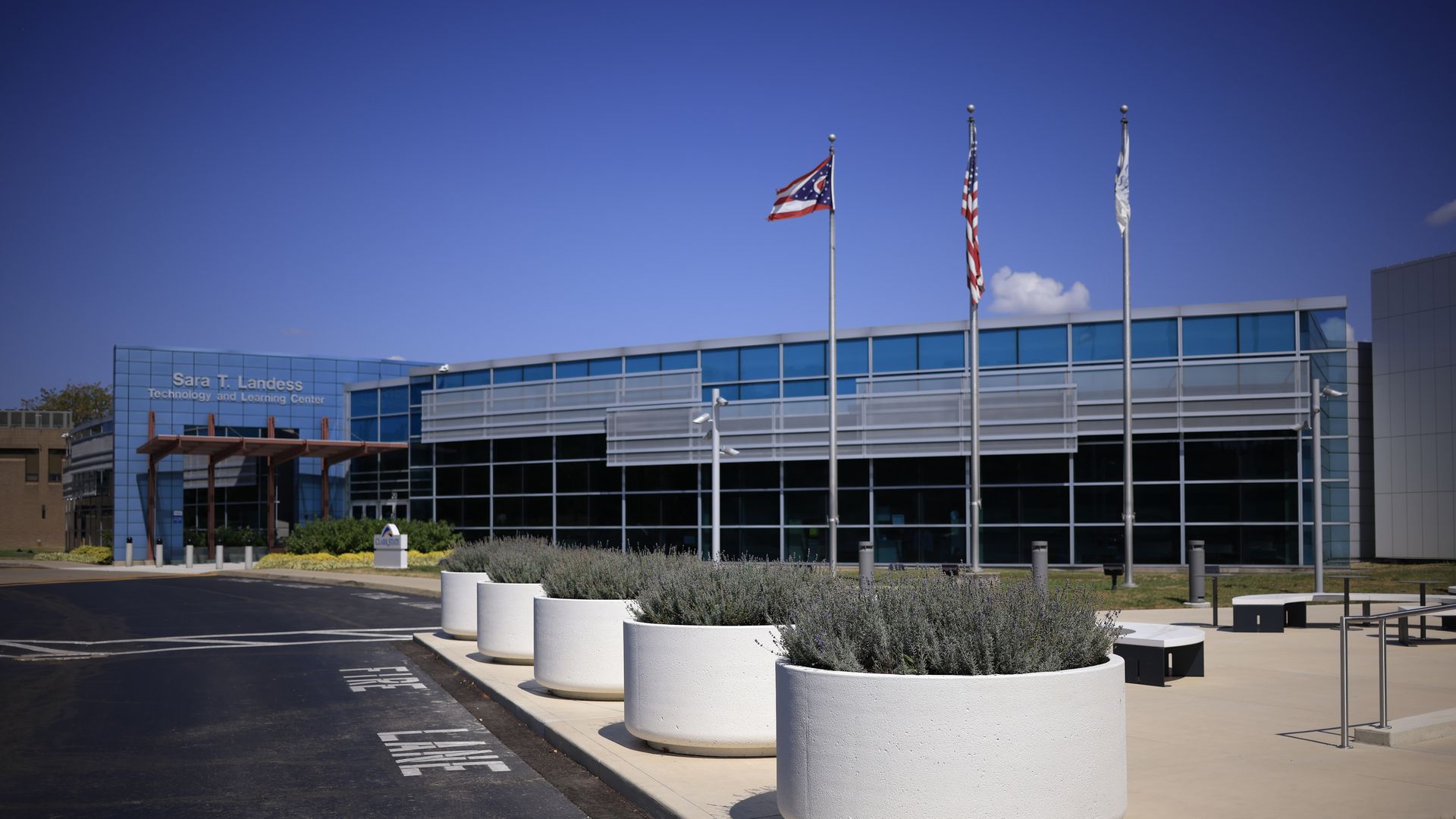
Clark State College's vacant campus in Springfield after classes were canceled due to a bomb threat. Photo: Luke Sharrett/Getty Images
Ohio schools have endured a spike in shooting and bomb threats this year, even before threats resulting from the GOP's baseless conspiracy about Haitian immigrants eating family pets led to school closures in Springfield, Ohio.
The big picture: Two recent incidents have heightened panic and have fueled hoaxes across the state: the lies and threats in Springfield, and the fatal school shooting in Georgia. Threat tip lines, which had already seen increased usage this year, are busier than ever.
Zoom out: Dr. Ken Trump, President of National School Safety and Security Services, a Cleveland-based consulting firm, says the spike in reported threats is not unique to Ohio; there has been a nationwide increase.
- "It fits the pattern, unfortunately," Ken Trump (no relation to Donald) told Axios, noting that he has taken calls from coast to coast.
- "It fits what I've seen for four decades. After every high-profile shooting, you see an uptick for at least a week or two. There's a contagion effect where this spreads across the country."
Ohio School Safety Center, which launched in August 2019 to help schools prepare for and respond to threats of violence, has seen a pattern where tips increase around school breaks and after school shootings elsewhere in the country, Executive Director Emily Torok explained.
- Torok said two other recent school shootings that didn't garner as much media coverage still contributed to the spike in tips reported to her office.
- "We've seen 732 tips so far this year, and we've still got a couple of months to go," Torok said. "We are almost matching the total for 2023 (757 tips), and we're not finished yet."
- That's just for the schools who utilize that particular tip line. Many go straight to local law enforcement or use other anonymous reporting systems, Torok said.
Zoom in: On Monday, after over 30 unfounded bomb threats in the Springfield City School District, Ohio Governor Mike DeWine deployed state troopers to bolster security at the district's 18 schools.
- Former President Trump and Sen. JD Vance have continued to share false claims about Haitian immigrants there even after local authorities said they were baseless.
Zoom out: While the Springfield situation garnered national attention, both Torok and Ken Trump noted a troubling rise in hoaxes and "swatting" incidents — fake emergency calls made to provoke a large law enforcement response.
- Ohio has introduced new laws to crack down on these hoaxes. Torok noted that students as young as fifth grade have been charged with making terroristic threats, and pointed Axios to recent cases in northern Kentucky and southern Ohio where students had been charged.
- "Do you think that child knew the seriousness of what they were doing? I highly doubt it," Torok said. "That's why education is so important. If you're a student and you think something like this is just a prank to get a day off, you might be ruining your future.
Between the lines: Sunny Slaughter, a law enforcement expert and CourtTV legal analyst, told Axios society has become numb to this: school shootings have become as American as apple pie — and tragically familiar.
- "We now expect the cycle: outcry and outrage, followed by sympathy, prayers, and patience, all leading up to the next incident. The same recipe, the same results," she said.
Slaughter pointed out that the current atmosphere of fear and anxiety is being heightened by rhetoric that normalizes violence — something Vice President Harris condemned during an interview on Tuesday.
- Slaughter stated that all of this contributes to the rise in hoaxes and threats, referencing a recent incident in Florida where an 11-year-old was arrested for making a threat.
- "The harmful rhetoric we're seeing from some politicians is a distraction that pulls law-enforcement away from addressing real threats," Slaughter said. "This increases the trauma experienced by children, parents, and entire communities, who are placed under threat by words that turn into actions."