Historic drought may raise pumpkin and apple prices

Add Axios as your preferred source to
see more of our stories on Google.
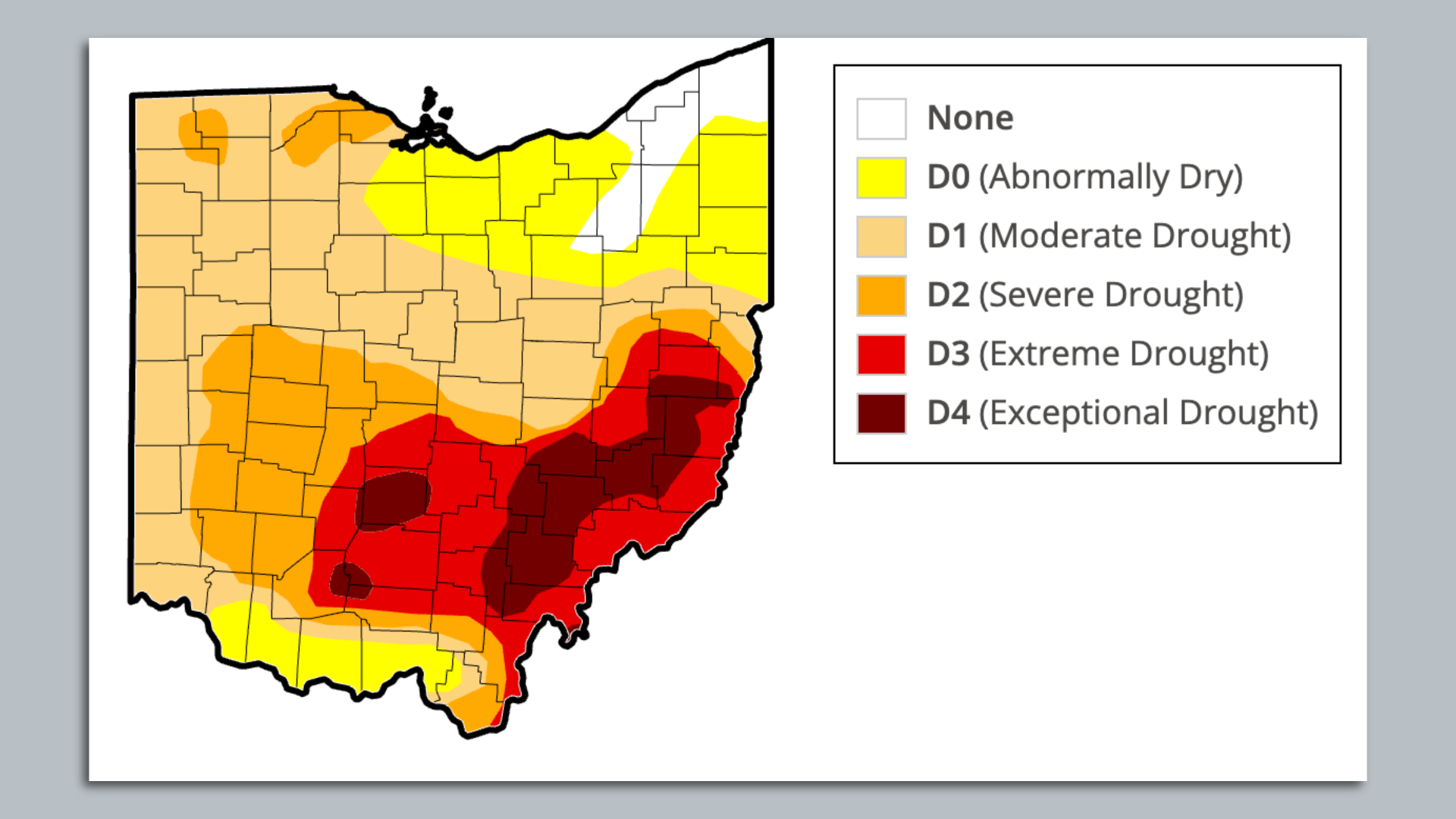
Screenshot: U.S. Drought Monitor
Ohio is experiencing its worst drought in decades with no relief in the foreseeable forecast.
Why it matters: Agriculture is our state's No. 1 industry, but farmers are struggling to grow crops and tend to livestock because of the lack of rain and scorching temperatures.
- The economic impact could be devastating and increase local produce prices, including at pumpkins patches and apple orchards this fall.
State of play: Ohio farmers haven't faced conditions this serious since 1988.
- Though severity varies, 95% of Ohio is experiencing some level of drought, per the U.S. Drought Monitor's latest data.
- As of Monday, 22 Ohio counties were designated as natural disaster areas, making their farmers eligible for federal financial relief.
- That includes nearby Fairfield, Madison and Pickaway. Contiguous counties, such as Franklin, also qualify.
Zoom in: Columbus is in "extreme drought" and has had less than one-tenth of an inch of rain all of September.
- This year's 24.6 inches of precipitation is nearly 7 below what's normal, Ashley Novak, a meteorologist with the National Weather Service's Wilmington office, tells Axios.
Threat level: Many farmers are hauling water from elsewhere and already feeding livestock hay that was collected for winter feedings, Ohio Farm Bureau spokesperson Ty Higgins tells Axios.
- And some pumpkin patches are bringing in crops from other places to meet demand during jack-o'-lantern season.
Other local impacts:
🚰 Columbus dipped into its reserve water supply to stave off restrictions, the Dispatch reports.
🔥 The State Fire Marshal issued a ban on open burning in 28 counties as of Friday, including Franklin, due to the increased risk of wildfires.
🧑🌾 Ohio State University has activated the Drought Rapid Response Team within its College of Food, Agricultural and Environmental Sciences to support farmers.
What we're watching: Drought is projected to continue in our region through November.
- If precipitation doesn't pick up during fall and winter, dry soil could threaten the spring planting season.
The bottom line: "It's really hard for farmers to admit when they're struggling, but there's no doubt, we have a lot of farmers in Ohio dealing with a lot of stress right now," Higgins says.