Homelessness on the rise in Ohio, per report


Add Axios as your preferred source to
see more of our stories on Google.
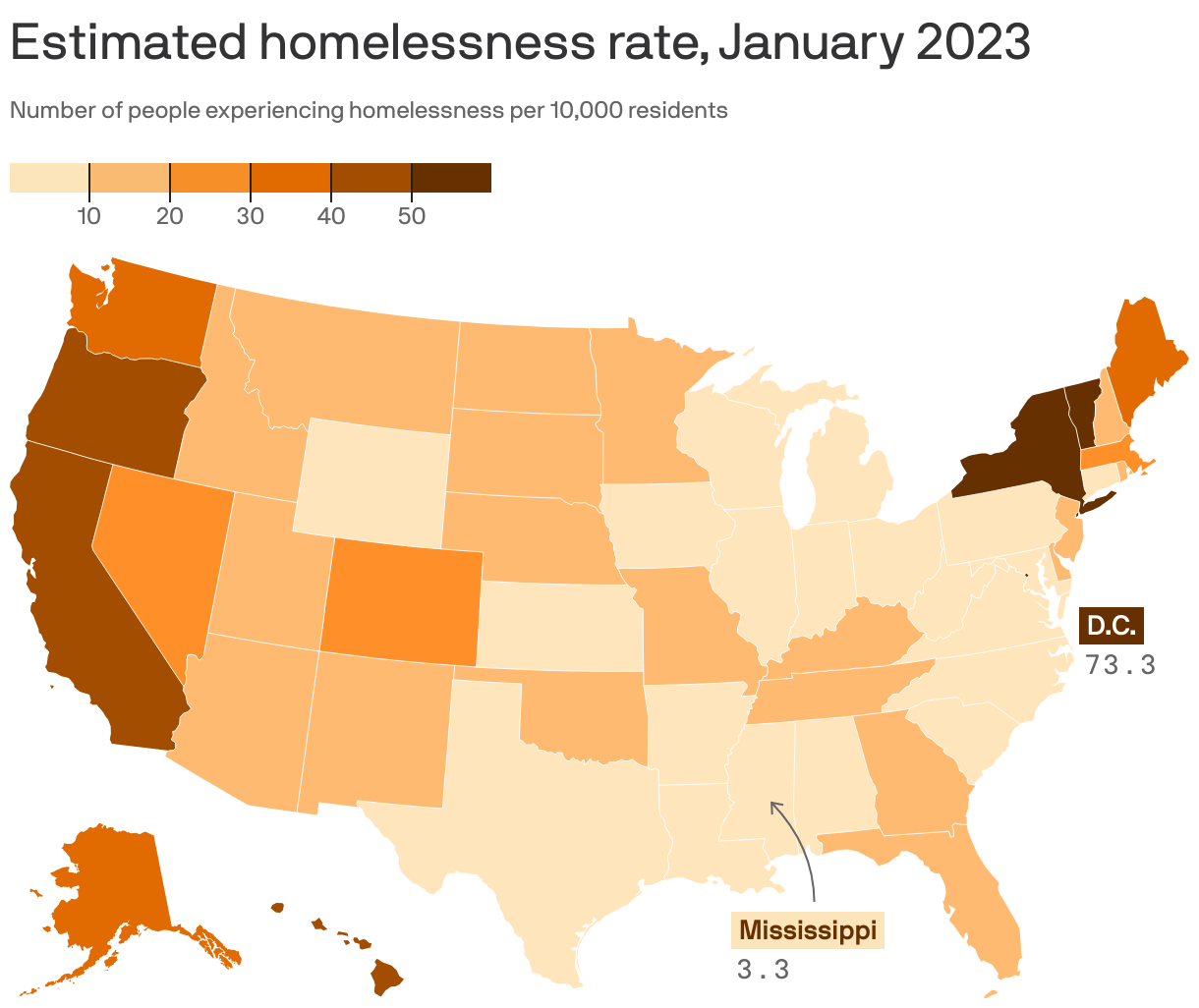
Ohio's homelessness rate has been on the rise since 2017, reversing a yearslong trend of declining numbers, per federal data.
Why it matters: U.S. homelessness reached a record high in 2023, Axios' April Rubin writes, as Americans grapple with an escalating housing crisis and the expiration of COVID-era safety nets.
- With freezing cold temperatures sweeping across much of the country this week, unhoused people will be left particularly vulnerable.
By the numbers: Nearly 10 Ohioans per 10,000 experienced homelessness in January 2023, according to the U.S. Department of Housing and Urban Development's estimates published in a new report.
- That's up about 10% from January 2019, when the rate was nearly nine in 10,000.
Zoom in: Last January's percentage amounted to over 11,000 affected people, including more than 1,200 identified as "chronically homeless."
- Nearly 800 were unaccompanied minors and over 600 were veterans.
- A majority (nearly 80%) were classified as "sheltered," meaning they resided in an emergency shelter, transitional housing or other safe haven program.
Of note: From 2007-2023, our state experienced one of the country's biggest drops in its overall number of people experiencing "chronic patterns of homelessness," per the report — 1,125 fewer people, or a nearly 49% drop.
- That's despite Ohio's overall population increasing about 2.5% during the same time frame, per census data.
Between the lines: The annual HUD report attempts to take an annual one-day count in late January to offer a snapshot useful to policymakers, advocates, researchers and others.
Yes, but: Some advocates believe point-in-time counts can be misleading and may drastically underestimate the true number of people experiencing homelessness.
Threat level: Last year, the Community Shelter Board reported Central Ohio's figures were up more than 20% compared to 2022, per the Dispatch.
- The news came as city sweeps of homeless encampments drew criticism from advocates for failing to address underlying causes.
Meanwhile, Columbus spent millions in pandemic relief funds for shelter and rental assistance, invested in a legal aid program to stave off evictions and has at times expanded community center hours to serve as public warming shelters.
What's next: Columbus and Franklin County's 2024 point-in-time count will take place Jan. 25, which should offer further local insights.