Maternal mortality rates are highest for Black women in Ohio

Add Axios as your preferred source to
see more of our stories on Google.
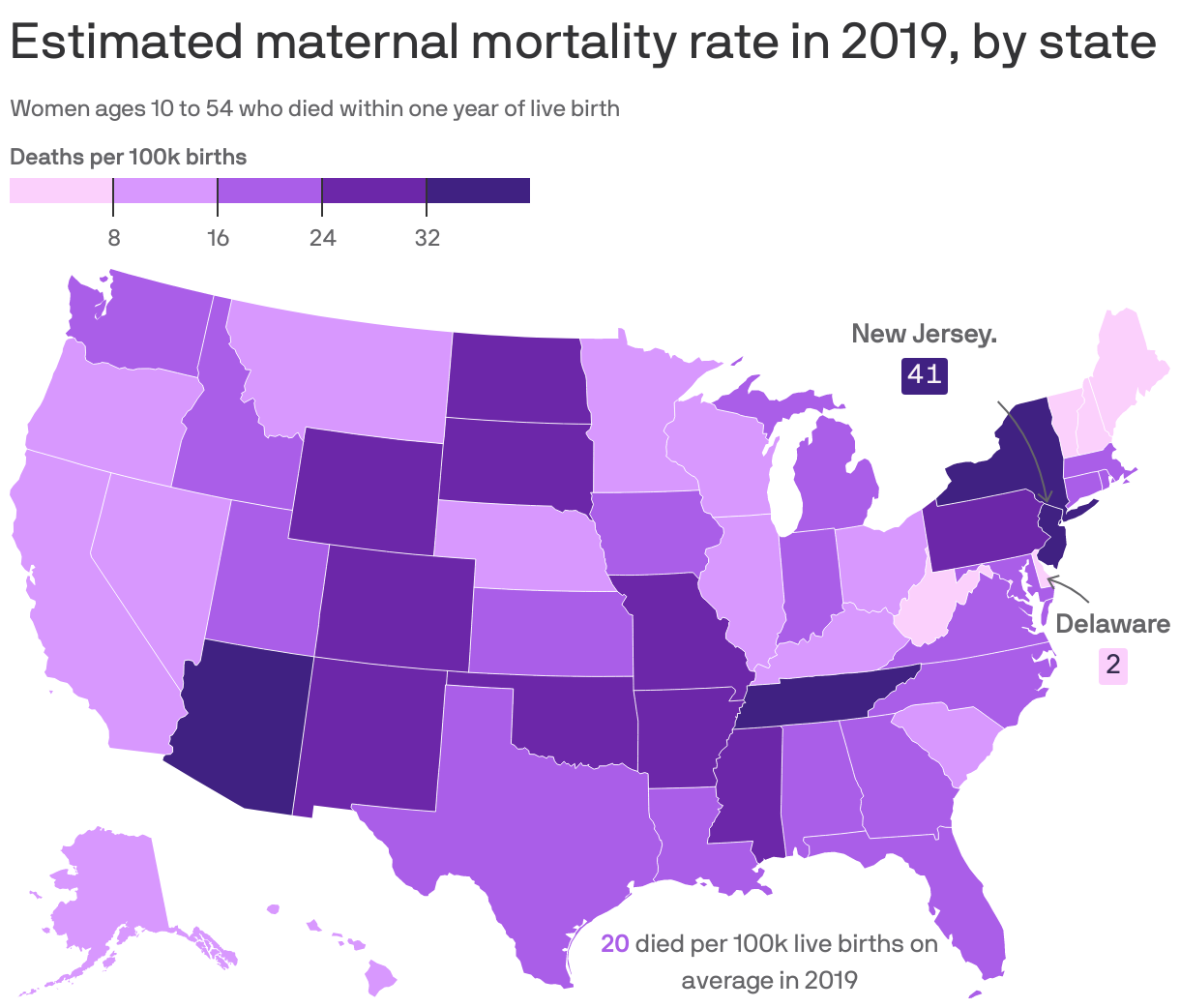
Black women in Ohio are more than five times as likely to die from pregnancy-related complications than the state average, according to a new JAMA study spanning 1999-2019.
Driving the news: Ohio's overall maternal mortality rate rose from 10.7 deaths per 100,000 live births in 1999 to 10.8 in 2019.
- However, the rate fluctuated wildly during that time, with a low of 5.3 in 2001 and a high of 29.7 in 2016.
Yes, but: For Black women in Ohio, the rate spiked from 29.3 to 59.7.
- American Indians and Alaska Natives had the largest percentage increase — 342% — with rates increasing from 2.6 to 11.5.
Threat level: The U.S. has the highest maternal mortality rates among developed countries, attributed to a lack of affordable health care, postpartum support and health insurance.
The big picture: Nationwide maternal mortality rates more than doubled from 1999-2019, from 12.7 to 32.2 deaths per 100,000 live births, Axios' Oriana González reports.
Context: Maternal mortality is defined as a death during pregnancy or within one year after the end of the pregnancy from a pregnancy complication.
- Common causes include mental health conditions (including suicide and overdose related to substance use disorder), hemorrhages, blood clots, high blood pressure and cardiac and coronary conditions.
Zoom in: The Ohio Department of Health found that 57% of the state's 186 pregnancy-related deaths from 2012-16 were preventable, per its most recent report.
- Statewide initiatives include efforts to improve treatment for hypertension and hemorrhage in 87% of Ohio birthing hospitals, and providing training on obstetric emergencies, a spokesperson tells Axios.
What they're saying: Franklin County Commissioner Erica Crawley, a former state representative, tells Axios more must be done.
- Though Crawley left the statehouse in 2021, her 2019 proposal to cover birthing doulas through Medicaid made it into the current state budget. Gov. Mike DeWine vetoed it as the state works on its own program that would be covered by Medicaid.
- "If we don't have these policies in place, in law, women will continue to die," Crawley says.
What we're watching: An updated state maternity mortality report is expected this fall, which will reflect the after-effects of the pandemic and Ohio's fluctuating abortion access.