Ohio's obesity rate is higher than U.S.

Add Axios as your preferred source to
see more of our stories on Google.
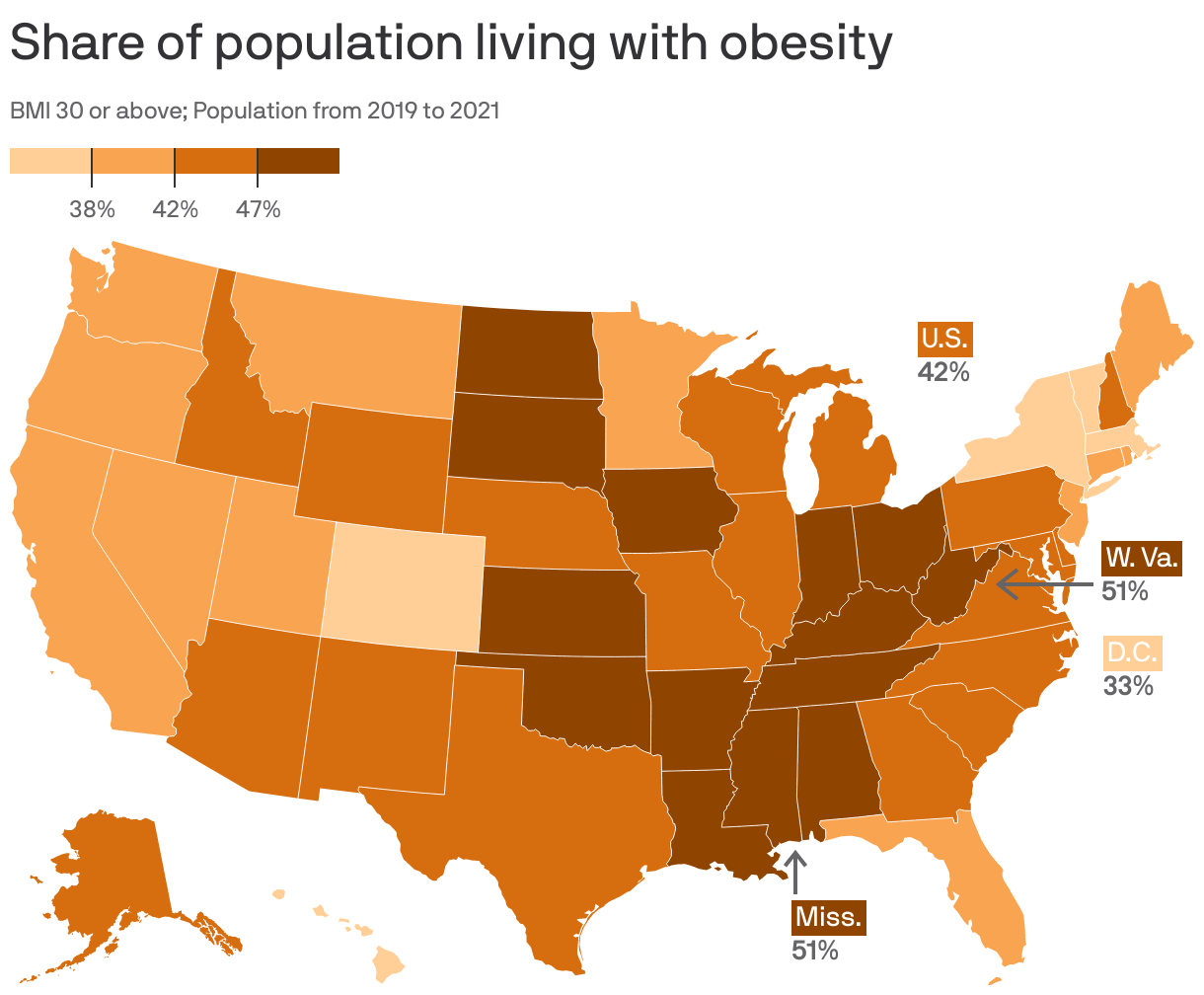
Nearly half of Ohioans (46.7%) are obese, per a new analysis from NORC at the University of Chicago.
- Ohio's obesity rate is significantly higher than the national rate of 42.7% and is the 14th-highest nationwide.
Why it matters: Obesity is associated with hypertension, cardiovascular disease, stroke and other conditions that are among the leading causes of preventable, premature death.
Zoom out: States in the Midwest and the South had the highest obesity rates from 2019–2021, Axios' Arielle Dreher reports.
- West Virginia and Mississippi had the highest obesity rates (51%).
- Colorado (34%) and the District of Columbia (33%) had the lowest.
Between the lines: Obesity disproportionately impacts Black and Hispanic Americans and people with less formal education, NORC found.
What they're saying: Obesity is a complex disease impacted by many factors, including socioeconomic status, health experts tell Axios.
- "If people are struggling to get by, it is harder to prioritize time and money for things like healthy groceries, cooking, and exercise," Mount Carmel doctor Shane Jeffers says.
Yes, but: "Be patient and gracious with yourself. You’re worth the investment," Amy Kleski, director of retail operations at OhioHealth's McConnell Heart Health Center, tells Axios.
What's happening: The Ohio Department of Health has several programs aimed at increasing nutrition education, healthy food access and physical activity, a spokesperson tells Axios.
- That includes Creating Healthy Communities, an Early Childhood Obesity Prevention Program and a Farmers' Market Nutrition Program through the Special Supplemental Nutrition Program for Women, Infants and Children (WIC).
The intrigue: The Buckeye Institute, a conservative think tank, partially blamed Ohio's labor shortage on obesity.
- Its new report said that obesity is keeping 32,000 adult Ohioans out of the workforce, a loss of $20 million in state tax revenue.
Of note: Obesity rates are determined in part by body mass index ranges, which many argue are not an appropriate indicator of health.