The kids aren't alright

Add Axios as your preferred source to
see more of our stories on Google.
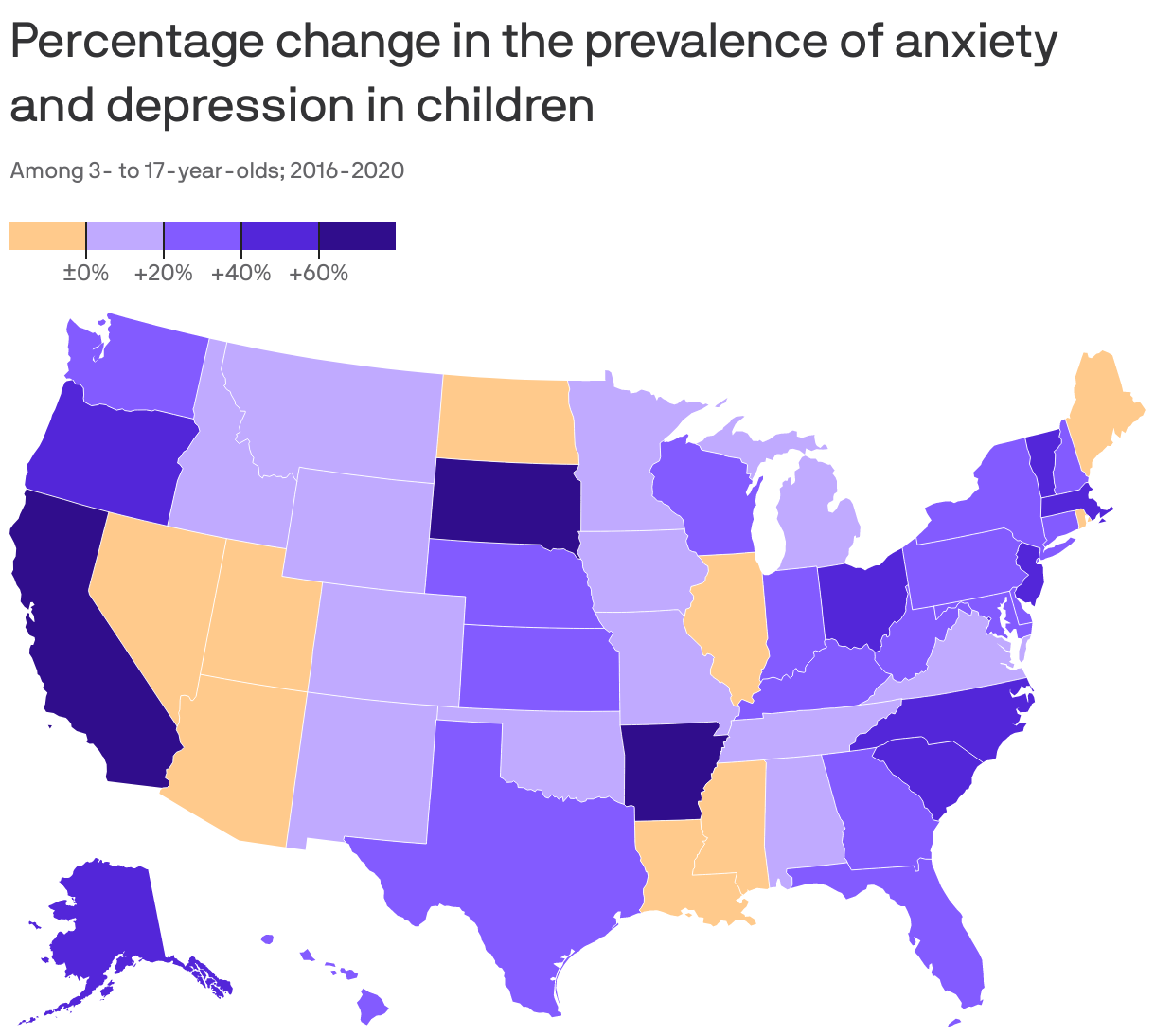
The percentage of Ohio children diagnosed with anxiety or depression jumped higher than most other states at the onset of the pandemic, per a new report by the Annie E. Casey Foundation.
Why it matters: The mental health crisis among children and teens is considered a national emergency by the American Academy of Pediatrics.
- Ahead of a new school year and the stresses that accompany it, the report draws wider attention to an issue that's top of mind for many educators and families.
Driving the news: Nearly 1 in 8 Ohio kids received a diagnosis in 2020, up 42% from 2016 — the 10th-highest increase nationwide.
- Ohio ranks 31st for overall child well-being based on economic, education, health and community measurements.
- Alongside the report, the Children's Defense Fund of Ohio also released county and regional data on the underlying challenges children face — including poverty, abuse, school absenteeism and a lack of health insurance.
What they found: Of the more than 300,000 children living in Franklin County, 1 in 5 live in poverty, a rate higher than most other Ohio counties.
- Statewide poverty rates are highest among Black and Hispanic children.
The big picture: Ohio leaders have invested in a variety of programs to improve children's health in recent years, such as Columbus' CelebrateOne, dedicated to early childhood development.
- The state invested $84 million in federal funds toward pediatric behavioral health in May and dedicated money in its latest school funding model to support student wellness.
What they're saying: "When children are emotionally and mentally well, they stand a better chance of staying healthy and being ready to learn," Tracy Nájera, state director of Children’s Defense Fund, said in a statement.
Yes, but: In his 2022 State of the Union address, Gov. Mike DeWine acknowledged that recent investments are "still not enough."
What we're watching: As kids return to classrooms this month, expect a renewed focus on supporting them beyond academics.