Ohio passes new congressional map ahead of 2026 election

Add Axios as your preferred source to
see more of our stories on Google.
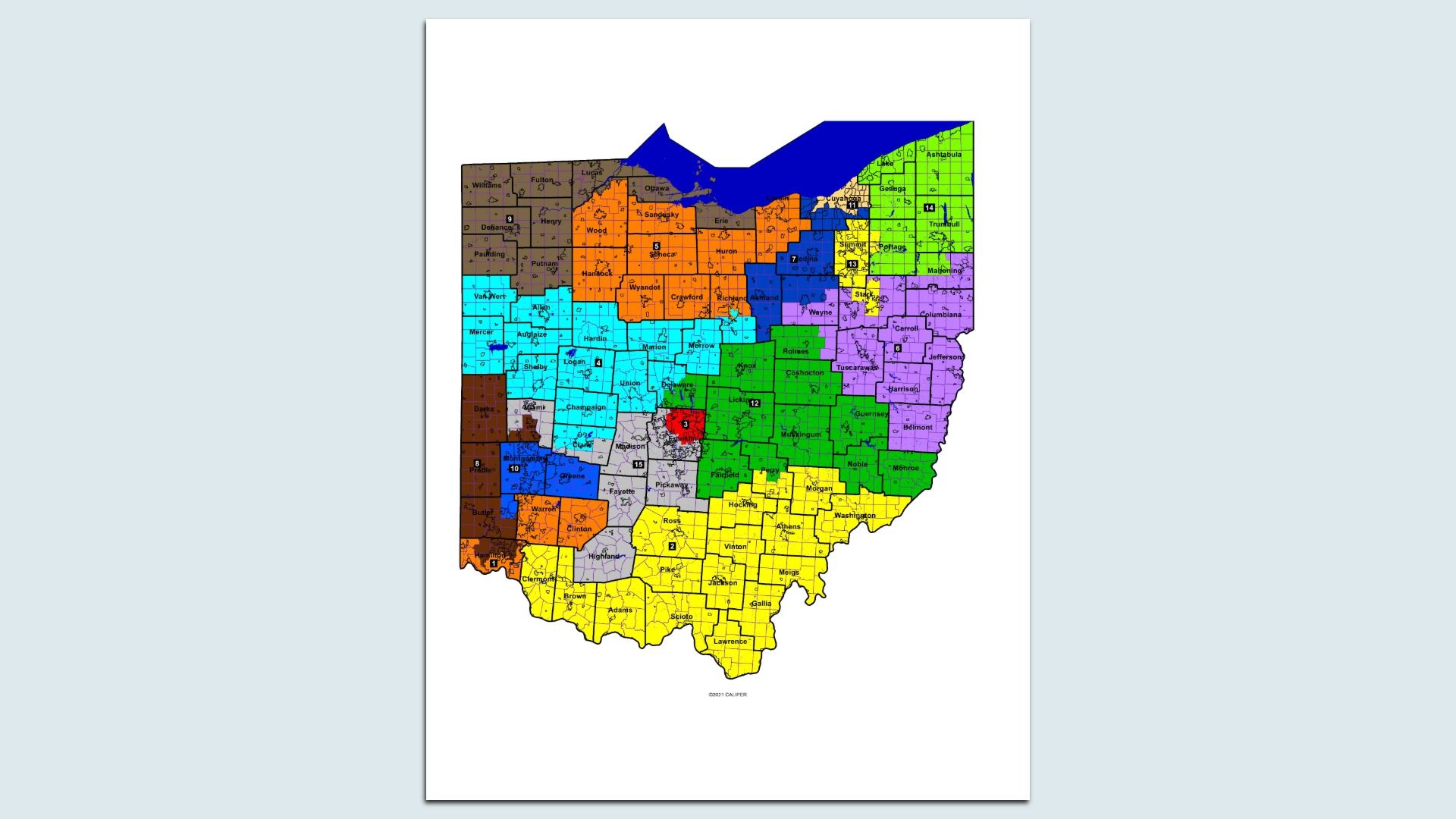
Ohio's Redistricting Commission approved a new congressional map Friday morning, narrowly meeting the state's constitutional deadline and reshaping several key districts ahead of the 2026 elections.
Why it matters: The map passed with bipartisan support, marking a rare moment of compromise in a process that's been mired in controversy and court challenges for years.
- Gov. Mike DeWine, who backed the plan, called it a fair compromise, even though neither Republicans and Democrats may be happy with the result, per the Ohio Capital Journal.
State of play: The final version creates 12 Republican-leaning districts and three Democratic-leaning districts, likely to shift the state's current 10-5 breakdown even further rightward.
What they're saying: Commission co-chair Rep. Brian Stewart (R-Ashville) said the agreement shows the process working as intended, while the Democrats on the panel, Senate Minority Leader Nickie Antonio (D-Lakewood) and House Minority Leader Dani Isaacsohn (D-Cincinnati), said the deal reflected the best achievable outcome within a flawed system.
- "It was not what the voters expected when in 2018 we voted to end gerrymandering," OCJ quoted Antonio as saying after the maps were first presented to the public Thursday.
Catch up quick: The vote follows weeks of closed-door negotiations and public hearings marked by protests and criticism from both parties' activists, who accused leaders of prioritizing incumbency and partisanship over fairness.
Zoom in: The new map preserves two Democratic strongholds in Northeast Ohio.
- Rep. Shontel Brown's 11th District, anchored in Cleveland, remains safely Democratic — with roughly a 78% partisan edge, per recent election data compiled by the commission.
- And Rep. Emilia Sykes' Akron-based 13th District would remain mostly intact, leaning Democratic 52% to 48%.
- The other Democratic-leaning seat favors incumbent Rep. Joyce Beatty of Columbus with a 69% to 31% lean.
Between the lines: Political observers took it for granted that Republicans would attempt to "carve up" Summit County to press their advantage.
What's next: The map will be valid for the 2026 election cycle, but could still face legal scrutiny from voting rights groups.