Fewer U.S. states top 35% obesity rate — but Ohio is still one of them


Add Axios as your preferred source to
see more of our stories on Google.
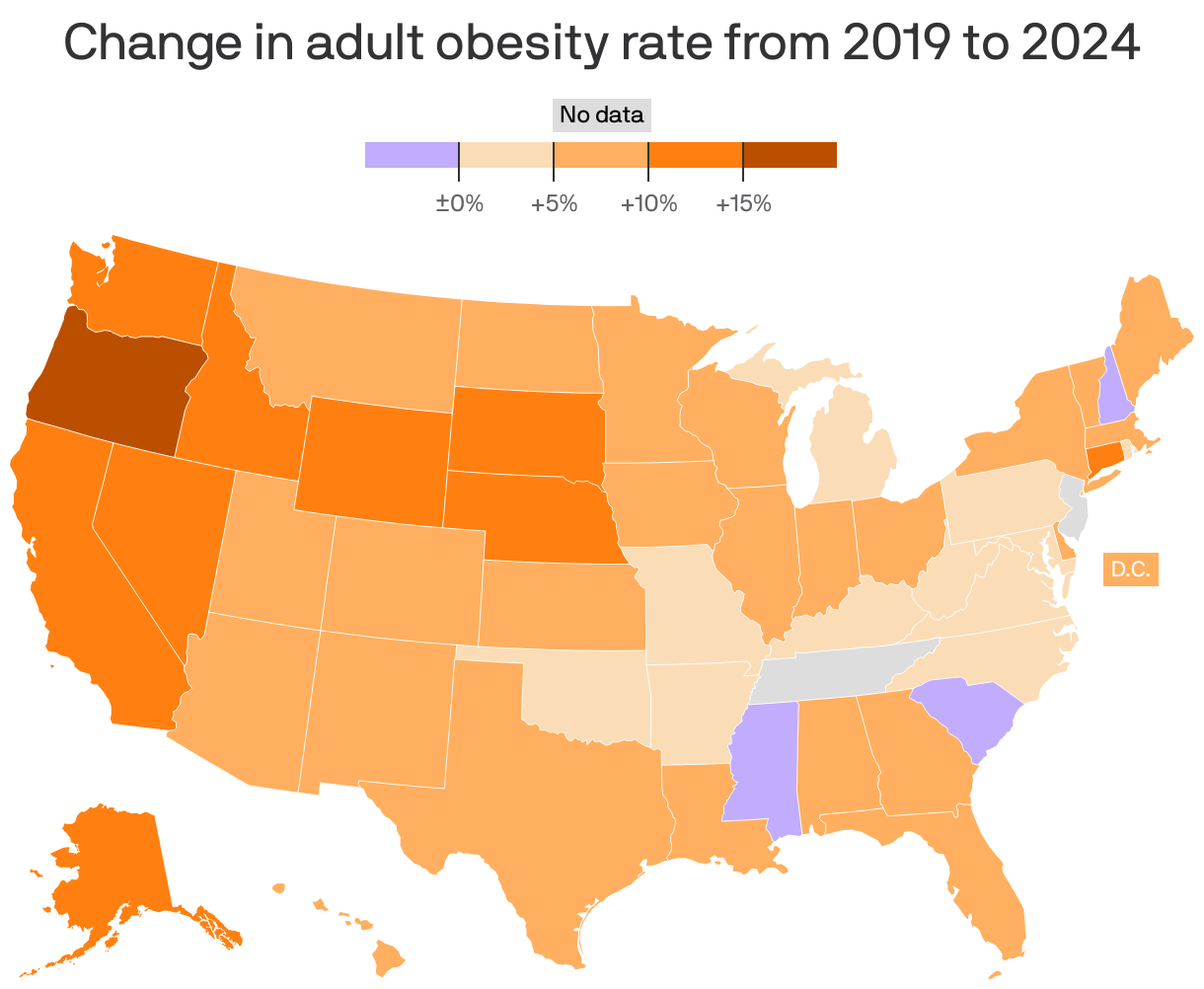
The number of U.S. states with adult obesity rates at or above 35% dropped slightly in 2024 compared to the year prior, but Ohio remains on the wrong side of that benchmark.
Why it matters: Obesity is tied to several health problems, including diabetes, heart disease, COVID-19 complications and more.
- Studies have also linked obesity to hundreds of billions of dollars in increased annual medical costs.
By the numbers: Ohio had a 36.9% obesity rate in 2024, according to a new "State of Obesity" report from the nonprofit and nonpartisan Trust for America's Health (TFAH).
- That's up from 34.8% in 2019.
State of play: Ohio is one of 19 states to have adult obesity rates at or above 35%.
- That's a drop from 23 states the year before — and the first decrease since states began hitting the 35% mark in 2013, the group says.
Yes, but: Back in 2014, only three states had obesity rates at or above 35%.
Between the lines: Obesity is tied to certain socioeconomic factors.
- Black and Hispanic Americans have higher rates compared to other groups, for example, and obesity is more prevalent in low-income households compared to high-income households.
The big picture: The nationwide obesity rate is stalling or even declining, per separate data, possibly thanks to new anti-obesity drugs.
- The success of those drugs is fueling calls to change how we talk about weight, Axios' Tina Reed reports.
What they're saying: The Trump administration has centered personal health under the "Make America Healthy Again" banner.
- Yet financial and staffing cuts have been made to agencies and programs that work on obesity, chronic disease and related issues, TFAH's report points out.
Zoom in: Earlier this month, the Ohio Department of Administrative Services launched its own weight management program for state employees.
- The program includes access to a health coach, nutrition resources and partial reimbursement for FDA-approved GLP-1 medications for eligible individuals.