Supreme Court homelessness decision won't change Cleveland's approach

Add Axios as your preferred source to
see more of our stories on Google.
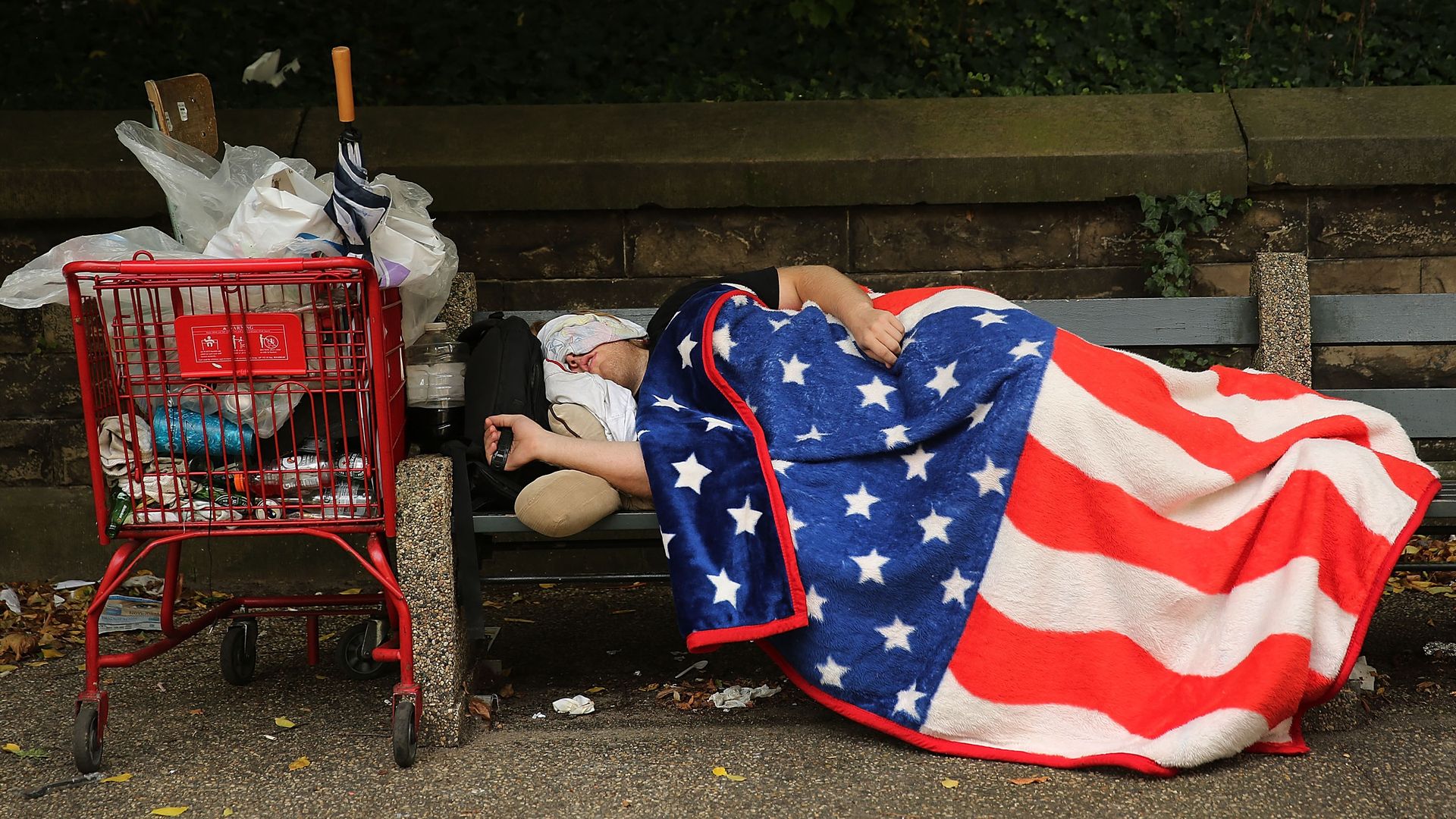
Photo: Spencer Platt/Getty Images
Last week's U.S. Supreme Court decision allowing cities to criminalize behaviors associated with homelessness — like sleeping outdoors — will not change Cleveland's official policies, according to the mayor's office.
Why it matters: The Supreme Court decision could open the door for cities to pursue stringent policies on outdoor encampments.
Yes, but: Mayor Justin Bibb told Axios that he remains committed to supporting unhoused people, not punishing them.
What they're saying: The "Supreme Court ruling will exist by name only in Cleveland," Bibb said.
- "Examples throughout the country have shown the best way to address this issue is by providing unsheltered residents with housing options, as well as connecting them to resources and services."
Flashback: In June, Cleveland launched its "Home for Every Neighbor" initiative, which aims to place 150 people in housing suited to their needs by the end of the year and provide wraparound services for an additional 12 months.
The big picture: Justices ruled 6-3 in favor of Grants Pass, Oregon's policies that criminalize sleeping outside, even when shelter space is unavailable.
- The ruling determined the city's policies of ticketing and jailing those who break municipal code do not violate the Eighth Amendment's cruel and unusual punishment clause.
The other side: Ohio homelessness advocates blasted the court's decision as a "senseless, costly" decision that will make the problem even worse.
- "When we ticket and arrest people for being homeless, we make it even harder for them to escape homelessness," Amy Riegel, the executive director of the Coalition on Homelessness and Housing in Ohio, said in a statement. "We can't arrest our way out of the homelessness problem."