First time voting in Charlotte? Here's what to know

Add Axios as your preferred source to
see more of our stories on Google.
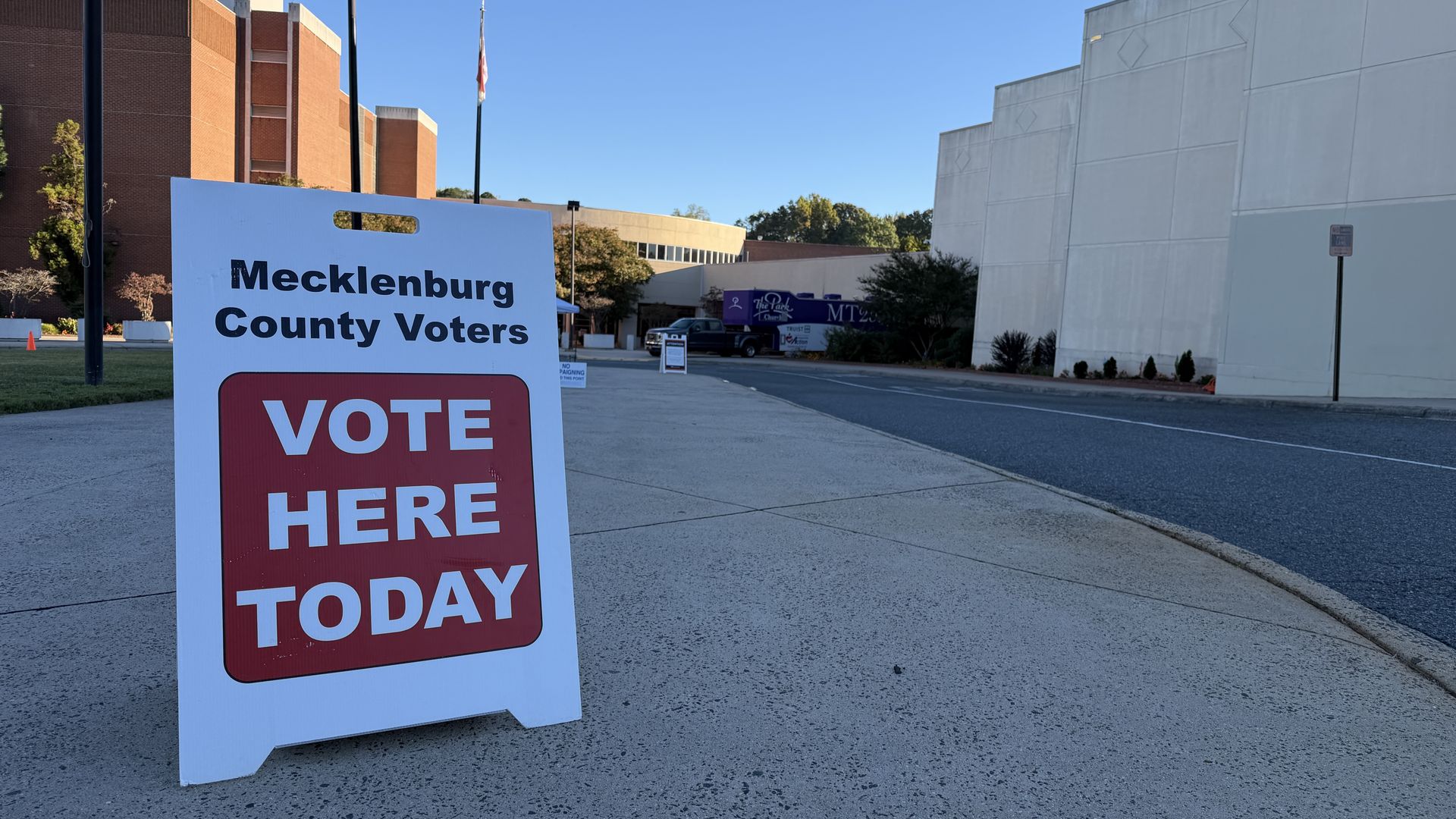
Photo: Ashley Mahoney
New to Charlotte? Welcome to a blue city that blends North Carolina purple, where the whole nation is watching our Senate pick, and our consequential judicial races come down to a few hundred votes.
Why it matters: Charlotte's large number of newcomers — like you! — is one reason why our elections are so interesting.
- Living in a swing state with fast-changing demographics means your vote can hold more weight than in some other places.
If you are otherwise eligible, you may vote using your current address if you will have lived there since Oct. 4 or before (at least 30 days before Election Day). If you moved within the past 30 days, you generally must vote based on your previous residence.
- Here's everything you need to know before you head to the polls.
1. ✍️ You can still register to vote at your new address.
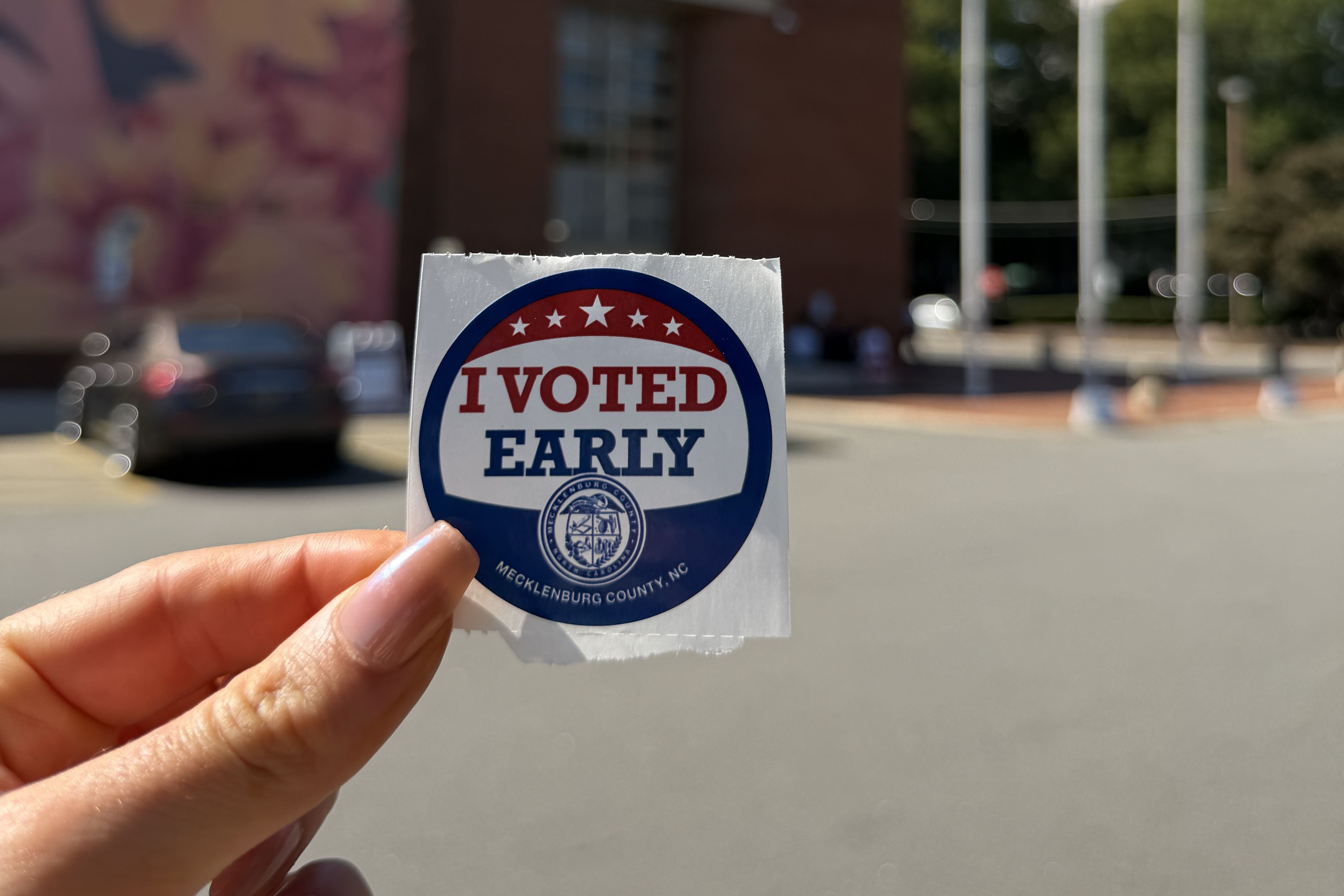
You must register to vote in North Carolina.
- If you haven't registered yet, you can still do so in person during early voting.
- Visit any of Mecklenburg County's 25 early voting sites before voting ends at 3pm Saturday, Oct. 31.
- Same-day registration is not available on Election Day for most voters.
- Map: How and where to vote early in 2026
During early voting, if you're registering to vote, bring proof of residency, such as a North Carolina driver's license, a utility bill or a bank statement showing your name and address.
- If you're a college student, you can bring a school document with your name and address.
- Find the full list of acceptable documents here.
After you register, you can cast your ballot right away.
2. 🪪 Don't forget your photo ID.
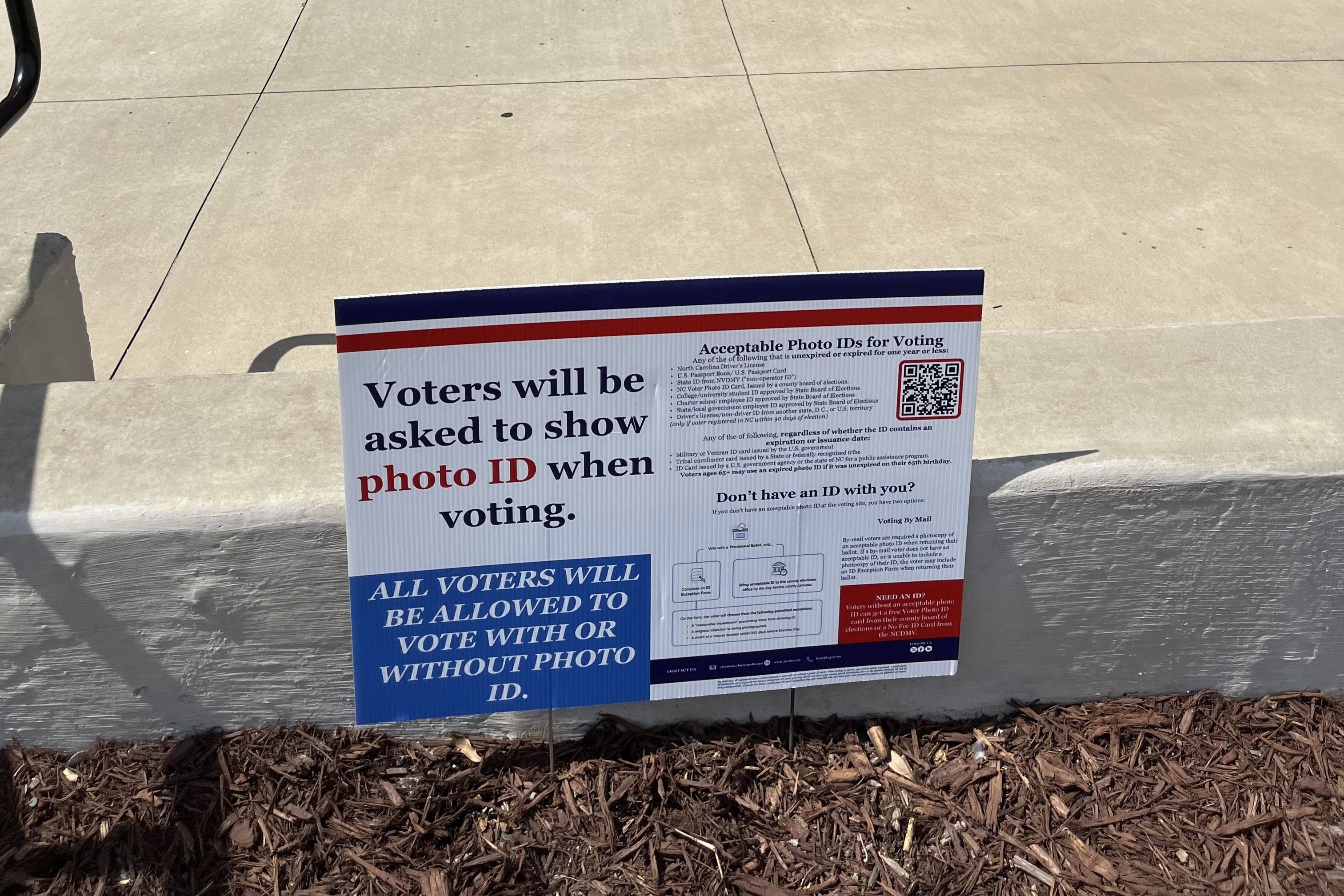
Voter ID is the law in North Carolina.
But you have a few options for what you can bring:
- North Carolina driver's license
- U.S. passport
- College student photo ID that's approved on this list
- Here's a full list of acceptable IDs
If you don't have a photo ID, you can fill out an exception form at the voting site.
3. 🇺🇸 Our Senate race is a big, national storyline.

The U.S. Senate race between Democrat Roy Cooper and Republican Michael Whatley is drawing national attention.
- Republican Sen. Thom Tillis isn't seeking reelection, giving Democrats an opportunity to flip the seat.
- Whatley, a Gastonian and former Republican National Committee chair, has never held elected office and was handpicked by President Trump to run.
- Cooper, a former two-term governor, is well-known statewide and was considered as Kamala Harris' running mate in 2024.
- North Carolina's other U.S. senator is Republican Sen. Ted Budd, whose term ends in 2029.
Go deeper: Breaking down the U.S. Senate
4. 👩⚖️ We elect judges in partisan races. (And every vote really counts here!)

Since you're new here, here's a brief history lesson:
- In 2020, Republican Justice Paul Newby defeated Democrat Cheri Beasley in the closest statewide election in modern North Carolina history with 401 votes.
- Then, in 2024, just 734 votes separated Democrat Allison Riggs and Republican Jefferson Griffin, in favor of Riggs. The close call was contested in court for six months until a federal judge ruled against Griffin. Griffin conceded after the ruling.
This history makes the state Supreme Court a closely watched race this year. The court has handed down big decisions on voter ID law, gerrymandering and public education funding.
The court has a 5-2 Republican majority.
- Justice Anita Earls, a Democrat, faces a challenge from longtime state lawmaker Sarah Stevens, a Republican.
- Stevens calls Earls an "activist" who will use the seat to get the results she wants.
- Earls says Stevens would pursue "conservative ideology" rather than being impartial.
This race will ultimately set the stage for 2028, when three Republican justices' terms are up, and the court balance could shift.
5. 🏛️ City vs. county: Who does what?

You'll notice Mecklenburg County commissioners on the ballot, but most races only have one person running.
- That's because Mecklenburg is a blue county, and local races are often decided in the primaries as there's not enough Republican opposition.
But what about Charlotte City Council?
- Council doesn't have an election until next year, 2027.
- The commissioners and council work similarly. Elected officials set policy, and a manager executes it. But the bodies have different responsibilities. Here's who does what:
Mecklenburg County:
- Funding for Charlotte-Mecklenburg Schools
- Sheriff/jails funding
- Environment
- Birth, death and marriage certificates
- Property records and taxes
- Parks and recreation
- Library
- Social services
City of Charlotte:
- Water/sewer
- Police
- Fire
- Charlotte Area Transit System (CATS)
- Trash and recycling
- Airport
- Economic development
- Zoning
- Housing and neighborhood services