From $20 cocktails to $2K rent: Why Charlotte is getting expensive

Add Axios as your preferred source to
see more of our stories on Google.
Axios archives. Apartment photo provided by Woodfield Development
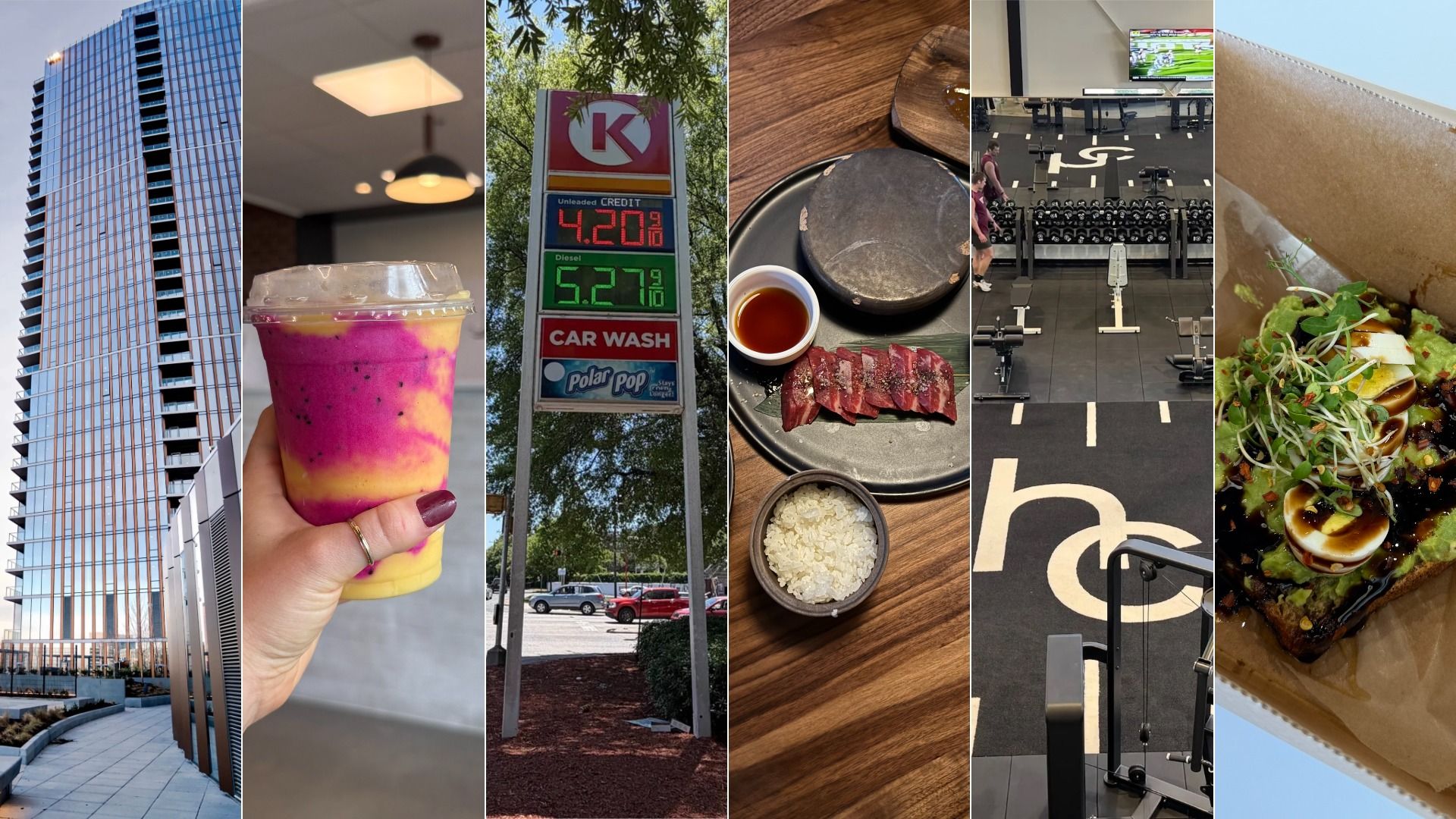
People are seeing it everywhere: Gas at $4. Cocktails over $20. Rent climbing to $2,000, and homeownership out of reach.
- Charlotte is getting expensive.
Why it matters: The whole country is feeling the squeeze, but Charlotte faces an extra layer of economic pressure:
- The rising cost of being a desirable city.
We asked readers what recently gave them sticker shock and made them say, "Charlotte's getting expensive." Responses poured in.
- "$15 high noon at gin mill" - Chloe W.
- "$28 for two 5pc supreme boxes at Bojangles" - Riley P.
- "1 million dollar townhomes with single car garage" - Brandon B.
State of play: Many of these ballooning costs are directly tied to Charlotte's fast growth. The city added more than 20,700 people last year, the most of any U.S. city.
- Residents are drawn from the Northeast, Midwest, Florida and the West Coast for jobs, quality of life and relatively attainable housing.
- "When a community is growing rapidly, you get a lot of demand-pull inflation," says Piedmont Crescent Capital's chief economist Mark Vitner, as consumers compete for finite resources.
Zoom out: Some of the rising costs are national, like groceries and gas.
Zoom in: Some of the rising costs are Charlotte-specific.
- Dining out, for example, is inflating faster in the South, UNC Charlotte economics professor Matthew Metzgar tells me.
- More restaurants are opening as Charlotte grows, and businesses are paying higher wages to compete for workers. (Also, the pandemic spiked labor costs.)
- "Who moves here doesn't necessarily always fit with what the labor market needs," Metzgar says. "Someone might come here for a job at Bank of America, but that doesn't help get any more staff at the restaurants."
Charlotte's fast-growing population of DINKs and young high-earning adults is supporting the luxury economy, too.
- "There are a lot of folks out there that are able to pay $15 for a cocktail," Vitner says.
Case in point: Some local consumer sentiment is a broader response to a changing city.
- Among the responses we received, several pointed to The Health Club, a relatively new luxury gym in east Charlotte that charges over $270 monthly for membership.
- "It's just shocking," Lana B. says. "Equinox is cheaper."
- Others flagged their check at Uchi, a nationally recognized Japanese restaurant that expanded to Plaza Midwood from Austin.
The big picture: Real estate used to almost feel like a "bargain" in Charlotte, Metzgar says. But the city can no longer pride itself on a lower cost of living than other major metros. It's more in line with the national average.
- Housing affordability is widely considered Charlotte's most challenging growing pain.
- The median sale price for a single-family home is now $444,000, up 2.3% from last year, on par with the national rate, according to Homes.com.
- Building more homes should help prices cool off.
- Rent has fallen slightly as a record number of apartments were built. But many builders are now pursuing primarily luxury apartments to offset high construction costs.
- Meanwhile, the typical Duke Energy bill has risen from $105 monthly in 2022 to $145 in 2026, largely due to grid upgrades, storm resilience and other improvements tied to growth.
Yes, but: Charlotte's still more affordable than peer Southern metros.
- Homes are priced 4.8 times the median household income in Charlotte, versus 5.6 times in Austin and 5.5 times in Tampa, according to Southeast Economic Advisors.
What's next: It's difficult to predict whether Charlotte will continue on this trajectory.
- As land becomes scarce, development gets more expensive. Prices follow suit.
- On the other hand, high housing prices and worsening traffic could make Charlotte less attractive to newcomers, possibly providing some relief to longtime residents.
The bottom line: Once again, Charlotte is a victim of its own success.
- "There's no free lunch," Metzgar says. "You can't expect to live in this big city, this nice city that has all this stuff, and somehow get this super cheap house. Only temporarily that can last."