America's fastest-growing city has a message: "We're full"

Add Axios as your preferred source to
see more of our stories on Google.
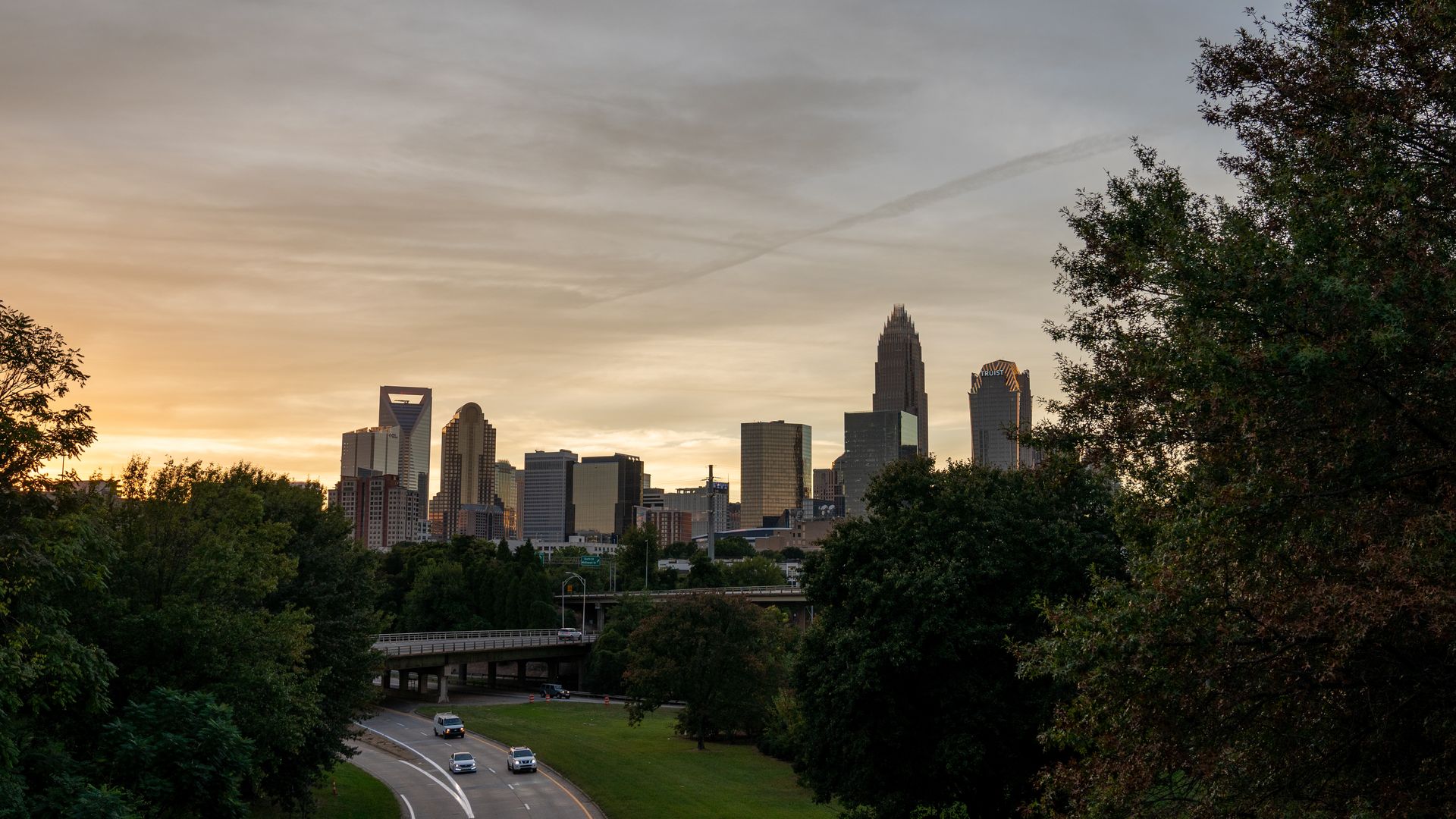
Photo: Andy Weber/Axios
As Charlotte barrels toward a population of 1 million, the city of transplants and unicorn natives is uniting behind a common phrase:
- "We're full."
Why it matters: Charlotte built a reputation as a place to escape more crowded, costlier cities. Now, residents fear rapid growth is recreating what they fled, from the Atlanta-scary traffic to the New York sticker shock.
- "I traded the Long Island Expressway (I-495) for I-485," says Dennis Cirillo, who moved to Charlotte in 2017. "It is the same movie with different accents."
By the numbers: Despite growth slowing in most large metros, Charlotte added 20,731 people between 2024 and 2025, more than any other city in the country, per the newest Census data.
- By percentage, Fort Mill is the fastest-growing area in the U.S., with the population jumping 6.8%. It's only 20 miles from Uptown.
- Charlotte's latest boom brings the population to 964,784, keeping it the nation's 14th-largest city and about 25,000 people shy of overtaking San Jose's 13th spot.
State of play: Charlotte doesn't need metrics. The growth is visible.
- We weave around construction only to get backed up on I-77 at rush hour.
- Residents roll their eyes at Northern license plates and resent new apartments, even as they beg for lower housing costs.
- Cranes dot the sky, blocking once-prime views of Hugh McColl's tower.
Flashback: Charlotte's status as a banking center has historically drawn people to the city for jobs. But, especially in the early 2010s, word got out that Charlotte was also just a nice, warm, relatively affordable place to raise a family.
- The city had become "one of the few places in the country where someone could land a competitive job and still buy a home," says Kailas Venkitasubramanian of the Charlotte Urban Institute.
- More recently, the pandemic propelled migration to the Sun Belt.
- And younger Americans are increasingly eyeing Charlotte as their next move, says Venkitasubramanian, who tracks social media and influencers as part of his data science practice.
Yes, but: Charlotte, while still inexpensive compared to peer cities, is less attainable for the people who actually live here.
- "The affordability advantage, which actually fueled this growth, is partially being cannibalized by the growth itself," Venkitasubramanian says.
By the numbers: A family needed an income of about $79,014 to afford the average home in 2020.
- Five years later, the number was $146,280 — an 89% increase, according to the UNC Charlotte Housing Report.
- The median home value in the Charlotte region has grown from $238,000 in 2019 to $407,000 in 2024, according to the Urban Institute.
Reality check: "There's really no equilibrium for a city," says Andrew Blumenthal, a real estate broker and vice chair of Charlotte's planning commission. "Either you're growing, or you're not."
- But Charlotte is playing catch-up on infrastructure.
- Charlotte wasn't built for so many people. It's centered around one Uptown core, surrounded by bottleneck-prone residential swaths.
- Blumenthal says city planning is now making decisions that concentrate housing density along busy passageways (the "corridors and wedges" approach) and keep transportation at the forefront.
- In a referendum that took years to place on the election ballot, Mecklenburg County voters last year passed a 1-cent sales tax increase for transportation projects. The first rail project on the docket (the Red Line to the north) will take at least a decade to build.
- "Charlotte was built as a car-dependent city, and has spent decades trying to retrofit transit into that pattern," Venkitasubramanian says.
What we're watching: Regional leaders this week shot down multi-billion-dollar plans to add toll lanes to I-77, the commuter route between ballooning Fort Mill and Charlotte.
- Pro-growth business groups — the ones bringing more banks and jobs here — call that decision shortsighted.
- The fight over a highway has evolved into a much bigger, overdue debate about what kind of city Charlotte wants to become.
The bottom line: We may be closer to becoming an "Atlanta" than some want to admit. But Charlotte still has time to address its growing pains.