Local small businesses will be paying for "Charlotte's Web" for months

Add Axios as your preferred source to
see more of our stories on Google.
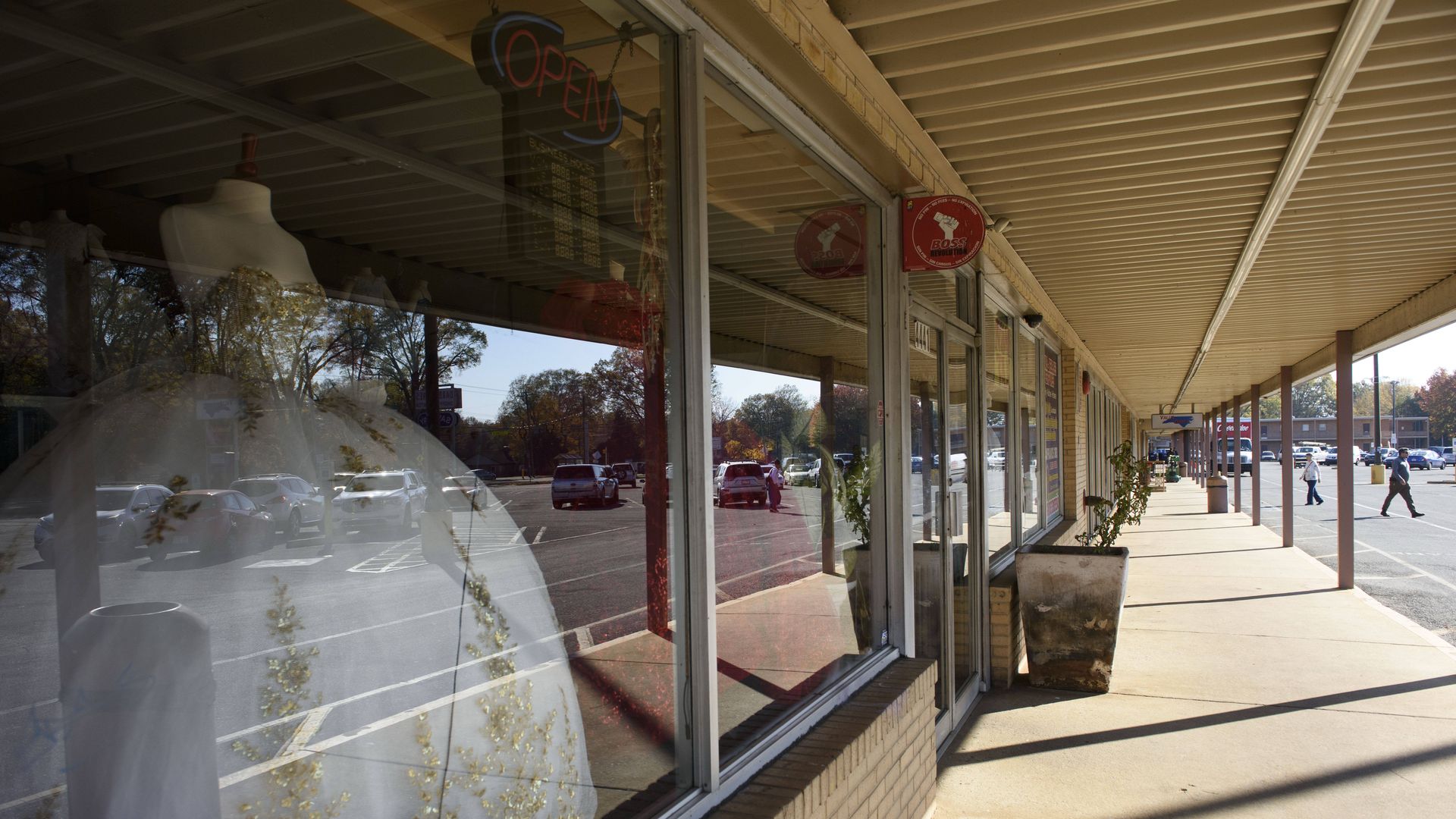
Photo: Melissa Sue Gerrits/For The Washington Post via Getty Images
Over the weekend, immigrant-owned businesses across the city reopened with caution. Some kept their doors locked, others operated with a skeleton crew, and many remain closed Monday.
Why it matters: The economic ramifications of U.S. Customs and Border Protection's operation "Charlotte's Web" are immeasurable at this time. But the trickle-down effects will be felt throughout the city for months to come at local restaurants, construction sites, grocery stores and inside homes.
Driving the news: The city has committed $100,000 to help households pay rent and utilities, WFAE reported. The aid will go to income-eligible families who lost wages or faced financial hardship as businesses closed and residents stayed home out of fear of encountering federal agents.
Zoom out: Economic and social disruptions spread citywide — from fruit vendors on Central Avenue to a country club in Myers Park.
- Pasta & Provisions owner Tommy George washed dishes at his Myers Park location last week after an employee's husband was detained. "In a way, the consequences are in every neighborhood," George told the Washington Post.
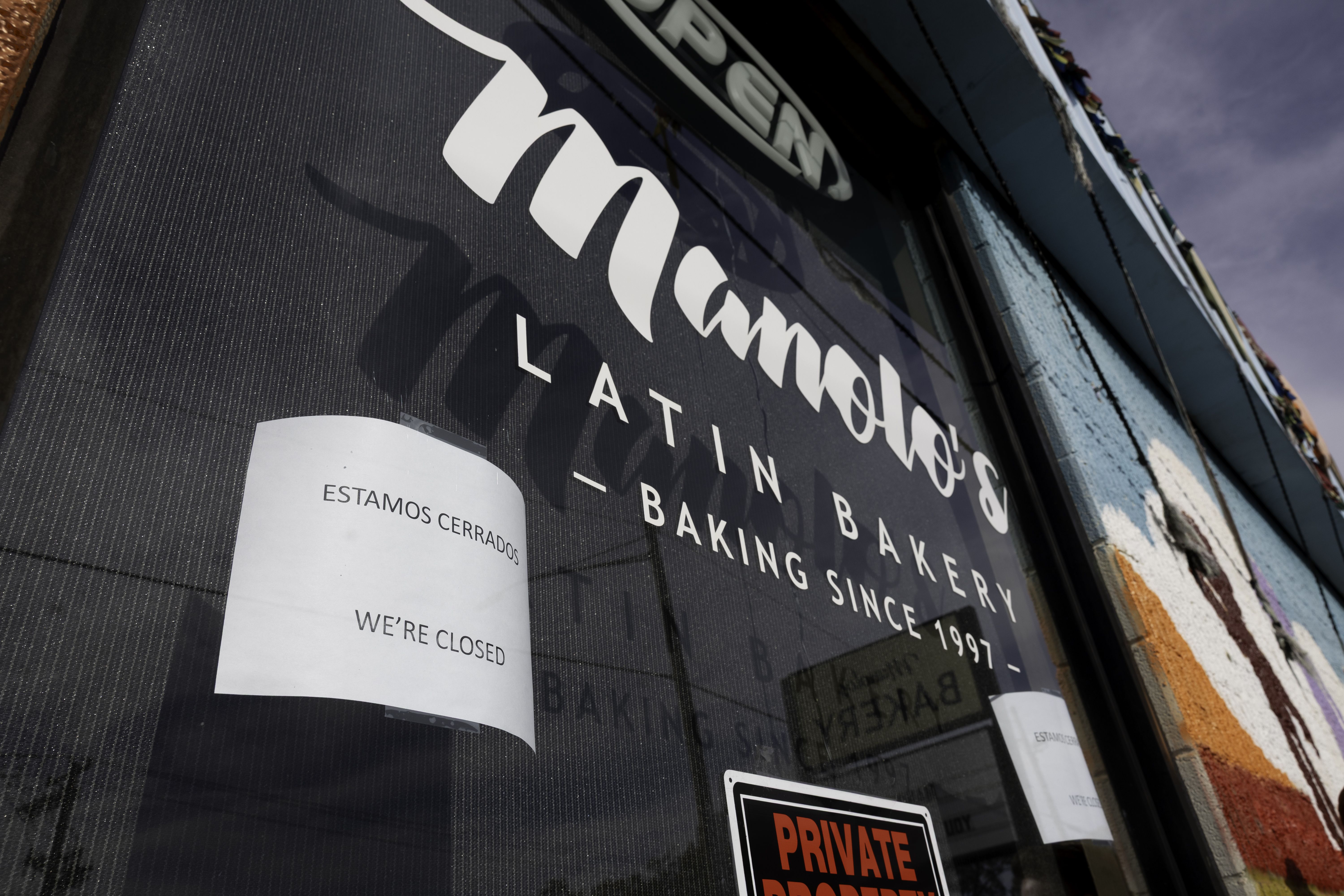
By the numbers: In a survey sent to local business owners in Charlotte last week by CharlotteEast, a nonprofit serving east Charlotte, businesses reported daily losses averaging $2,500. Losses ranged from $200 at small tiendas to $12,000 for one general contractor, according to survey responses.
- Of the 90 surveyed businesses, 47% were closed for at least three days.
- 70% of survey respondents were located in east Charlotte.
Caveat: The survey is a snapshot in time, says Greg Asciutto, executive director of CharlotteEast.
The big picture: Of the more than 400 independently owned east side businesses, between 50-70% are first- or second-generation immigrant-owned.
- Asciutto estimates "more than half" closed for at least one day last week.
- But some immigrant-serving businesses have been struggling since the start of the year, when ICE increased enforcement activity across the country.
Zoom in: East Charlotte's small business ecosystem is uniquely vulnerable because the local dollar circulates longer and more tightly within the community, explains Asciutto.
- An international grocery store, for example, will supply ingredients for a bakery, which then employs neighbors and sells to others in the area.
- Because of this tight-knit network, closures triggered by Border Patrol activity didn't just affect individual shops — they rippled across the entire corridor.
Asciutto estimates it will take at least a quarter for east Charlotte's business district to regain any sense of normalcy.
Between the lines: Despite local law enforcement confirming that agents would leave the city on Friday, U.S. Customs and Border Protection says otherwise.
- "We haven't left. 400 apps as of this afternoon," CBP commander Gregory Bovino wrote on X on Sunday.
- ICE, a separate agency from CBP, continues to operate in Charlotte and can take people into custody, as it has been doing amid Trump's heightened arrest quota.
The latest: The Department of Homeland Security did not respond to Axios' request for updated arrest numbers. Unverified documents obtained by CBS allege that roughly one-third of people arrested during "Charlotte's Web" were classified as criminals, though the records do not indicate the severity of the offenses or whether they were convictions or charges.
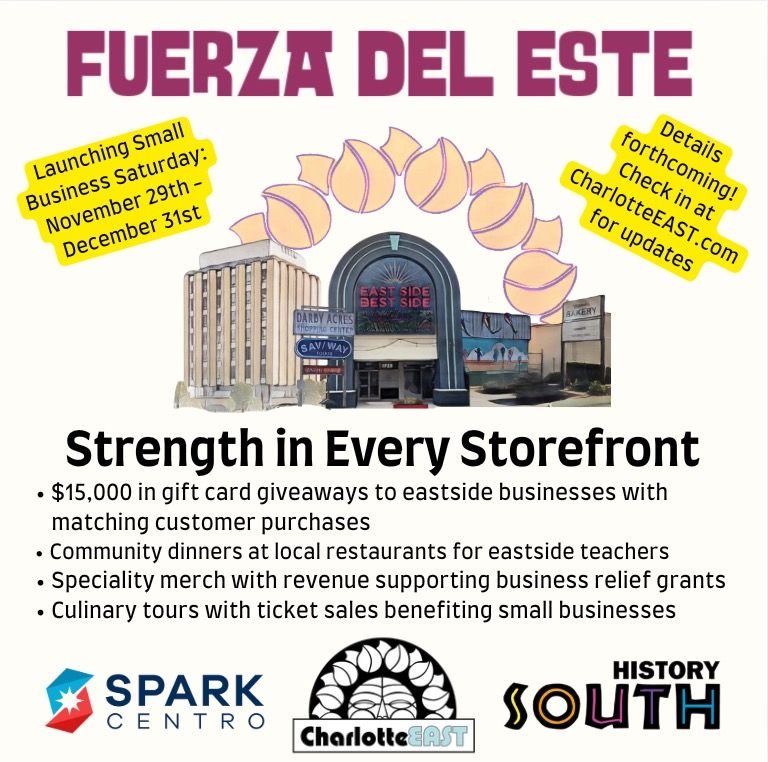
What's next: Starting on Small Business Saturday, CharlotteEAST is launching "Fuerza del Este," a monthlong effort to drive customers back into eastside storefronts.
- Shoppers visit participating businesses and upload receipts to an online platform. CharlotteEAST will match purchases with gift cards — up to $15,000 in giveaways — for businesses that accept them.