ICE crackdowns hit Charlotte's immigrant businesses hard

Add Axios as your preferred source to
see more of our stories on Google.

Photo: Andy Weber/Axios
The threat of ICE enforcement is weighing on Charlotte's immigrant community.
Why it matters: A surge in arrests by Immigration and Customs Enforcement agents is fueling fear, racial tension and economic hardship in Charlotte, local business owners tell Axios.
The big picture: President Trump's team has been demanding that agents arrest 3,000 immigrants a day — an unprecedented pace ICE is still trying to reach, Axios' Brittany Gibson reports.
Context: We spoke to three immigrant entrepreneurs in Charlotte, who say they're seeing a trickle-down effect across several industries due to the immigration crackdown.
What they're saying: Fear is spreading, regardless of immigration status.
- "No matter what their status is, they're afraid to go out, to drive, to speak up," said Astrid Muñoz, who co-owns SQS Catering, Mr. Pollo, SQS Junk Removal Service and SQS Janitorial with her husband Carlos Bergman.
Muñoz describes customers and staff alike growing anxious about public interaction. Racist language, tense encounters with clients and fear of separation from family are all part of the emotional toll.
"There's anguish. But I can't focus on that — I have to lead with peace of mind, or fear takes everything off course."
Muñoz's biggest fear: That rising resentment and anxiety will spiral into violence.
- But she says she has faith that things will get better.
Zoom in: Manolo Betancur, humanitarian and owner of Manolo's Bakery, Higher Grounds Café and Artisen Vegelato, says ICE's presence weighs on his businesses.
- Whenever there are rumors of ICE's presence, "nobody goes to the bakery," he told Axios subscribers at a recent Small Business Spotlight event.
By the numbers: Orders for large cakes — usually in high demand in May for Mother's Day and quinceañeras — dropped to zero, Betancur says. Revenue is down 20%.
- In an interview with WFAE, Betancur said he had to lay off three employees and reduce the hours of others.
- "We are not criminals. We're survivors. Now the hardest thing for an immigrant is to survive in America," Betancur said.
Go deeper: How immigration raids could weigh on North Carolina's labor force
Natalia Silva, local entrepreneur and organizer of Festival Colombiano, said she refuses to let fear win.
- "We are business owners, professionals, entrepreneurs…and we deserve respect."
- Silva says events like Festival Colombiano Cultural are acts of resilience — a way to assert dignity and presence in a time of heightened scrutiny.
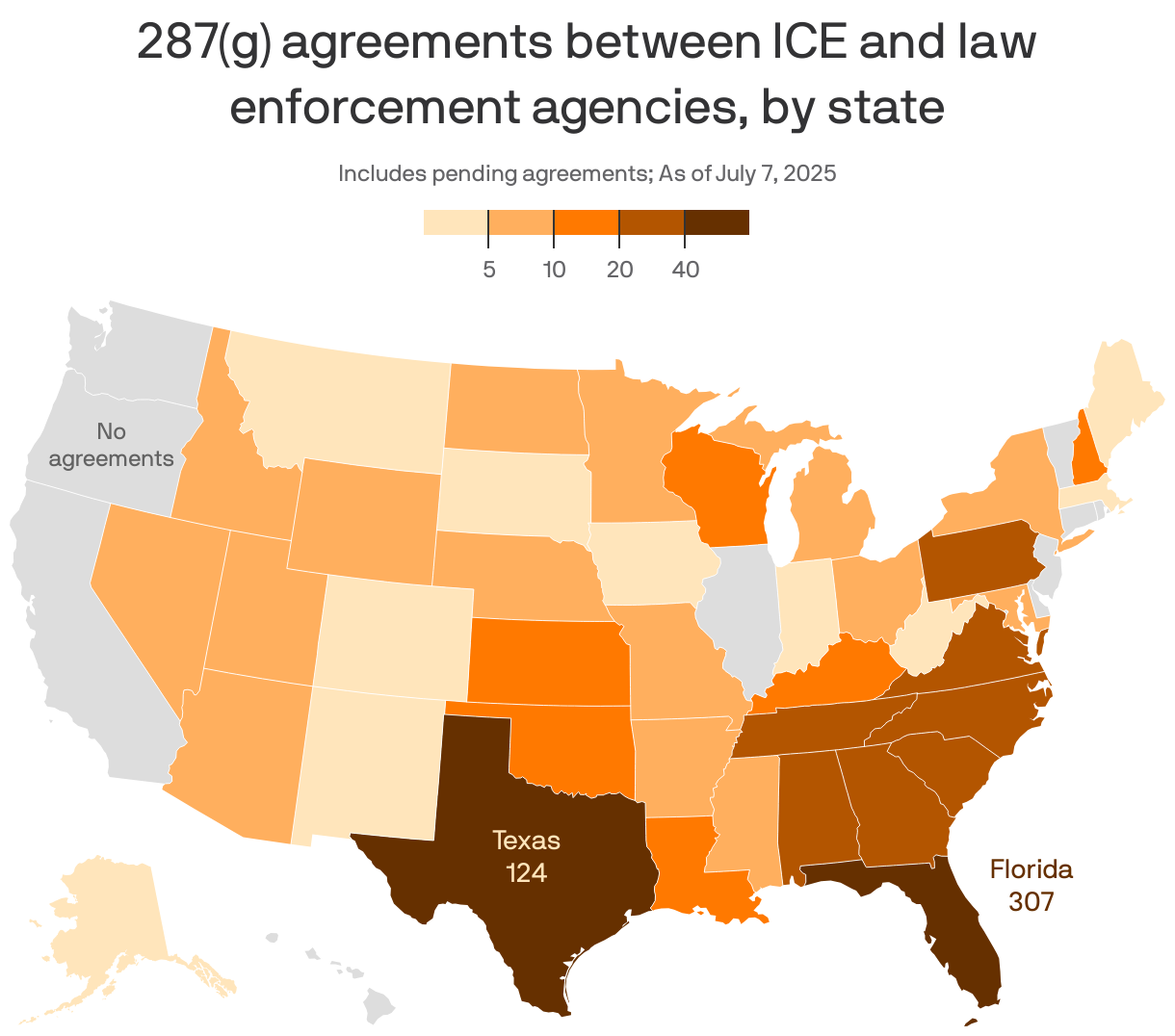
Zoom out: North Carolina is an immigration enforcement hot spot, according to an Axios analysis.
- Local law enforcement agencies in nearby Gaston, Union and Cabarrus counties have been some of the most cooperative in rounding up immigrants through deals known as 287 (g) agreements, according to the analysis.
Between the lines: Mecklenburg County Sheriff Garry McFadden ended the county's 287(g) program agreement with ICE in 2018.
- Last year, lawmakers enacted House Bill 10, mandating that all state sheriffs honor ICE detainers by holding suspects for up to 48 additional hours to facilitate federal pickup, WFAE reported. But keeping those detainees is expensive, according to McFadden, who has expressed communication concerns with ICE in the past.
The other side: Differences in opinion are emerging on how aggressively ICE should deport workers, longtime residents, and some people who've sought refuge from brutal regimes, Axios reports.
- Lawmakers on both sides of the aisle detailed concerns to Axios, ranging from prioritizing the removal of criminals over peaceful residents to economic disruptions and humanitarian risks.
- But the differences are far from a GOP rebuke of Trump, Axios' Russell Contreras writes. Many have few qualms about the way Trump's deportation campaign is being carried out.
Go deeper: 40+ Hispanic- and Latino-owned restaurants to check out in Charlotte
Editor's note: The interviews with Natalia Silva and Astrid Muñoz were conducted in Spanish and translated for this story.