What city officials in North Carolina can and can't do about ICE and Border Patrol

Add Axios as your preferred source to
see more of our stories on Google.
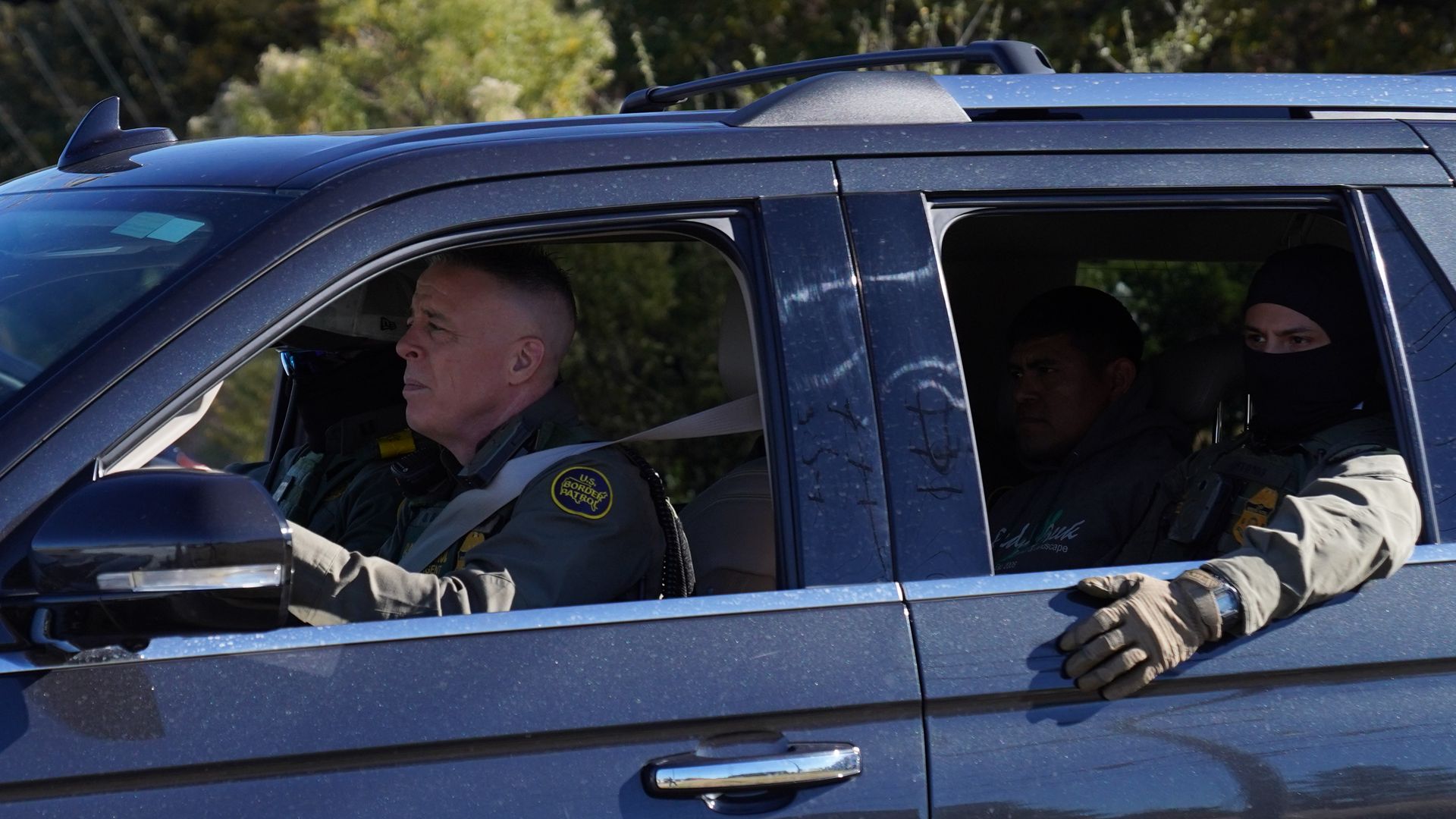
Photo: Ryan Murphy/Getty Images
Federal Border Patrol and U.S. Immigration and Customs Enforcement (ICE) operations in Charlotte have sparked widespread concern, especially after reports of racial profiling, detentions, and property damage.
Why it matters: Cities have little authority to intervene. North Carolina's Dillon Rule limits their ability to curb federal enforcement, even as community fear grows.
- Charlotte leaders met Monday to clarify what local government can legally do and what limits state law imposes.
What legal authority does the city have over ICE and Border Patrol?
The city has limited authority to restrict federal operations due to state preemption under North Carolina's Dillon Rule structure.
- "All of the power originates from the General Assembly," Charlotte city attorney Andrea Leslie-Fite said at Monday's city council meeting. "City Council only has as much power as is explicitly granted or inherently granted by state law."
That means cities like Charlotte cannot issue executive orders or create "sanctuary" policies like some Home Rule cities, such as Chicago.
What is the difference between a Dillon Rule and Home Rule city?
A Dillon Rule city like Charlotte can only take actions that the state government explicitly allows by law.
- A Home Rule city like Chicago, however, has broad authority to govern itself unless the state specifically prohibits something.
- In short, Dillon Rule limits local power; Home Rule grants it.
Can the city block ICE or Border Patrol from using city property?
Not entirely.
- Restricted city areas (like offices or secured zones) require a judicial warrant to access.
- Public areas (like lobbies or meeting rooms) remain open.
Can a city like Charlotte restrict ICE or Border Patrol from accessing city data?
No. Most city records are public under state law.
Can Border Patrol legally be in Charlotte if it's not near a border?
Yes. Federal law allows Border Patrol to operate anywhere within 100 miles of a U.S. border or port of entry — which includes major airports like Charlotte Douglas.
Go deeper: Immigrant advocates cast doubt on border law
What should residents do if confronted by agents or if someone impersonates them?
CMPD is not involved in federal immigration operations and does not assist ICE with civil warrants.
- Residents can call 911 or CMPD if they are unsure whether someone is a legitimate federal agent.
What about North Carolina's new immigration law?
House Bill 318, which took effect Oct. 1, 2025, requires sheriffs to determine the immigration status of people arrested for certain crimes and to hold them up to 48 hours for ICE pickup.
- "It codifies that relationship and creates an expectation for jail administrators … not the city," Fite said
That means CMPD and the city have no role in enforcing detainers — that's under Mecklenburg County Sheriff Gary McFadden.
What's next: Charlotte City Council will vote on a measure on or before Nov. 24, directing the city manager to quickly deploy short-term funding, in coordination with Mecklenburg County, to local organizations helping residents affected by ICE and Border Patrol activity.
- In addition to the funding motion, the committee also voted unanimously to direct the city attorney to develop an educational campaign to inform residents of their rights and available resources.