Helene in western North Carolina: "Fight for survival" as aid pours in


Add Axios as your preferred source to
see more of our stories on Google.
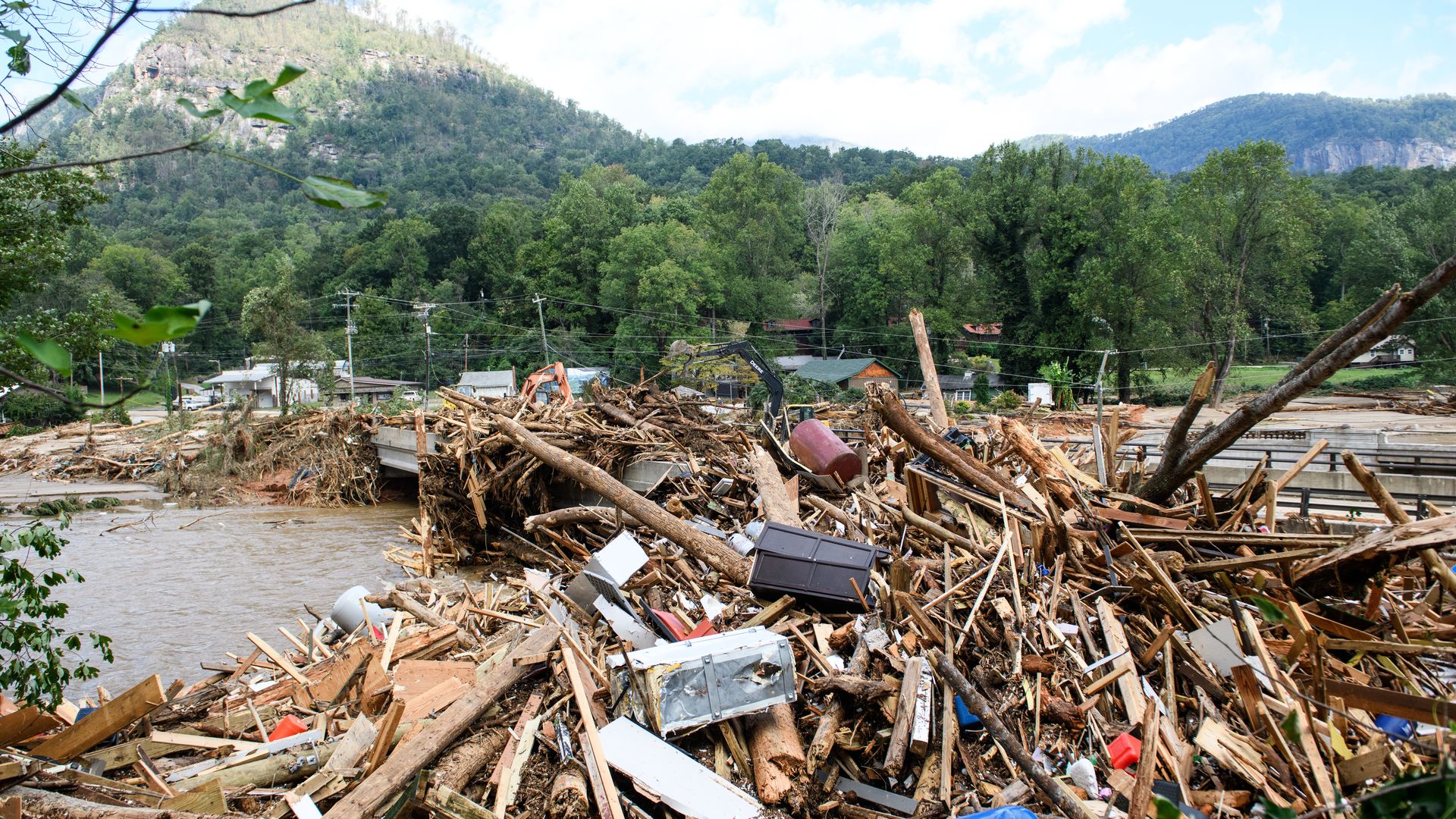
Approximately six feet of debris piled on the bridge from Lake Lure to Chimney Rock, blocking access on Sept. 28 following Helene. Photo: Melissa Sue Gerrits/Getty Images
Government agencies, along with smaller organizations and businesses, are hauling food, water and other emergency supplies into North Carolina's mountain towns by semi-trucks, helicopters, military planes and even mules.
The massive relief efforts come days after Tropical Storm Helene wreaked havoc on the western part of the state, leaving catastrophic property damage and hundreds of thousands of customers without power.
- At least 121 people have died as a result of Helene, according to the AP.
- In western North Carolina, the storm claimed the lives of at least 41 people, including 35 in Buncombe County, where Asheville is located, the Asheville Citizen-Times reported on Monday afternoon.
Between the lines: Larger cities like Asheville are making headlines as they grapple with the storm's devastation — but some smaller communities have been almost literally wiped off the map.
- The mayor of Canton has used the word "apocalyptic" in numerous posts and interviews to describe his town in rural Haywood County, telling WRAL the experience has been an "unacceptable and disgraceful breakdown of cellular technology."
- In Spruce Pine, situated in rural Mitchell County northeast of Asheville, the town's executive director, Spencer Bost, told Axios that a town of 2,000 just "doesn't necessarily have the resources to prepare for something like this."
- "Appalachia is so frequently forgotten ... Even if we did know, I mean, what could we do with a police force [of only so many people] ... We just don't have the bodies or the resources to prepare for something like this."
The big picture: Hurricane Helene has left officials in six Southeastern states struggling to respond to the widespread destruction it caused after hitting Florida as a Category 4 storm last week, Axios' Rebecca Falconer reports.
The latest: FEMA officials are on the ground in Asheville as of Monday, said FEMA external affairs officer John Mills, per Blue Ridge Public Radio. Ten FEMA search and rescue crews are on the ground, and 10 more arrive soon.
- FEMA administrator Deanne Criswell also arrived in Asheville on Monday, and is expected to stay in the city "for the foreseeable future," McClatchy reported.
- The North Carolina Air National Guard is transporting more than 100,000 pounds of supplies from FEMA in a C17 military airplane to western North Carolina.
- One North Carolina-based group, Mountain Mule Packers, were using the animals to deliver aid to neighbors' homes, the Washington Times reported.
Yes, but: Buncombe County officials are still telling people to stay away from the county, saying it doesn't have capacity for more people due to a lack of water, power and poor road conditions throughout the area.
- "Consider all roads in Western North Carolina closed until further notice," NCDOT officials said Sunday.
Zoom in: Sarah Verardo has spent years helping American forces in conflict areas overseas, through nonprofit organizations The Independence Fund, where she's CEO, and Save Our Allies, which she co-founded.
- The groups are now conducting their first stateside mission — here in North Carolina, Verardo's home state. And the reports she's getting from her teams are breathtaking.
What they're saying: "The scenes unfolding in Western North Carolina are beyond comprehension. It's near war zone conditions — homes demolished, communities torn apart, and people desperately clinging to hope amidst the chaos," Verardo told Axios in a text message. "The resilience of these communities mirrors the warriors I am honored to support daily.
- "But make no mistake — this is a fight for survival, and we urgently need to unite in aid of those affected."
How to help: Save Our Allies has people on the ground in the mountains working with emergency officials. The organization also has trained pilots who've flown in combat zones, ready to man helicopters if anyone can make them available, she said.
Zoom out: The world's largest weather and climate data center was knocked offline by Hurricane Helene, Axios' Andrew Freedman reports.
- According to NOAA, its National Center for Environmental Information (NCEI) in Asheville is trying to account for its staff and has limited electric and water service.
What's next: President Biden will visit North Carolina on Wednesday for a briefing and an aerial survey of the area, AP reported Monday.