How Charlotte plans to get cars off the road

Add Axios as your preferred source to
see more of our stories on Google.
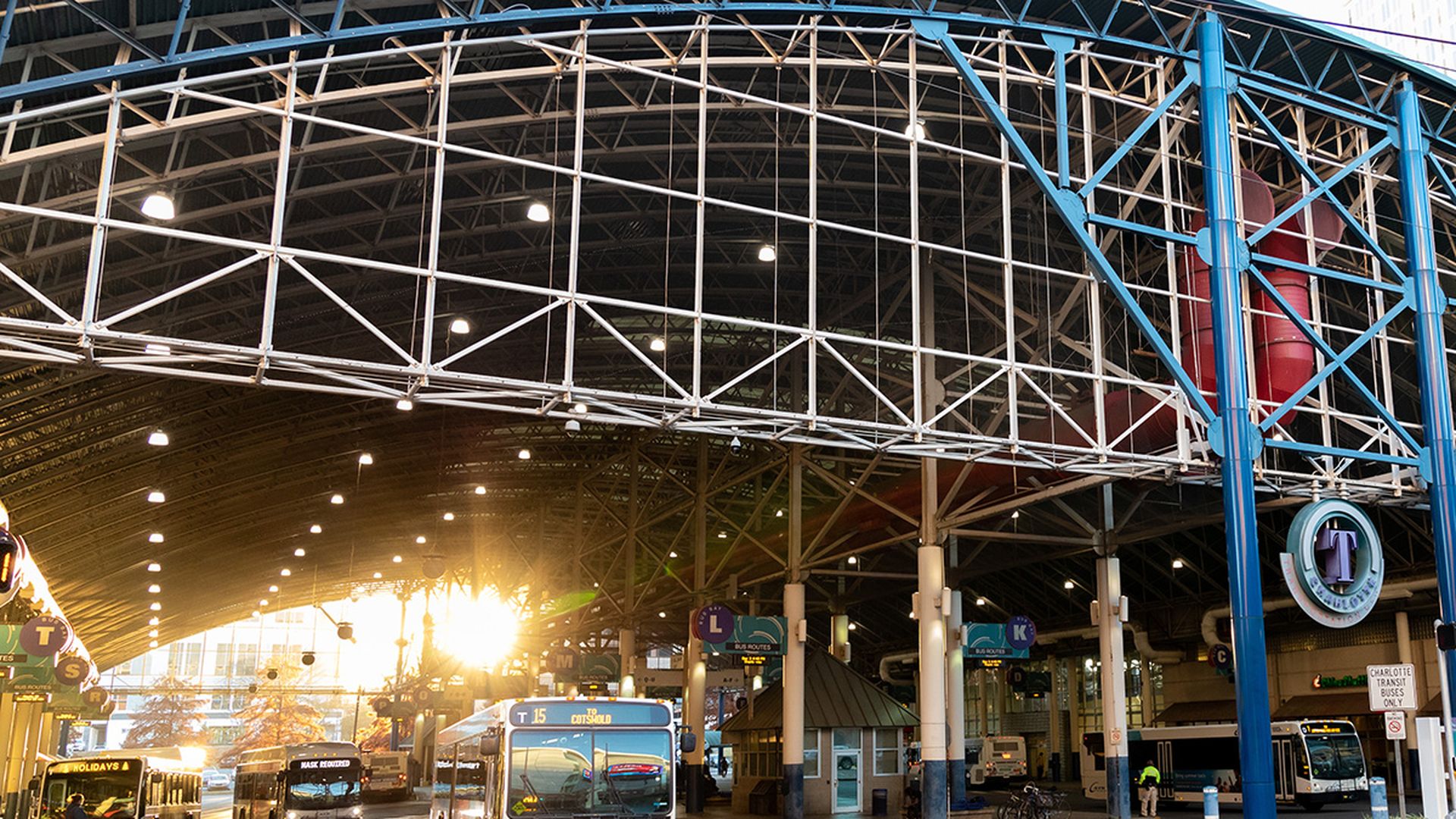
Photo courtesy of Sustain Charlotte.
Editor’s note: Charlotte City Council approved the Strategic Mobility Plan in a 9-2 vote on June 27.
Imagine if half of Charlotte’s residents got around by walking, biking or taking transit.
What’s happening: That’s what city leaders want to achieve by 2040, according to a plan first released in May that outlines what a future in our growing city could look like with more infrastructure focused on people, not just cars.
- The Strategic Mobility Plan consolidates existing transportation plans into one document.
- In addition to reducing vehicle trips, the plan also looks to make roads safer and intends to eliminate traffic-related deaths.
Details: The city wants to invest in four areas to achieve those goals: Transit, streets/roadways and bike and pedestrian infrastructure.
Why it matters: The city is going to keep expanding, and if we don’t address infrastructure needs now, sprawl and more traffic is inevitable. Plus, vehicle emissions are one of the biggest drivers of air pollution.
Yes, but: We’re a long ways from undoing decades of policies that prioritized cars. Today, more than three-quarters of residents commute to work by car only, according to the report.
What they’re saying: “The goal is to get those modes on equivalent footing with driving your car,” says Eric Zaverl, urban design specialist with nonprofit Sustain Charlotte.
- “Why it’s so easy to drive today is you have a network of streets and highways. We don’t have a network of transit corridors or a safe, easy bike network.”
Here’s some of what the city is proposing to do to change that:
1) A network of bike lanes
What’s happening: The city wants to build a web of lanes like the one that just fully opened through Uptown.
The map below shows the areas prioritized for bike infrastructure, such as Beatties Ford Road and West Boulevard. The city says it used criteria like population and employment density, proximity to transit and the location of planned greenways.
- In total, the plan proposes 173 miles of bikeways.
- The challenge is that many of the streets the city is focusing on are already built out, so the city will have to take away space for vehicles.
/2024/01/06/1704506468365.png)
Between the lines: Two trails would make up the center of the citywide bike network: The cross Charlotte trail, already underway, and a rail trail following the path of the proposed LYNX Silver Line, which would stretch east to west.
Pedestrian infrastructure
The big picture: More than 250 miles of streets in Charlotte lack sidewalks on at least one side of the road. The city is looking to fill those gaps.
/2024/01/06/1704506468690.png)
Sidewalks are the most fundamental infrastructure to increase walkability. But even areas that have sidewalks can be dangerous for pedestrians.
The plan also calls for improving pedestrian crossings, traffic calming measures like speed bumps and better street lighting for cars and pedestrians.
Transit
The city is spread out, and walking and biking won’t be enough to get around without a car.
Context: The plan supports proposals already in the works for the expansion of the Gold Line streetcar which will eventually stretch 10 miles, as well as rail: The Silver Line, the extension of the LYNX Blue Line to Pineville and Ballantyne and the LYNX Red Line commuter rail from Uptown to the northern towns.
Yes, but: Rail is expensive and takes a long time to build. Plans to put a sales tax referendum on the ballot to fund those projects are in limbo.
Meantime, buses carry the majority of Charlotte Area Transit System riders, per the report. The plan proposes increasing frequency and consistency, and improving bus stops themselves and areas around them.
- It also identifies, using existing proposals from CATS, 22 routes for high frequency service, and six corridors with high ridership to be prioritized for improvements.
- Those could include things like dedicated bus lanes and signals that allow buses through an intersection before the rest of traffic.
- The city also wants to build more than 100 “mobility hubs,” or amenity centers where transit options connect, as well as “microtransit” options such as shuttles and circulators to connect areas that aren’t on transit lines.
/2024/01/06/1704506469051.png)
Roads
Details: Cars aren’t going away anytime soon.
Improvements to intersections, road widening and other projects to accommodate all the new cars on the road are necessary, per the plan.
- The city also wants to create new streets, especially in the outskirts.
Another major component is the proposed street map, a blueprint for what the city’s streets will look like. You can view an interactive version of the draft map here.
Between the lines: The Strategic Mobility Plan is designed to go alongside the 2040 Plan, a vision for the next 20 years of growth which the city approved last year, and the Unified Development Ordinance, which will implement those goals through local regulations.
Of note: The plan is a visionary document, but after adoption, the city will create a list of prioritized projects to be funded, per Hannah Bromberger, strategic mobility division manager with the Charlotte Department of Transportation.
- That funding could come from bond money, she said in an email.