UT's power line sensor could better detect grid trouble

Add Axios as your preferred source to
see more of our stories on Google.
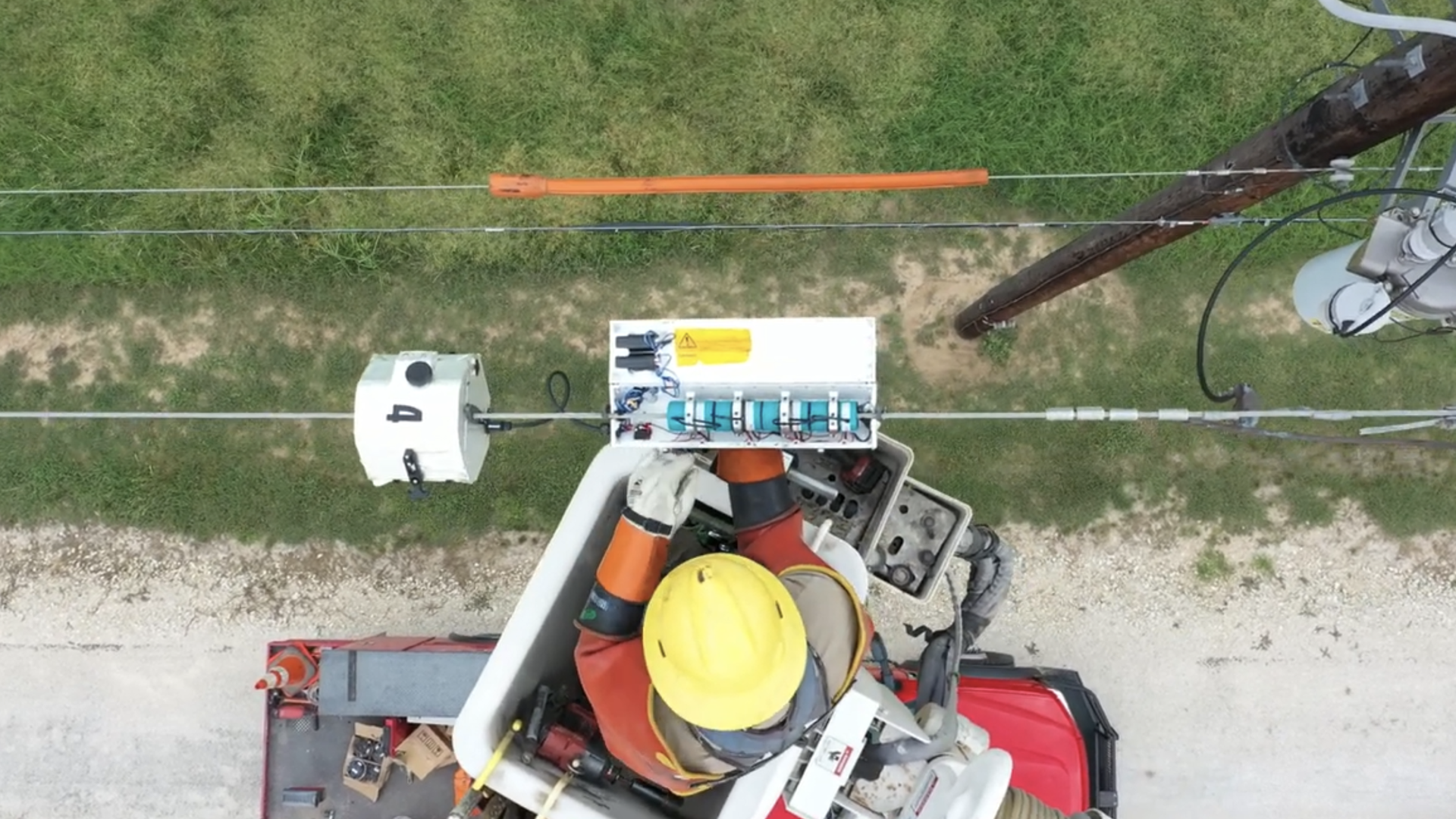
A sensor is attached to a power line. Photo: Courtesy of the University of Texas
University of Texas researchers say they've developed a new tool that could help spot problems on power lines before they lead to outages.
Why it matters: As Texas adds data centers, renewable energy and more people, utilities are looking for better ways to monitor an aging electric grid in real time.
Driving the news: Engineers at UT have spent the past several years developing a "smart sensor" that clips directly onto power lines.
- The device continuously monitors electrical activity and can detect subtle changes that conventional equipment often misses, like when a tree touches a power line.
- That could allow utility crews to identify hazardous vegetation before it causes an outage or sparks a wildfire, instead of relying primarily on scheduled tree trimming every several years.
By the numbers: During a field test near Seguin, the sensors detected 34 issues on lines in one month compared with three identified by conventional monitoring equipment, according to the researchers.
How it works: UT project manager Shannon Strank says the sensors give utilities "improved situational awareness" by providing real-time information about conditions instead of requiring operators to analyze data hours later.
- "You could literally pull up a dashboard and get grid performance data on the spot versus filtering through messy systems that tend to have a lag," Strank tells Axios.
Between the lines: Researchers say AI data centers, especially in rural areas, are creating a new challenge for utilities because their demand for power can swing dramatically as computing jobs start and stop.
- Those rapid changes could place new stress on an electric grid.
- "We're entering a new world of study to really understand how this may impact the life cycle" of grid equipment, Strank says.
The big picture: The Department of Energy sponsored the project to better monitor power quality.
- "We have quite a bit of renewables on the grid here in Texas, so that was the motivation," Strank says.
- Plus, the 2021 deadly winter storm in Texas, followed by destructive wildfires and rapid AI growth, underscored the need for faster, more detailed grid monitoring, according to Strank.
Yes, but: Discovering more infrastructure threats could require utilities to shell out more money addressing them.
- Austin Energy budgeted $32 million for vegetation management and wildfire mitigation in the 2026 fiscal year — and that's for a schedule of trimming Austin trees once every seven years.
What's next: The team will redeploy more sensors for testing this fall, in partnership with Sandia National Labs.