Ticketing robot cars comes with extra hurdles


Add Axios as your preferred source to
see more of our stories on Google.
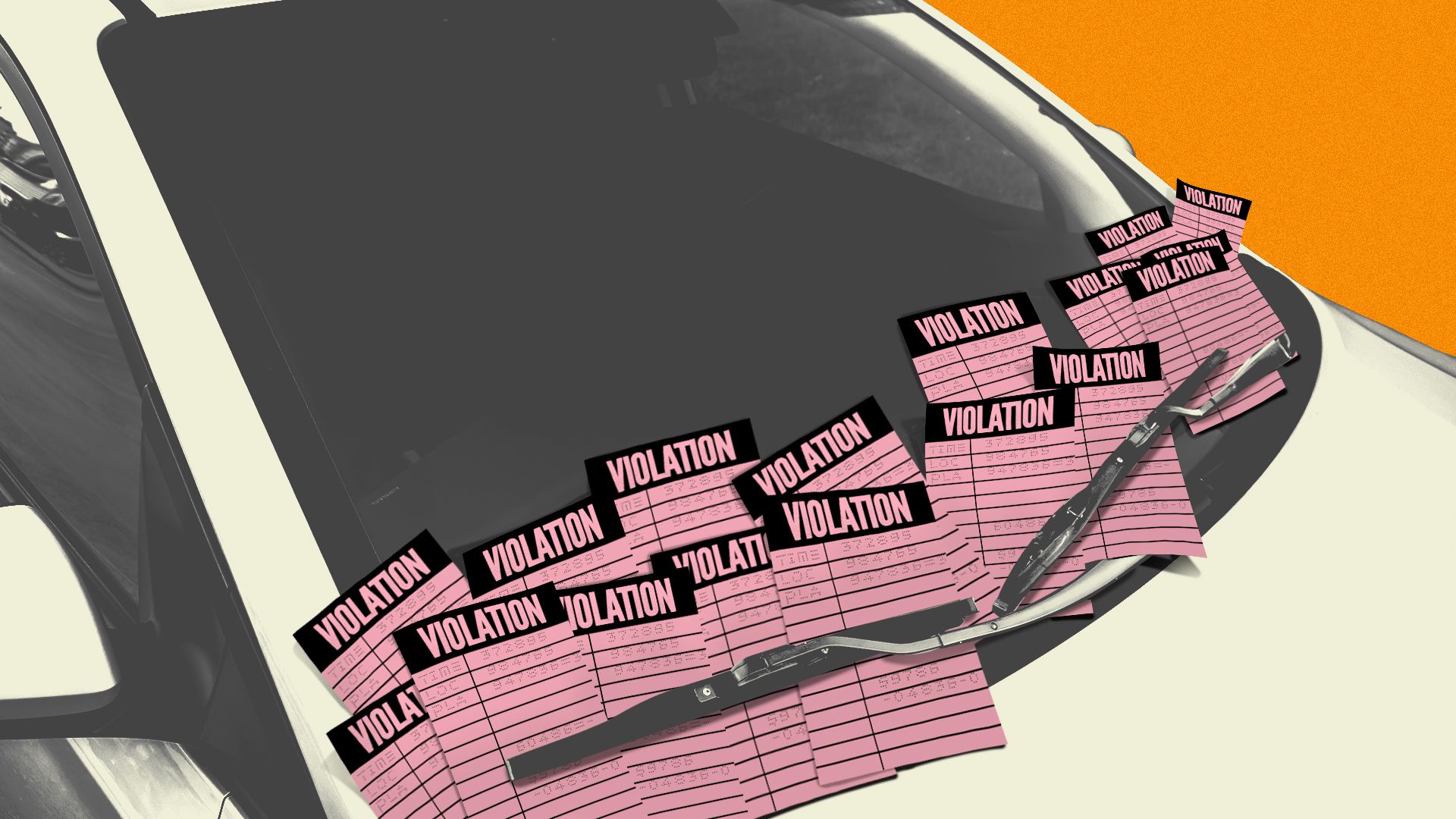
Illustration: Brendan Lynch/Axios
Driverless cars in Austin, like their human-operated counterparts, have earned citations for moving and parking violations, per a review by Axios.
Why it matters: Depending on the type of violation involved, penalizing driverless cars can bring its own challenges, spelling difficulties for local governments trying to catch up in a world increasingly featuring robots.
State of play: Vehicles operated by driverless car companies have gotten 21 parking citations in Austin from November 2024 to the end of this May, per information obtained by Axios from the city.
- Waymo vehicles earned 20 of those citations, chiefly for parking in tow-away zones or failing to pay a meter.
- Zoox, the driverless firm run by Amazon, earned a single citation for a vehicle parked in a tow-away zone in July 2025.
Context: The city issues about 210,000 parking citations annually, Austin officials tell Axios.
How it works: Parking tickets for driverless cars are issued the same way as for any other vehicle, with an officer stuffing a ticket beneath a windshield wiper.
- If anything, "it is more straightforward to issue a parking ticket to an automated vehicle," Brad Cesak, a spokesperson for Austin's Transportation and Public Works Department, tells Axios, since parking tickets are civil fines and associated with a vehicle, not a driver.
Yes, but: Ticketing autonomous vehicles (AVs) for moving violations requires extra steps that don't exist when a human driver is behind the wheel.
- Austin police have issued just six such citations to AVs, according to a spokesperson for the department.
What they're saying: "Unfortunately, we can't simply issue a ticket like an officer can on a human driver, which only takes a few minutes," Austin police officer Lt. William White told city council members in an April meeting.
- In the case of an AV, police must complete a sworn affidavit that describes the violation and submit it to the municipal court.
- "It's more time-consuming and cumbersome for officers to deal with that," White, who serves on the city's autonomous vehicle task force, added.
Put another way, when a driverless car "commits a violation, the citation is issued to the registered owner, which is typically a corporation," Stacy McKenzie, administrative specialist with the Austin Municipal Court tells Axios via email.
- "This creates several challenges, including determining and summoning the appropriate corporate representative, managing appearances through counsel, and addressing the limited mechanisms available to ensure compliance with court orders," McKenzie says.
- Some parking violations, such as parking in a wheelchair accessible spot — which a Waymo vehicle was cited for in Austin — fall into this category as well.
The other side: "Waymo pays valid tickets issued for our vehicles, like any other driver, and we do not expect different treatment with regards to ticketing," Waymo spokesperson Chris Bonelli tells Axios.
Zoom out: Austin isn't alone in grappling with how to enforce traffic and parking laws against AVs.
- In cities across the country, self-driving cars have racked up parking citations that often go unpaid.
- California recently adopted new regulations designed to make it easier for police to issue citations and hold operators accountable.
What's next: City leaders are hopeful rules recently adopted in Texas will give state regulators greater oversight of the rapidly growing industry.
- The new rules require AV operators to obtain authorization from the Texas Department of Motor Vehicles before operating without a human driver.
- However, they don't address citations.