Austin mayor backs license plate readers after shootings

Add Axios as your preferred source to
see more of our stories on Google.
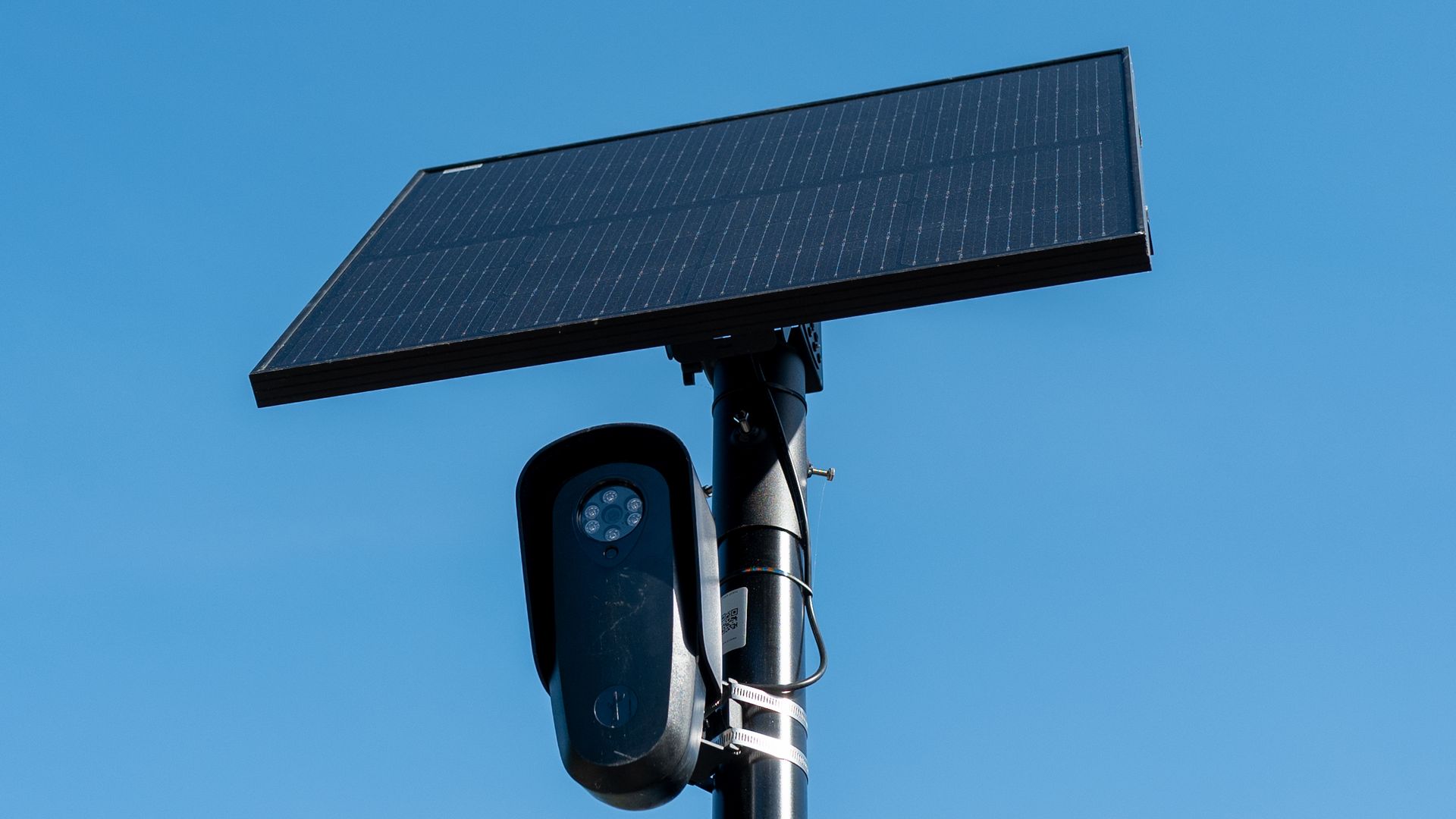
A Flock license plate reader and camera. Photo: Smith Collection/Gado/Getty Images
Mayor Kirk Watson tells Axios the city should move forward with obtaining license plate readers, which police say could have helped more quickly track down three suspects tied to a citywide shooting spree.
Why it matters: The shootings have reignited debate over whether concerns about privacy still outweigh public safety arguments for bringing back the technology.
Catch up quick: Police on Sunday detained three teenage suspects who they say shot four people across 12 crime scenes, prompting a 24-hour search and a shelter-in-place order across South Austin.
State of play: Manor police used license plate reader technology to identify the suspects' stolen vehicle just before 3:30pm Sunday, about 45 minutes after the department received Austin's "be on the lookout" request.
- Two suspects fled on foot after the car was stopped by police. They were detained soon after, while the third person who fled was found later that evening.
- Austin Police chief Lisa Davis said license plate readers "could have helped" investigators more quickly locate the suspects while they were in Austin.
Flashback: Austin ended its contract with Flock Safety, a license plate reader technology provider, last June over privacy concerns.
- Flock's technology allows police to automatically compare scanned license plate data against criminal databases, alerting them to stolen vehicles, Amber Alerts or cars associated with wanted suspects.
- Through the program with Flock, 40 cameras were installed around Austin and eventually over 500 vehicle-mounted cameras were installed on Austin police cars between 2023-2025.
Austin Police Association president Michael Bullock said on X that investigators "lost critical hours" tracking down suspects because council members "chose politics over public safety and prevented APD from using license plate readers and other crime-fighting technology."
What they're saying: Watson tells Axios that the council's February passage of the TRUST Act, which regulates how law enforcement can use surveillance technology, allows the council to move forward with approving license plate readers.
- "We need to give our law enforcement professionals the tools they need to make sure people are safe," Watson says.
- "We must also make sure that as we move forward, we find balance between protecting the privacy of our residents with the need and desire of our residents to feel and be safe."
Between the lines: A KUT investigation in February found that the department had still used the technology in the preceding month — even after the council ended the program — by accessing data from neighboring law enforcement agencies.
- Austin police did not respond to Axios' requests about whether they're still using data from neighboring agencies.
The other side: City Council Member Mike Siegel, who opposes Flock's program, says he remains "open to technologies that don't create new vulnerabilities for our neighbors and constituents."
- "I want to balance our response to make sure that we aren't adopting new technologies that make us less safe, overall. [Automated license plate readers] have been used to track and criminalize undocumented people, people seeking reproductive healthcare, and protestors, and I take those unintended consequences seriously," he tells Axios in a statement.