Austin's independent venues feel the squeeze

Add Axios as your preferred source to
see more of our stories on Google.
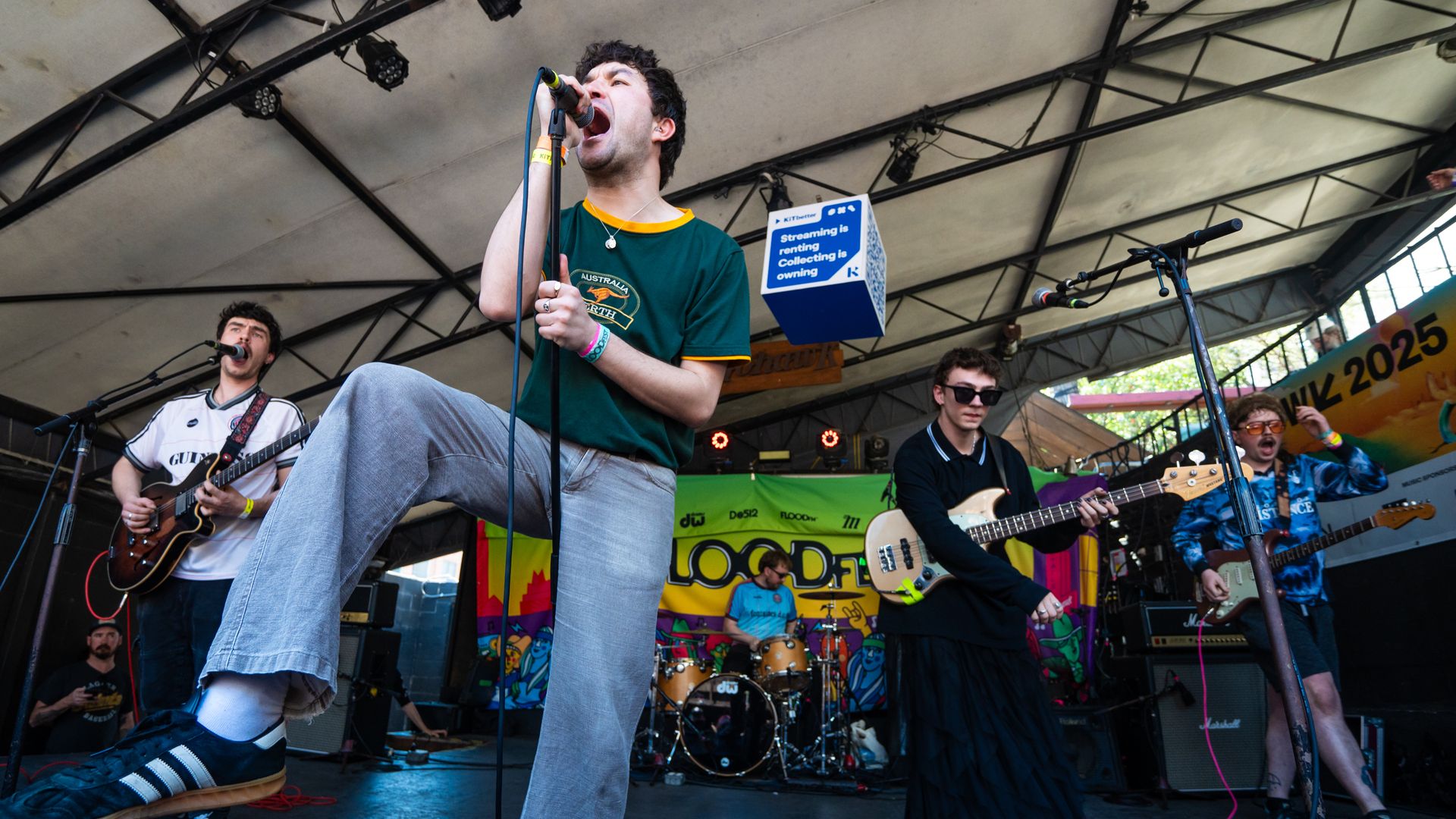
Dan Hoff and Charlie McCarthy of Gurriers perform at Mohawk during SXSW this year. Photo: Lorne Thomson/Redferns via Getty
Austin's independently owned venues anchor its music scene, but rising insurance costs and rents have many operators focused on survival over success.
Why it matters: Independent venues aren't just cultural touchstones that develop artists and support the city's major festivals. They're economic engines that underpin a multibillion-dollar state industry and Austin's tourism economy.
Driving the news: Texas' independent live entertainment industry drives $3.1 billion in state gross domestic product, $5.9 billion in economic output and $186.4 million in tax revenue, per a first-of-its-kind report released by the National Independent Venue Association (NIVA).
- NIVA categorizes independent venues and music festivals as those not owned by a multinational corporation or a publicly traded company. Local estimates weren't included in the report.
Yes, but: 64% of the nation's independent venues were not profitable.
What they're saying: "The infrastructure that independent venues provide for the economic growth and the economic opportunity in this city is greatly understated," Nicole Klepadlo, executive director of Red River Cultural District, tells Axios. The nonprofit works to support and secure funding for businesses in the Red River district.
- If independent venues close, Klepadlo adds: "You're going to feel it, if not in declining numbers, then in the fact that the culture is not there anymore."
Between the lines: Even with their outsized economic and cultural impact, it's a tough time for indie music venues.
- The live music industry is dominated by corporate giants like Live Nation — which owns Stubb's, Emo's, and Scoot Inn — and AEG Presents, which is expected to open a 4,000-capacity venue in southeast Austin.
- Live Nation/C3 Presents helped privately finance Moody Center, Austin's largest music venue, and they operate Moody Amphitheater in Waterloo Park.
The big picture: Coming out of the pandemic — when venues had no revenue for at least a year — operators faced surging insurance costs, rising property values and a lack of long-term leases, according Klepadlo.
- "Venues' revenue model is tickets and bar sales. When you think about just those two sources, it's pretty limited."
Zoom in: At Mohawk, a 1,000-person capacity Red River venue that's been around for nearly two decades, owner James Moody says the margins have never felt tighter.
- Moody isn't related to the Moody Foundation family, the philanthropists whose name is on the Moody Center and other Austin buildings.
- "Since COVID, insurance went through the roof," Moody tells Axios. "It's not like we had an explosion in revenue to make up for the explosion in expenses. ... You'd think after 20 years, you should be working less. That's not the case."
Reality check: Moody doesn't think Live Nation radically reshaped smaller venues like Stubb's. Instead, he sees the company's impact with large venues, like the Moody Center, which helped push Austin's music scene mainstream.
- "It hurts a little bit of our credibility, in that we were always supposed to be the town where you see the big band in the small room," Moody says. "I think we lost a little bit of that by going big."
- But that shift has helped venues like Mohawk in some ways, Moody says: "When you get more industry, more dollars and music lovers ... if bands are on their way up, we catch them in the middle."
What's next: Red River venues are coming up on a slow time of year, and the Red River Cultural District works to bring in music lovers — and their dollars — during the nonprofit's annual free week in January.