"Fire weather" is happening more often


Add Axios as your preferred source to
see more of our stories on Google.
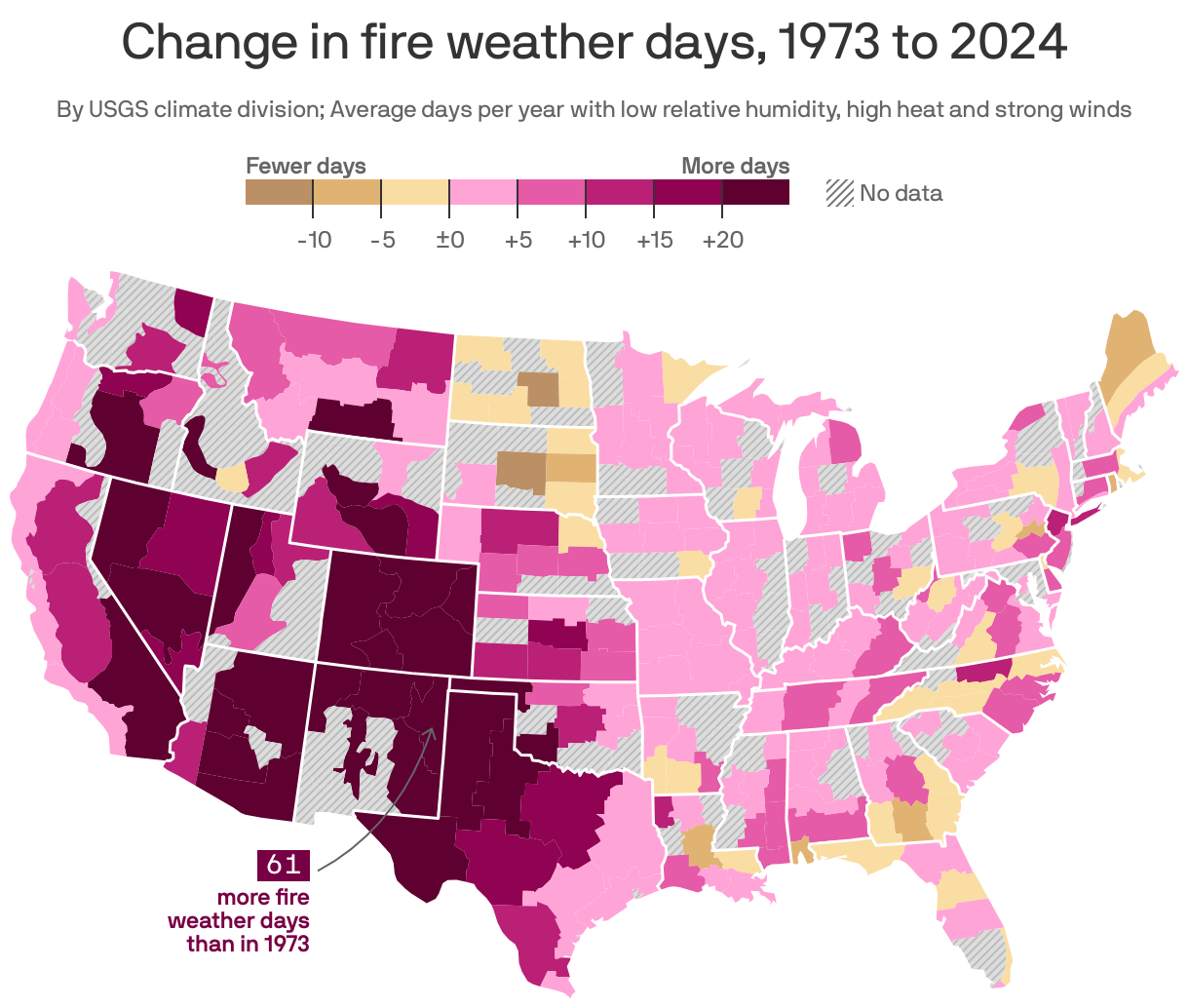
Hot, dry and windy weather that helps wildfires spread is becoming more common across much of the U.S. amid climate change, a new analysis finds.
Why it matters: What used to be several months of "fire season" is stretching in some places into a yearlong phenomenon, straining fire departments and others tasked with controlling or containing wild blazes.
Driving the news: The number of "fire weather" days rose by 37 in the Southwest and 21 in the West on average between 1973 and 2024, per an analysis from Climate Central, a climate research group.
- Some areas, including parts of Texas, now experience "around two more months of fire weather per year compared to a half century ago," the group says.
Yes, but: The number of such days grew by 2 in the Austin area.
How it works: Climate Central's analysis is based on data from 476 nationwide weather stations and is broken down by 245 climate divisions across the continental U.S.
- The group defined a "fire weather day" as one with temperatures of at least 45°-55°F (depending on the season), relative humidity within 5% of regional thresholds, and sustained wind speeds of 15mph or more — all happening together during at least two hourly measurements on a given day.
Stunning stat: Human activities (unattended campfires, sparks from power lines, etc.) start a whopping 87% of wildfires, Climate Central says, citing the National Interagency Fire Center.
- Regardless of how a fire starts, "fire weather" can give it the push it needs to spread and grow.
The intrigue: A 2023 report found that nearly 88% of properties in greater Austin could face higher insurance premiums or policy non-renewals due to the risk of wildfires, high winds and other extreme weather events.
The big picture: Extreme wildfire events more than doubled in frequency and magnitude globally over the past two decades, a recent study found.
The bottom line: "An early onset of summer-like heat and dryness is quickly exposing Texas to growing season fire activity," per the latest weekly Texas Fire Potential Update from the Texas A&M Forest Service.