The link between sprawl and cheaper housing


Add Axios as your preferred source to
see more of our stories on Google.
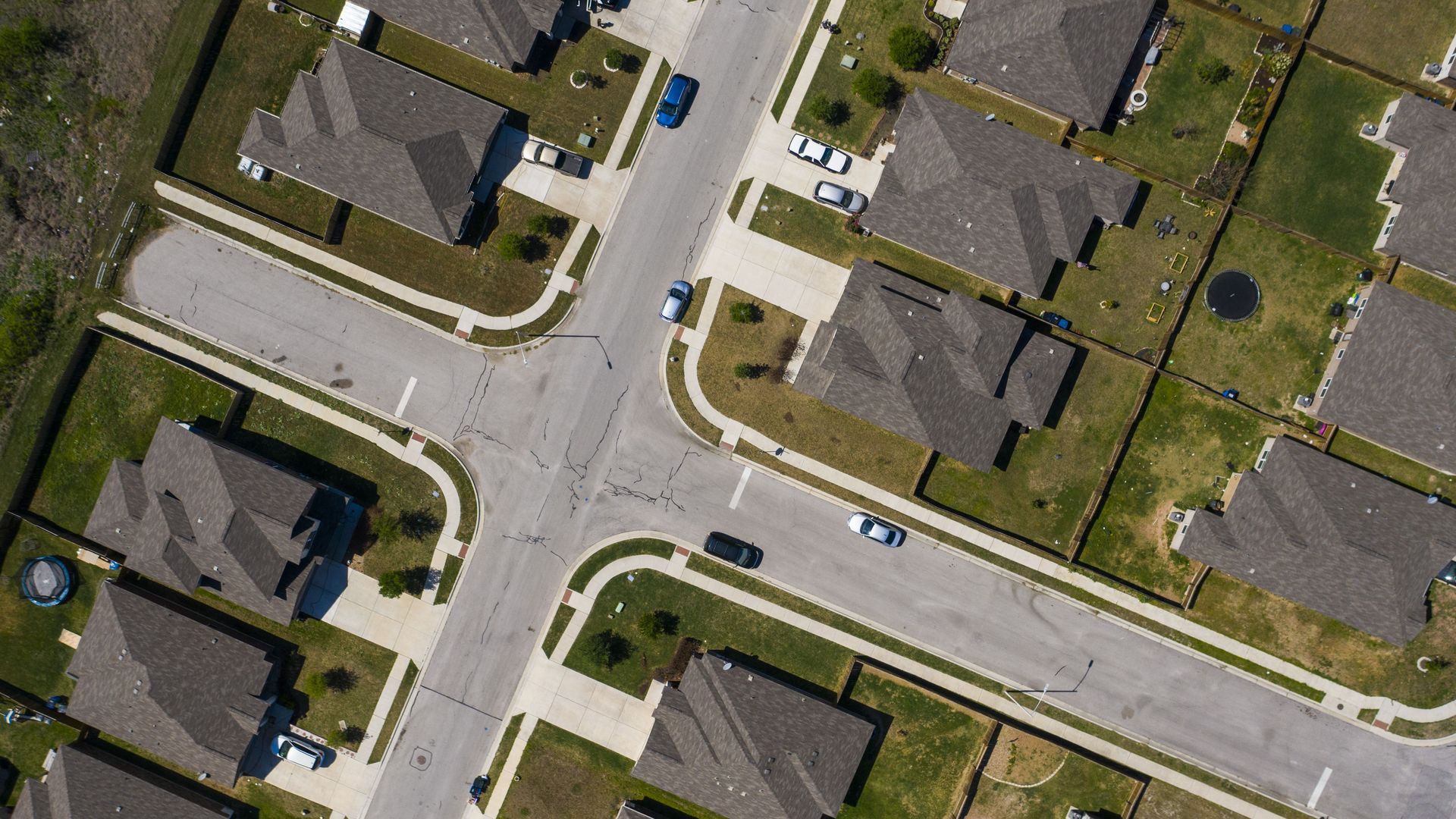
Aerial view of a neighborhood outside Austin. Photo: Joe Sohm/Visions of America/Universal Images Group via Getty
Greater Austin housing could be even more expensive if not for new development in the sprawling suburbs, according to a new George W. Bush Institute report.
Why it matters: People want to move to Texas and specifically to the Austin area.
- Texas, which leads the nation in residential construction, is still short at least 300,000 units.
What they did: Economists with the nonpartisan independent policy institute at Southern Methodist University analyzed population, income and real estate data from the 250 largest metro areas since 2010 to determine how cities are meeting the demand for housing.
- The report focuses on the country's fastest-growing cities.
What they found: The 25 fastest-growing Sun Belt cities — including Austin and other major Texas metros — accounted for 42% of single-family houses and 36% of apartments built in the last 15 years.
The latest: Austin and other Sun Belt metro areas offer more affordable houses and apartments than equally in-demand coastal cities, like San Francisco, because they have less-restrictive housing policies, per the report.
- By staying ahead of the population growth, Sun Belt cities have kept housing prices and rents about 10% cheaper than they otherwise would be, the report estimates.
- Yes, but: Many coastal cities don't have as much open space to build on compared to Sun Belt cities.
Zoom in: Housing stock grew 57% in Austin from 2010 to 2023, per the report.
What they're saying: "In a handful of metros — notably Austin — a surge in apartment production over the last couple years has brought rents and home prices down by more than 10% from their peak, demonstrating that housing growth works for delivering greater affordability," J.H. Cullum Clark, director of the Bush Institute-SMU Economic Growth Initiative, wrote in the report.
- The emergence of 3D-printed homes and new policies that allow for home construction on smaller lots make Austin a leader in construction, the report notes.
Stunning stat: If every large U.S. metro had similar housing policies to greater Austin and other Sun Belt regions, about 5.6 million additional homes would have been built nationwide from 2010 to 2023.
- The average home price could be $115,000 lower and monthly rents could be $450 cheaper if the biggest metros added housing at a rate consistent with Sun Belt cities, the study found.
The other side: Austin environmentalists have long sought to tame sprawl.
- They blame the rash of cars and homes for drawing down and polluting waterways and jeopardizing endangered species' habitats.
- Plus, sprawl leads to bigger highways, a cost then borne by all Texans.
- The city of Austin has spent hundreds of millions of dollars buying up land or conservation easements outside its boundaries to protect water quality within them.
Affordability issues in central Austin have pushed many middle-class families to the suburbs.
Worth mentioning: Clark tells Axios that homebuilders and developers did not fund the report.
- "The Bush Institute, a nonprofit institution with a very wide variety of donors, has periodically received donations from individuals in the industry, but none played any role in the report or in any way influenced our conclusions," Clark says.