What to know about Austin's HOA fees

Add Axios as your preferred source to
see more of our stories on Google.
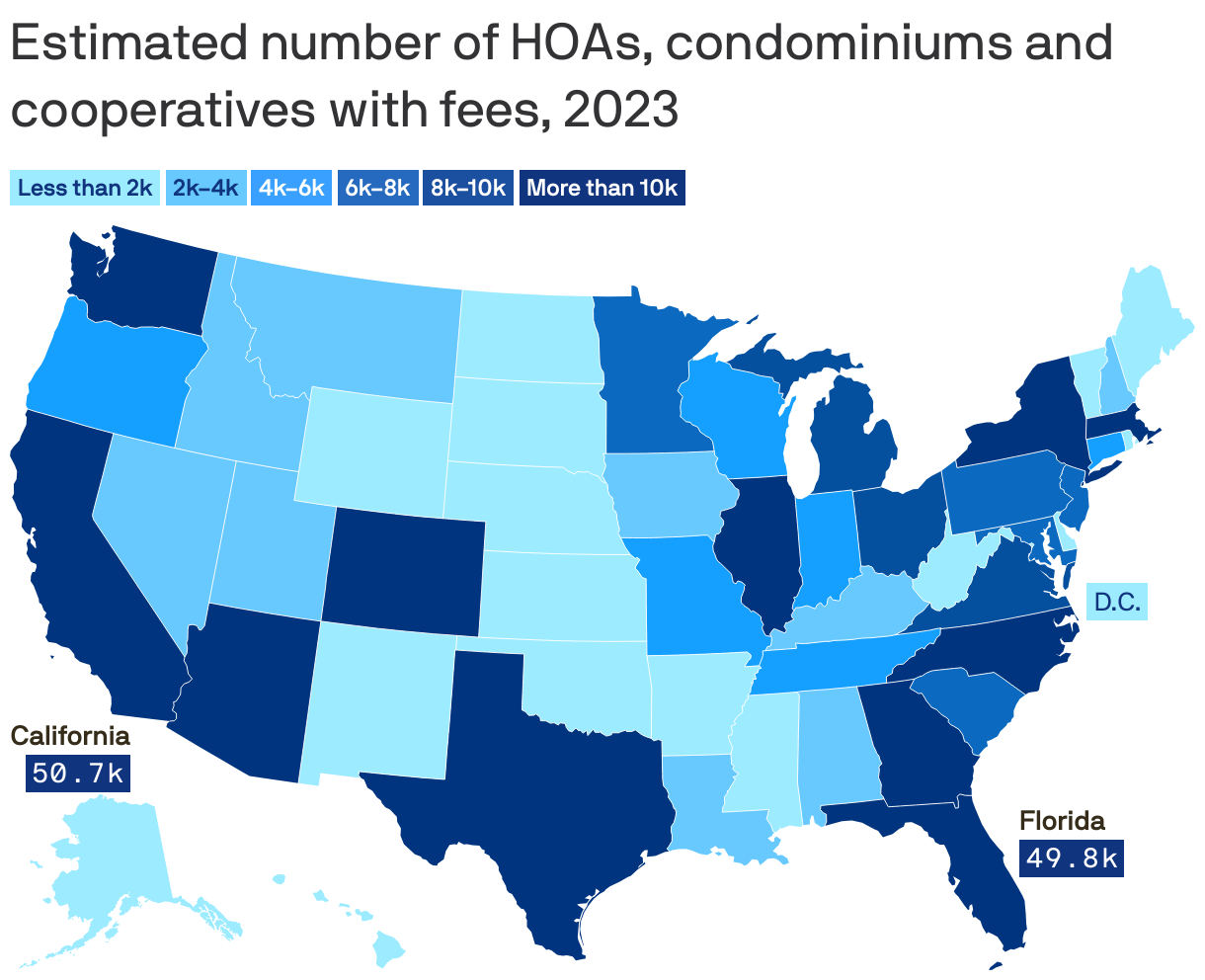
With roughly 23,300 housing communities in Texas, many home shoppers need to factor in homeowners association fees as part of their purchase price.
Why it matters: HOA dues can cost hundreds or, in some cases, thousands more on top of monthly mortgage payments — creating another barrier for prospective homebuyers.
By the numbers: One-third of owner-occupied homes in Texas were part of a homeowners association as of 2021, per the latest data available from the Foundation for Community Association Research.
- Texas associations collected nearly $8 billion in assessments annually as of 2021.
Between the lines: HOA fees cover maintenance and amenities like pools and gyms, among other things, keeping the community running.
Be smart: Condo buyers should pay close attention to the building's age, condition, location and finances, Clare Trapasso of Realtor.com tells Axios.
- "If they're buying [in] an older building that doesn't have much in its reserve fund to pay for emergencies, and the building floods frequently or the elevator gives out, then each individual condo owner may see their monthly HOA fees go up," says Trapasso, the company's executive news editor.
What's next: If your dues change, the association board should report that in the community newsletter, website, notices or meetings, says Thomas M. Skiba, CEO of the Community Associations Institute.
- Typically, condo fees don't go down, unless a special assessment — extra fees charged under unforeseen circumstances — ends or the building gets an influx of cash, Trapasso says.
📬 Tell us: What strict HOA rules have you dealt with? Hit reply to this email.