Austin firm wins $55 million autonomous vessel funding

Add Axios as your preferred source to
see more of our stories on Google.
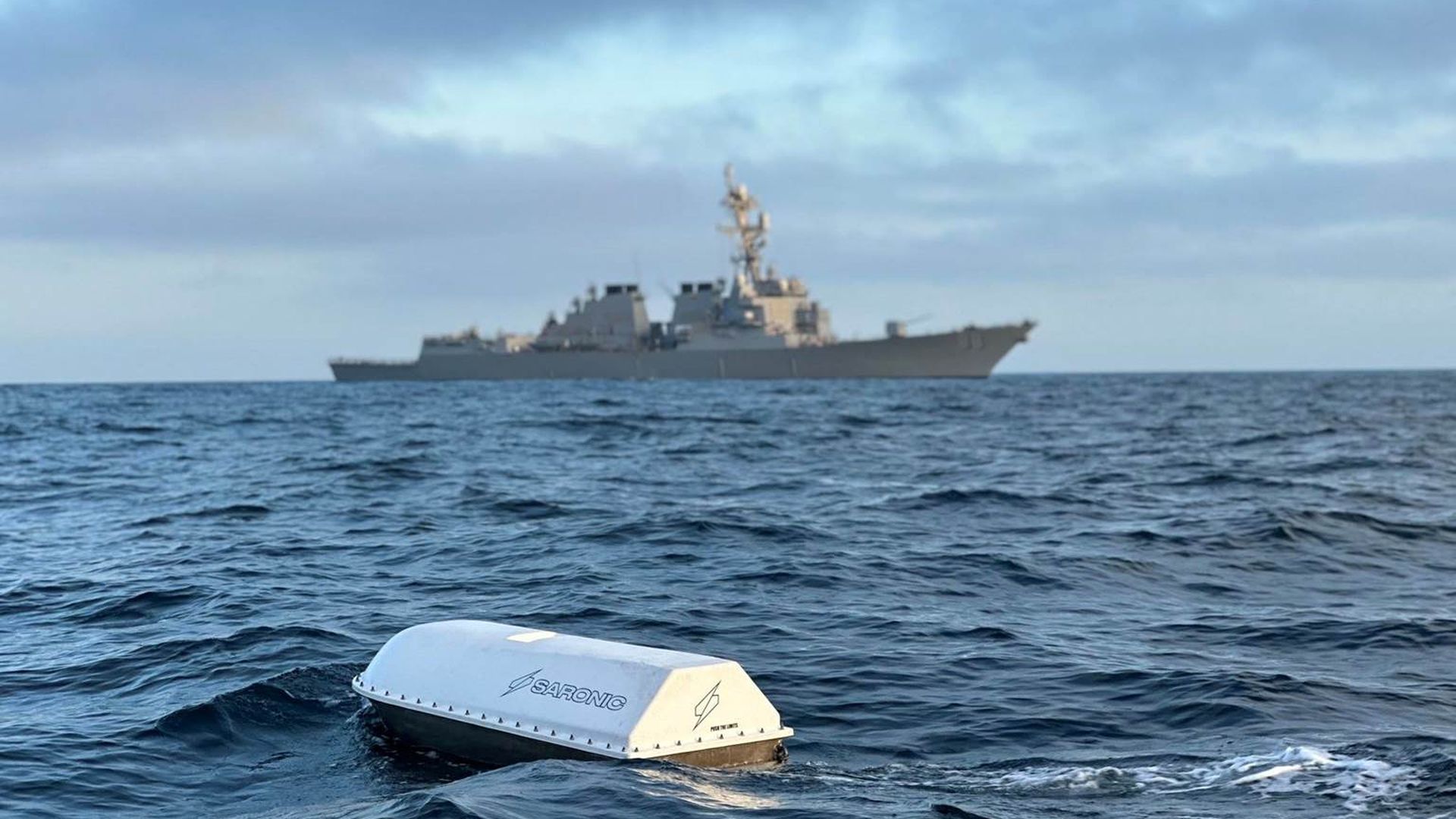
A prototype Saronic Spyglass vessel undertakes a mission in its first open water exercise with the US Navy, in the Pacific earlier this year. Photo courtesy Saronic
An Austin defense technology firm is getting a chunk of cash to boost its robotic ship business.
Driving the news: Austin-based maritime company Saronic announced Tuesday a $55 million round of funding led by California-based Caffeinated Capital for research, development and manufacture of ocean-going drones.
Why it matters: The investment gives Austin a toehold in the development of a fast-growing technology.
- The global autonomous ship market is projected to nearly double in size to $9.87 billion by 2030, per Fortune Business Insights.
What's happening: The company, formed just over a year ago, is currently developing Spyglass, a 6-foot vessel, and Cutlass, a 13-foot vessel, capable of carrying payloads in "communication-denied and GPS-denied environments," per the company.
What they're saying: "Think of them as drone boats for the Navy to enable target identification and intelligence gathering," Dino Mavrookas, Saronic co-founder and CEO, tells Axios.
- "America's conventional shipbuilding ecosystem lacks the agility to match the threats posed by our adversaries," Mavrookas says.
- The company has already built 10 of the Spyglass vessels at its facilities at The Yard, near the intersection of South Congress and St. Elmo.
Of note: Other investors in Saronic include 8VC, helmed by prominent Austin Republican political contributor Joe Lonsdale.
- Other investors include the firms Andreessen Horowitz, Lightspeed Venture Partners, Point72 Ventures, Silent Ventures, Overmatch Ventures, Ensemble VC, Cubit Capital, and the U.S. Innovative Technology Fund.
The big picture: The U.S. Navy is expanding its drone fleet as part of an arms race with China, which has unveiled robotic ships of its own.
- At stake is dominance of increasingly contentious waters in the Pacific.
By the numbers: The Navy is already invested in robotic boats, and requested more than $500 million for unmanned vehicle research and development in fiscal year 2024.
- Four U.S. unmanned ships are now operating out of Japan, Defense News reported in September.
- And Austal USA announced in February that it had delivered to the Navy the 337-foot Apalachicola, which can operate for up to 30 days without sailors.
Yes, but: The battle over the ethics of unmanned warfare has raged for years — and some national security insiders have warned about unexpected costs of earlier efforts involving unmanned vessels.
- "Fewer sailors meant fewer problems spotted, and less capacity to fix them while underway," per a 2021 article in Texas National Security Review.
The bottom line: Congress has previously balked at the cost of the autonomous vessels, declining some appropriations requests for unmanned vehicles — but lawmakers appear increasingly receptive to Navy requests as conflict escalates on the Pacific rim.