More Iowa men are skipping college

Add Axios as your preferred source to
see more of our stories on Google.
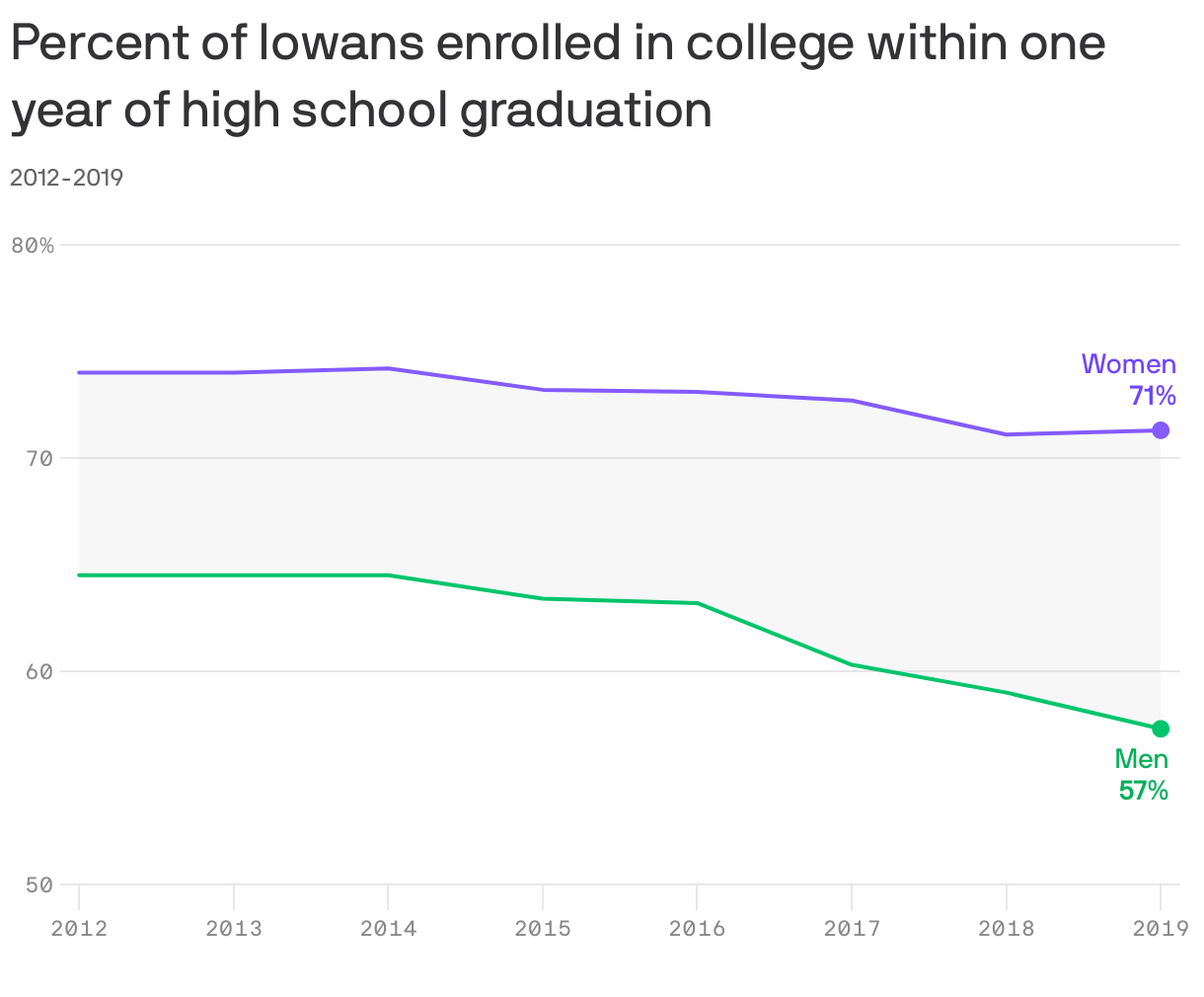
Iowa men have historically enrolled in college at lower rates than women, but the education gap is widening, state data shows.
Why it matters: Men who choose to not pursue a college degree could face career and wage stagnation in the future, according to Iowa College Aid.
- Some studies show that obtaining a higher education leads to healthier and longer lives.
By the numbers: The number of male Iowa high school graduates who immediately enrolled in college dropped 7 percentage points between 2012 and 2019 (64.5% to 57.3%), according to Iowa Postsecondary Readiness Reports.
- The number of women who immediately enrolled after graduating high school dropped by only 3 percentage points — 74% in 2012 vs. 71.3% in 2019.
Filings for the 2020-21 Free Application for Federal Student Aid, aka FAFSA, suggest the gap continued in the pandemic.
- 41% of Iowa men filed for FAFSA for that school year, in comparison to 57% of women. Student aid is often an early indicator of whether someone intends to attend college.
The big picture: Enrollment in undergraduate and graduate programs has been trending downward nationwide for nearly 10 years, according to National Student Clearinghouse Research Center data.
- And college enrollment saw dramatic declines during the pandemic.
What they're saying: Men are more likely recruited to work right out of high school, especially in agricultural or trade jobs, said Meghan Oster of Iowa College Aid.
- While men may work in a trade and earn $40,000-$50,000 right out of high school, those salaries stagnate for workers without degrees, Oster said.
Between the lines: Studies have shown mentoring is a helpful push for men considering college, but those relationships suffered due to the pandemic.
- Plus, there are heightened concerns about college debt, particularly for low-income men and among Black and Latino communities.