Saturday's health stories

Axios Live: Health care affordability emerges as a defining issue
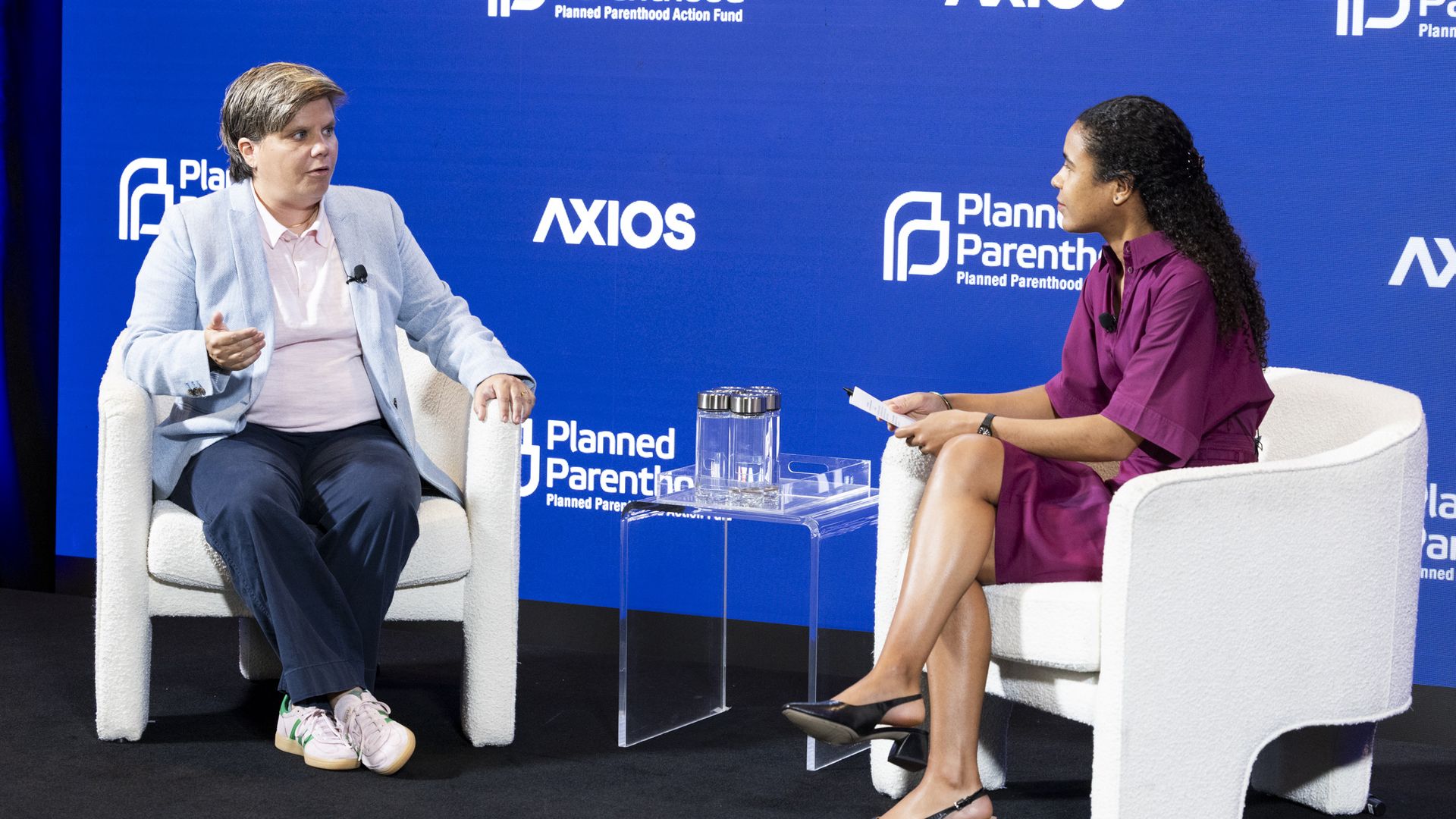
WASHINGTON, D.C. — Concerns about health care costs are motivating voters across the ideological spectrum, lawmakers and policy experts said at a June 24 Axios Live event.
Why it matters: As midterm elections loom, an Axios-Ipsos poll found that a plurality of Americans are more likely to vote for a candidate who prioritizes lowering health costs.
Axios' Brittany Gibson and Erica Pandey moderated conversations with Rep. Sydney Kamlager-Dove (D-Calif.), KFF survey methodology director Ashley Kirzinger and Sen. Ron Wyden (D-Ore.). The program was sponsored by the Planned Parenthood Action Fund.
By the numbers: "Two-thirds of Americans say health costs are their top worry," according to a KFF survey cited by Kirzinger.
- "55% say that their health costs now are more expensive than they were a year ago, and 80% are worried about the cost of living," she added.
What they're saying: Health care affordability is "intrinsically tied to the economy," Kirzinger said.
- "When folks are thinking about health care, they're also saying to themselves, 'Can I afford to get sick? Am I having to make decisions about getting to work?" Kamlager-Dove said.
- "We've had 6 out of 13 LA County clinics close because of loss of revenue," she added. "We are hearing from four or so hospitals that are possibly considering closure."
- "Let's get rid of the red tape that the Republicans are pouring into" the health system, Wyden said. "That's the way to make care a little bit more affordable right now."
What's next: Wyden and 14 Democratic co-sponsors introduced legislation this week to limit the amount seniors pay for Medicare.
Content from the sponsor's segment:
"Defunding health care is deeply unpopular," said Alexis McGill Johnson, Planned Parenthood Action Fund's president and CEO, in a View From the Top conversation. And Americans are "choosing between filling their prescriptions, getting an IUD or making rent. These choices are going to be front and center in the voting booth."
Axios Live: "Health care costs are scaring people," Rep. Dingell says

Washington, D.C. — Americans are not just thinking about the high prices of health care — they're afraid of them, said Rep. Debbie Dingell (D-Mich.) at an Axios event.
Why it matters: Collective investment in preventive care could save lives and reduce costs.
Axios' Kate Santaliz and Brock Turner moderated conversations with Dingell and Lexi Branson, vice president of health policy at the U.S. Chamber of Commerce. The June 23 program was sponsored by Boehringer Ingelheim.
State of play: Changes the GOP-led Congress made to the Affordable Care Act and Medicaid are beginning to take effect, increasing the number of Americans without health insurance.
What they're saying: "The cost of everything is [the] number one issue on most people's minds," Dingell said.
- "It is a crisis in this country that," because of funding cuts, "we are going to lose a generation of researchers," Dingell said.
- Health care is a "retention tool" for employers, Branson said. "They use it for competitiveness … and when we're talking about prevention, these employers have a real responsibility and a very unique opportunity to really make a difference."
Threat level: "People are … not going to the doctor" because they're afraid of the bill, Dingell added, "putting it off and showing up at the emergency rooms when they're far sicker."
What's next: "Anything that focuses more on prevention is a great opportunity," said Branson.
Content from the sponsor's segment:
In a View From the Top conversation where she was joined by American Diabetes Association director of primary care Jessica Pius-Nwagwu, National Kidney Foundation vice president of health policy Miriam Godwin said that when undiagnosed and untreated patients die, it showcases the "millions of missed opportunities to save lives [and] to do better for the federal financing of our health care system."

Three finalists emerge to lead FDA

White House aide Heidi Overton, oncologist Jeffrey Vacirca and senior Pentagon health official Stephen Ferrara are all in the running to be the next FDA commissioner, sources tell Axios.
Why it matters: The agency is moving to repair its relationship with industry and rehire critical staff since the departure of former commissioner Marty Makary. But a full-time political leader will ultimately decide the agency's direction.
Medical breakthroughs collide with the health system

Some of the most leading-edge medical breakthroughs are moving faster than the health care system can absorb, panelist after panelist said at the Aspen Ideas: Health conference this week.
Why it matters: The buzziest advances — like personalized gene therapies or AI-discovered drugs — aren't going to deliver on their potential if regulatory structures or the commercial sector can't enable them.