Tuesday's health stories

Pandemic prep concerns hang over WHO meeting
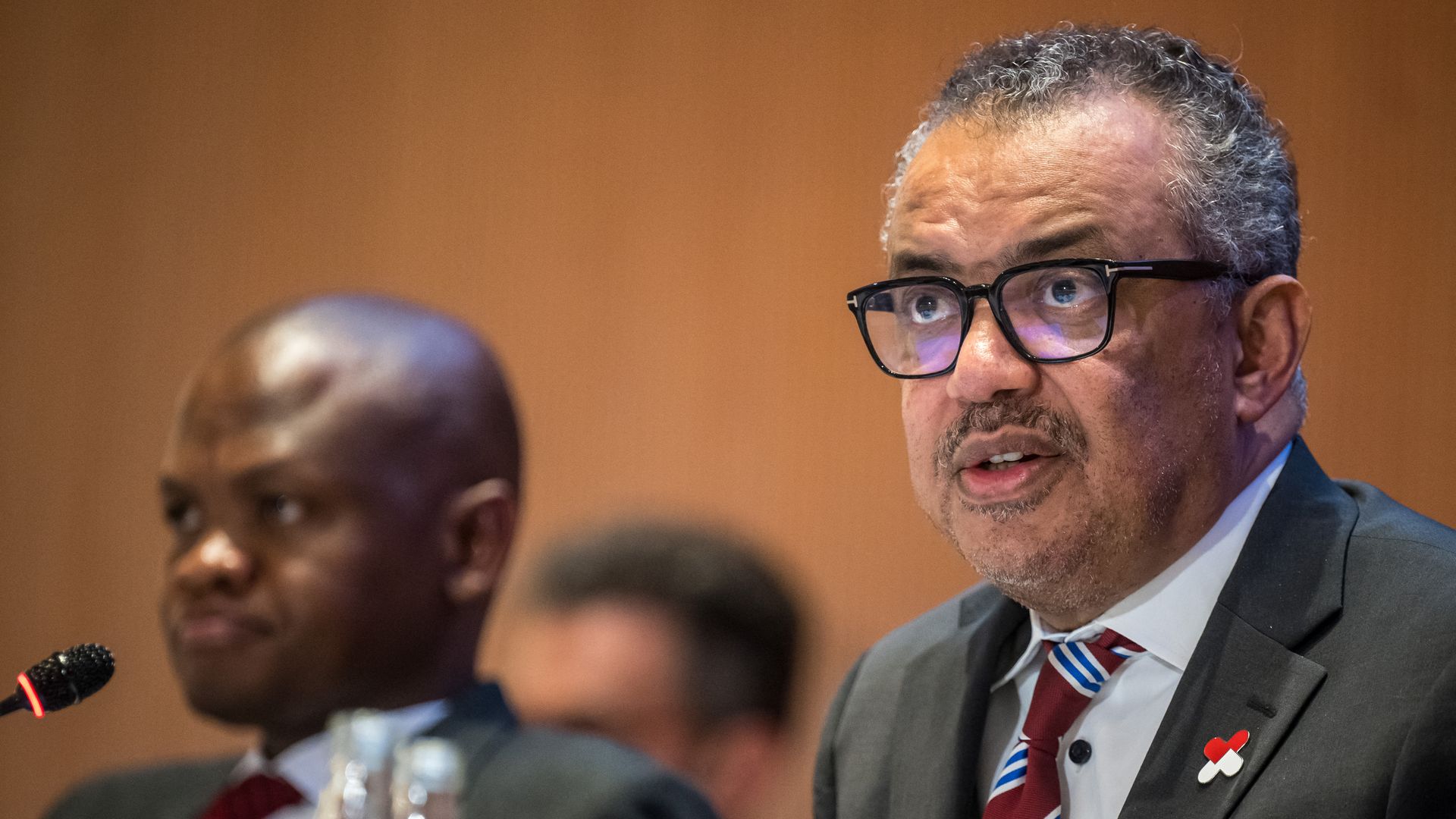
After negotiations on a pandemic treaty stalled, concerns about how the globe deals with the next big viral threat will linger over the World Health Assembly that opened on Monday.
The big picture: Two years of talks about how countries could better cooperate on future pandemics failed to produce a draft treaty in time for the World Health Organization's annual meeting.
- "It's now for this World Health Assembly to decide what that way is — meaning the solution is in your hands," said WHO Director-General Tedros Adhanom Ghebreyesus, per the Associated Press.
- The WHO could grant treaty negotiators more time, experts told NPR, and Tedros expressed confidence a pact could still be reached.
State of play: Treaty talks were sparked by the inequitable rollout of COVID-19 vaccines and treatments to poorer countries.
- But negotiators were hung up over requirements for countries to quickly share genetic sequence data and pathogen samples, as well as how much vaccine and treatments rich countries would have to share with poorer countries.
- Countries in the next week could also take more immediate steps to improve pandemic preparedness by agreeing to changes to the International Health Regulations, which dictate how countries respond to outbreaks.

Pfizer's Paxlovid reward
Pfizer has received a priority review voucher from the FDA for its oral COVID-19 treatment Paxlovid.
Why it matters: The drugmaker on Friday was rewarded under a program meant to incentivize the development of medical countermeasures during public health emergencies.
- Drugmakers could use the voucher to speed up FDA review for another product. They could also sell the voucher to another company hoping to fast-track a drug to market, often netting tens of millions of dollars or more.
Zoom out: Similar vouchers were already awarded to Gilead for COVID treatment remdesivir and to Moderna and BioNTech for their vaccines.
- The few studies that have examined such voucher programs found they had little effect on drug development, though drugmakers who won vouchers said they were a factor in development decisions, a GAO review found.

America's doctors need more obesity medicine training

The relatively small number of health care providers trained in obesity care can hardly keep up with Americans' demand for new weight-loss drugs.
Why it matters: Tens of thousands of U.S. patients each week are starting on treatments like Novo Nordisk's Ozempic and Wegovy, but obesity medicine specialists worry there are still too few providers with enough specialized training to help patients who likely have to remain on the drugs long term.