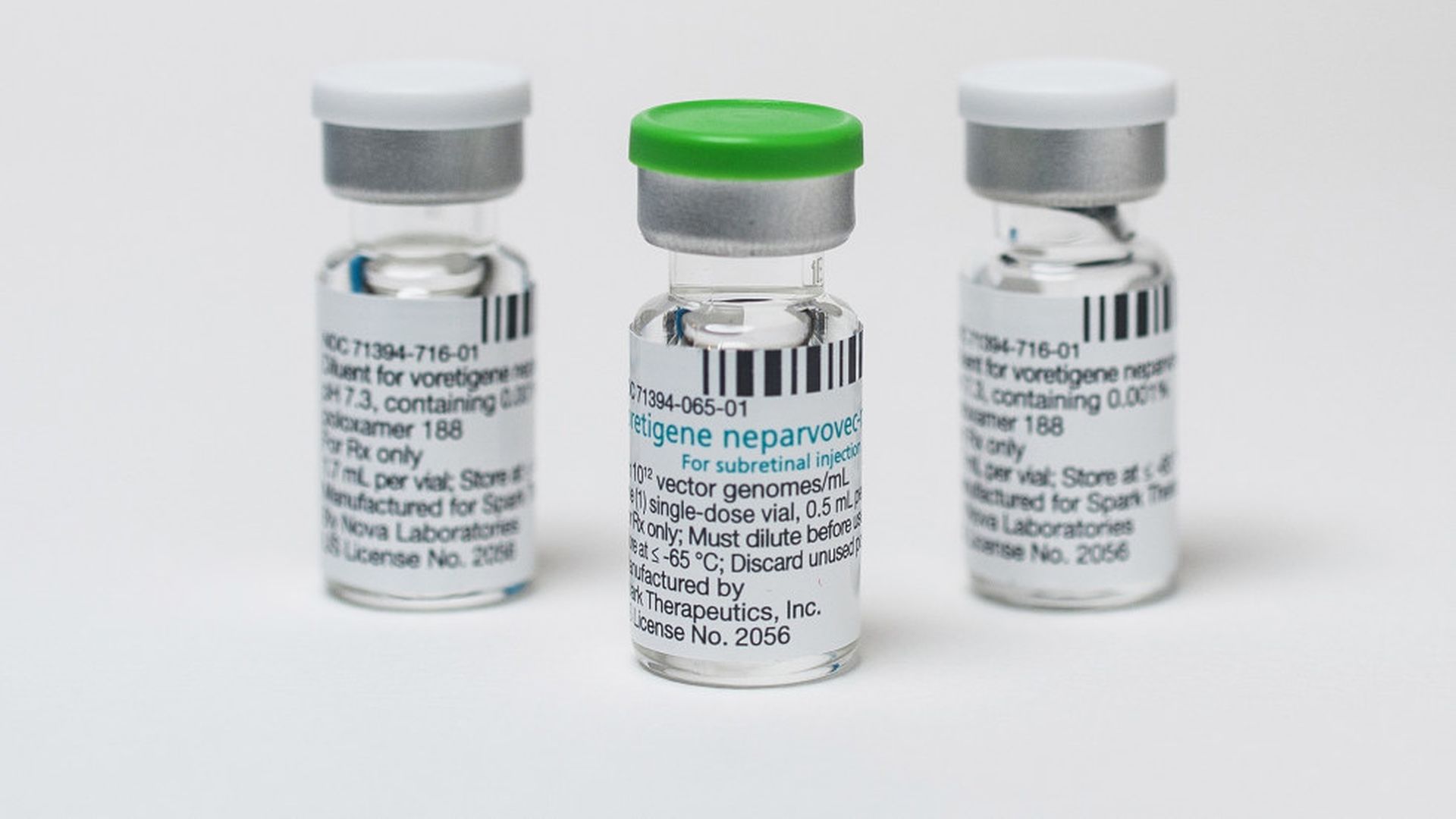
Spark Therapeutics is charging $850,000 for its recently approved gene therapy drug, Luxturna, which treats a rare eye condition that leads to blindness. The actual price will be lower after Spark negotiates discounts with health insurers, but uninsured patients and people with high deductibles and coinsurance rates pay based on the list price.
Why it matters: Luxturna is now the most expensive drug on the market, although many other rare-disease drugs also cost more than $500,000.
A handful of drug companies rang in 2018 with price hikes that easily surpass inflation but stay conspicuously below double digits. Investment banks Jefferies and Cowen highlighted some of the big ones (listed below the fold).
Get smart:Our reporting might sound like a broken record, but it's the truth: Despite public outcry, the pharmaceutical industry has no incentive to change its drug pricing tactics.
Stock prices for the country's largest health insurance companies soared well above the rest of the stock market in 2017.
Between the lines: Even though the failed attempts to repeal and replace the Affordable Care Act created uncertainty and distractions, the health insurance industry still reaped record profits as it benefited from people using less expensive health care settings.
Data: Yahoo Finance; Chart: Andrew Witherspoon / Axios
2018 is going to be a long year, and probably a hard one to keep up with in the ever-evolving world of health care.
Let's take a step back from the minute-by-minute onslaught and take stock more broadly of the big, overarching trends that will animate this year in health policy.