Thursday's health stories

Trump strategy working: ACA enrollment falling
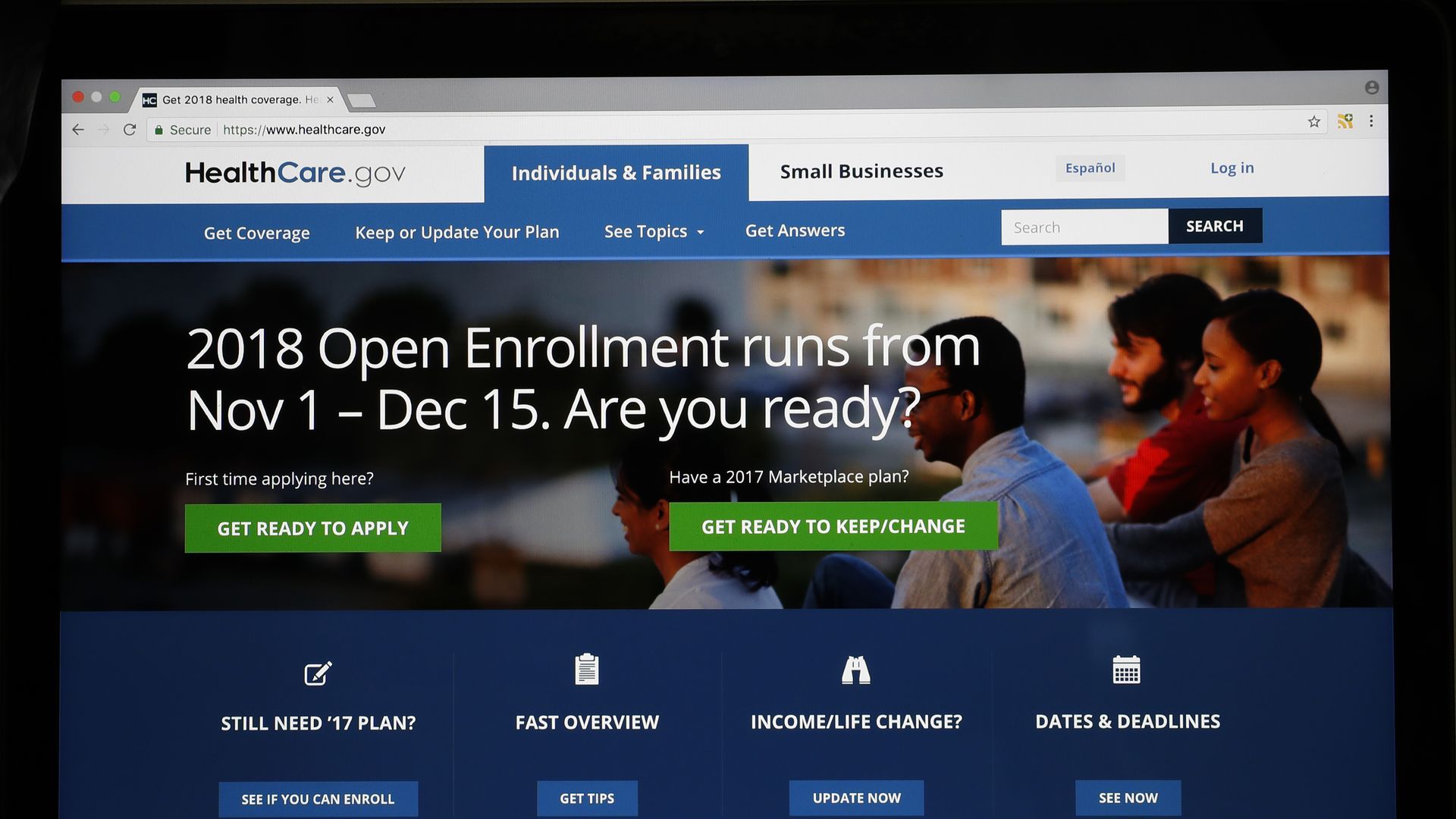
At the end of last week, with 13 days left to go in open enrollment, roughly 3.6 million people had signed up for coverage through HealthCare.gov. About 5.6 million more would need to sign up by Dec. 15 to match last year's enrollment totals. That is almost certainly not going to happen.
Quick take: Of course, Trump's cuts to enrollment outreach are also a major factor here.


Note: Data includes partial weeks. The 2018 open enrollment window is Nov. 1 to Dec. 15, 2017. The 2017 window was Nov. 1, 2016 to Jan. 31, 2017; Data: Artificial Intelligence Index; Chart: Chris Canipe / Axios

Hospitals are making a fortune on Wall Street
The nation's largest not-for-profit hospital systems reaped more than $21 billion last year from their Wall Street investments, mergers and other investment options, according to an Axios analysis of financial documents.
Why it matters: Hospitals say they're having trouble staying afloat because insurance programs, namely Medicare and Medicaid, aren't paying them enough. But while their margins on patient care are slim, they've more than made up for it on Wall Street.


Spending on health care slows, but still outpaces GDP
The U.S. spent $3.34 trillion on health care in 2016 — a 4.3% increase from 2015 and an amount that almost equals Germany's entire economy, according to new data from the Centers for Medicare & Medicaid Services. That spending growth is slightly lower than what CMS initially predicted in February, and it's a lower growth rate than 2014 and 2015.
Yes, but: Even a slower 4.3% uptick in health care spending greatly outpaced the 2.8% growth of the broader U.S. economy. Health care continues to absorb a greater share of the overall economy, which eats into other areas like education and infrastructure.


More opioid patients are dying in the hospital
We're getting better at keeping hospital patients alive — unless they're in the hospital because of opioids. A study published in the new issue of Health Affairs finds that mortality rates for opioid patients quadrupled between 2000 and 2014. The hospital mortality rate for other drugs stayed about the same, while survival rates for all other hospitalizations improved over the same period.


Between the lines: Patients admitted for opioid/heroin poisoning were more likely to be: white, ages 50–64, Medicare beneficiaries with disabilities, and residents of lower-income areas.