Friday's energy & climate stories

Blizzard warning issued in Hawaii
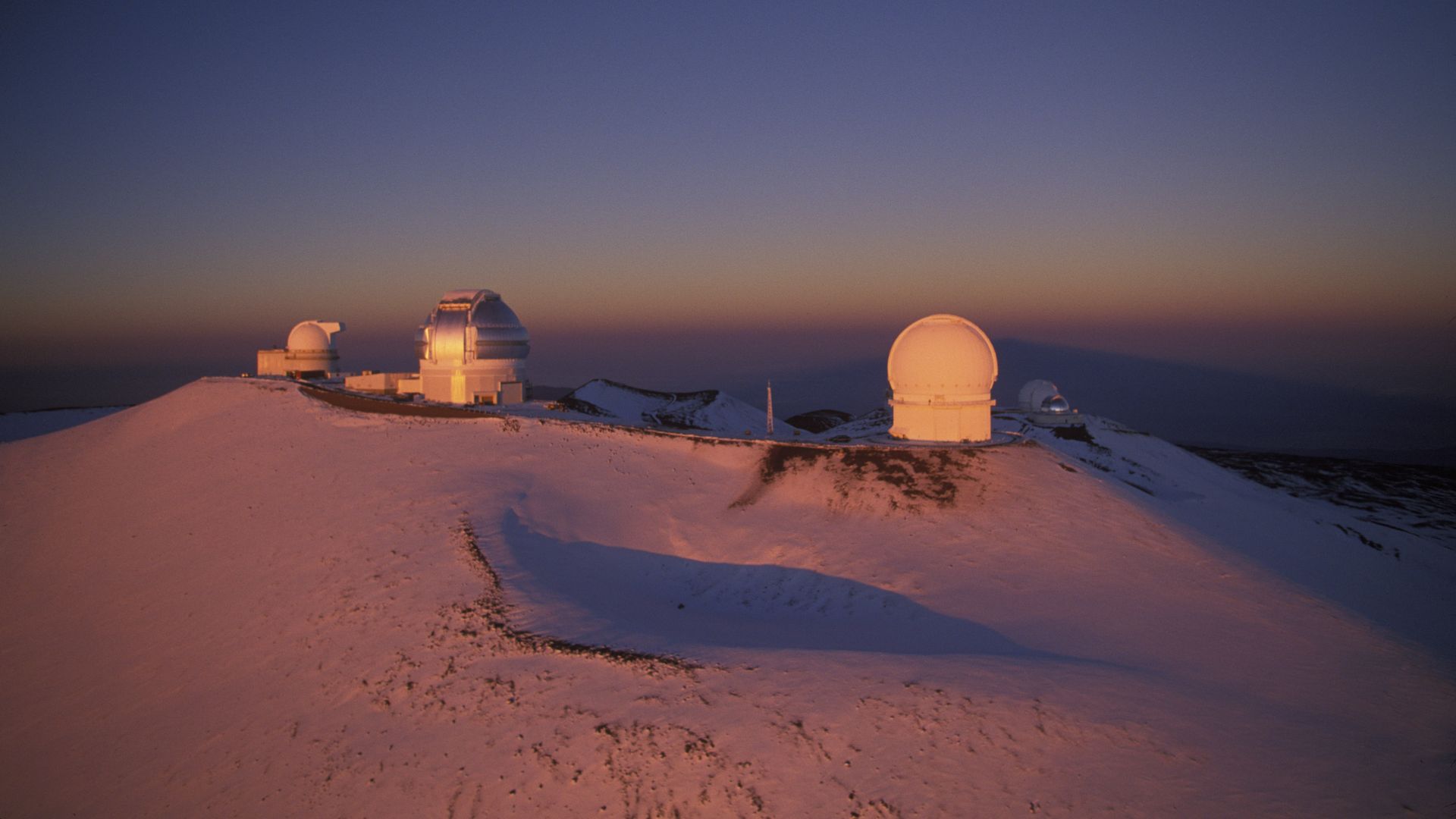
The National Weather Service issued a rare blizzard warning for the Big Island Summits in Hawaii on Friday.
Driving the news: There are no other winter storm warnings or blizzard warnings in the continental U.S at the moment.

OPEC in the age of Omicron

The OPEC+ decision to forge ahead with output hikes next month can't be untethered from U.S. politics or uncertainty about the Omicron variant.
Catch up fast: OPEC, Russia and allied producers met virtually Thursday and stuck with plans to increase production by 400,000 barrels per day in January.

Hedging against extreme weather events
Your home or business insurance could soon come with innovative options for extreme weather thanks in part to platforms developed by climate risk management companies like The Demex Group.
Driving the news: The company uses a combination of meteorological know-how, risk analysis, software development and relationships with insurers to help distribute the monetary risk that extreme weather events pose.
Early winter heat shatters records in U.S., Canada
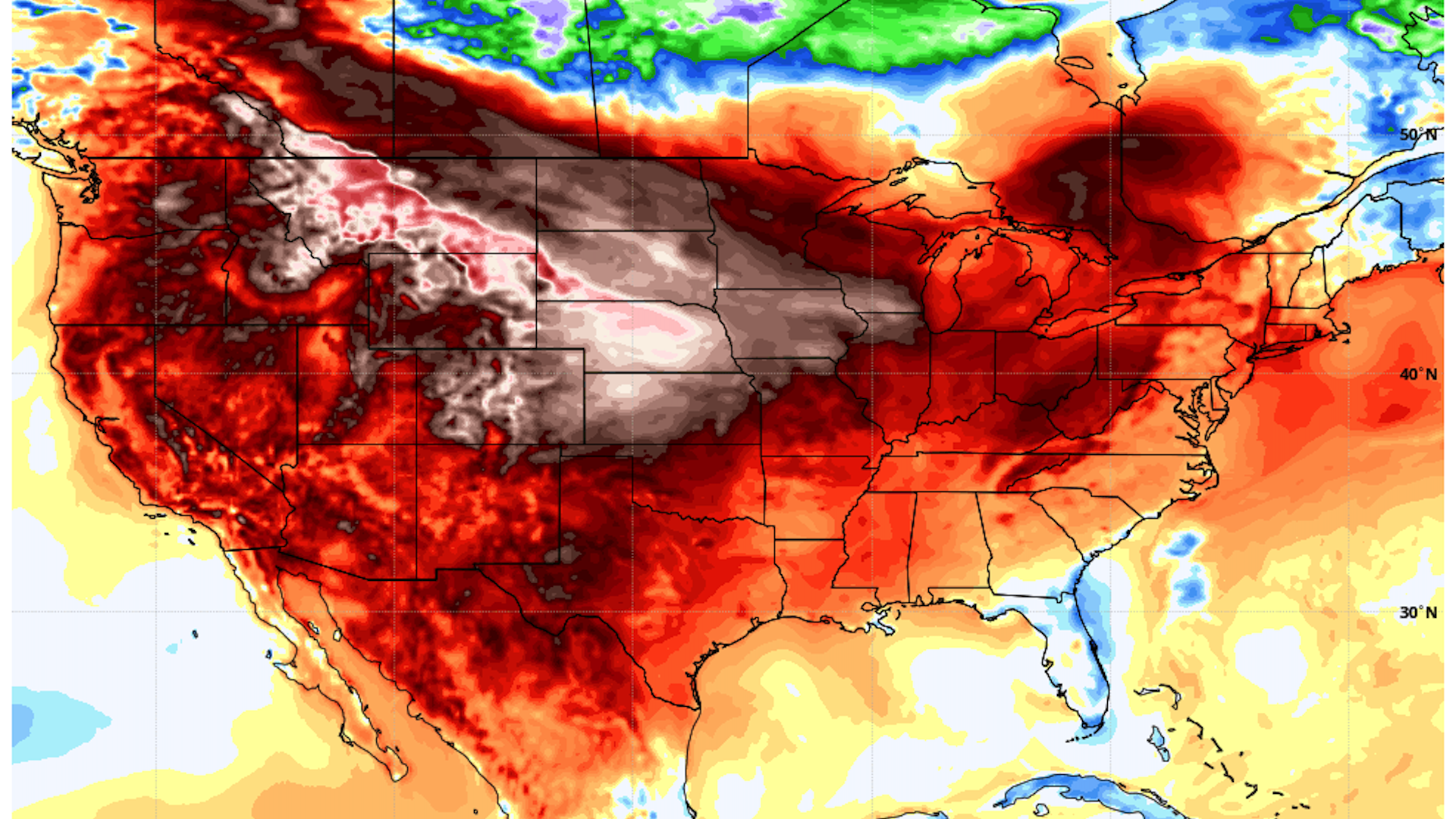
A widespread and intense heatwave is roasting large portions of the U.S. and Canada, shattering daily and monthly temperature records.
Why it matters: Winter is the fastest-warming season across the U.S., and the lingering warmth is shortening the snow season in places like Colorado and Montana, where mountain snowpack is a critical source of water during the summer months.
Winter starts frigid in western Europe amid energy crunch
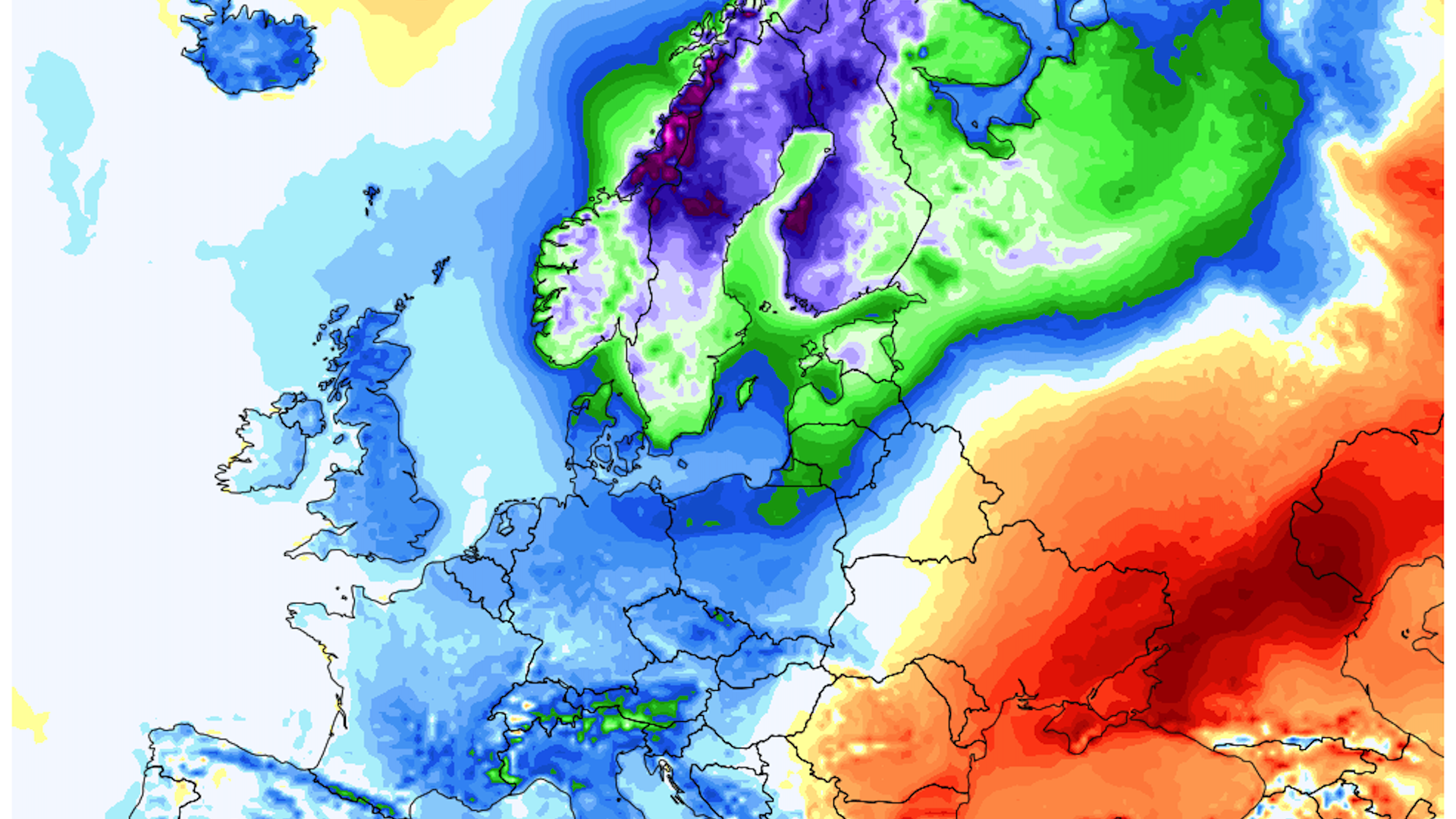
Across a large swath of Europe, from Scandinavia to the U.K. south into France, Spain and Germany, temperatures have been unusually cold as winter gets underway, and they're about to plunge further.
Why it matters: The cold snap is the opposite of what policymakers have been hoping for, given that Europe entered the 2021-22 winter season with the least amount of natural gas on hand in at least a decade.
Report: Markets like carbon-cutting firms
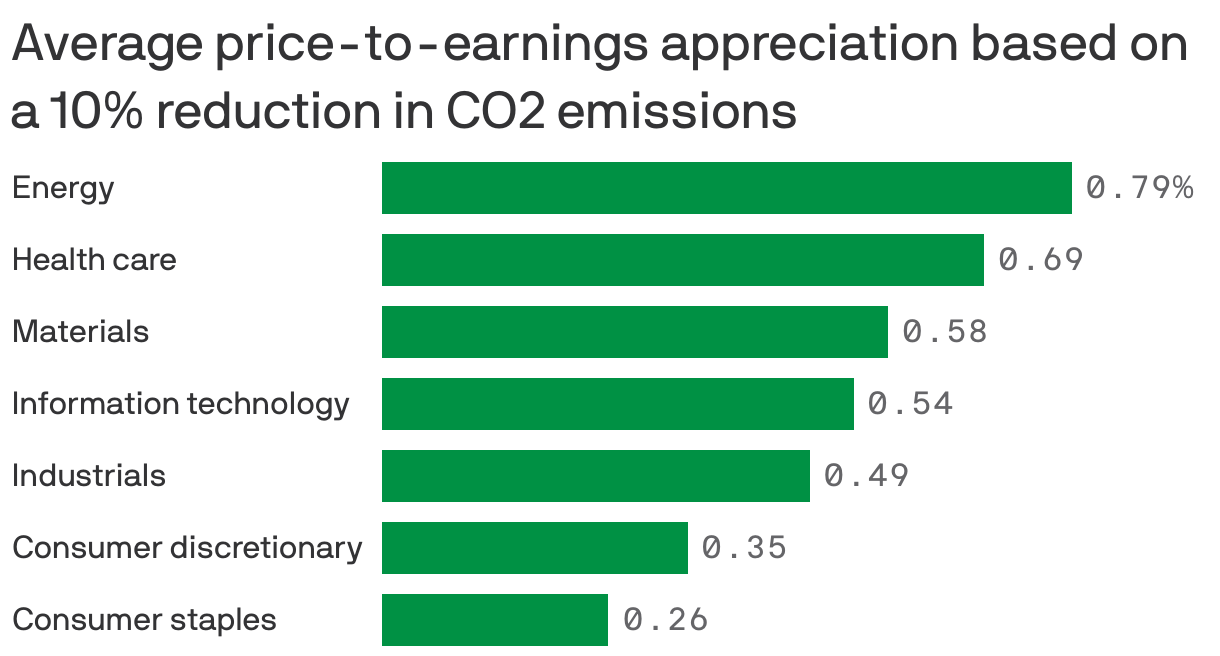
Analysis of companies' market performance shows a relationship between emissions-cutting and higher share prices relative to earnings, a metric of investor confidence.
Driving the news: Lazard, a financial advisory firm, explored the equity values and emissions of over 16,000 companies in 2016-2020.
A milestone for more sustainable air travel
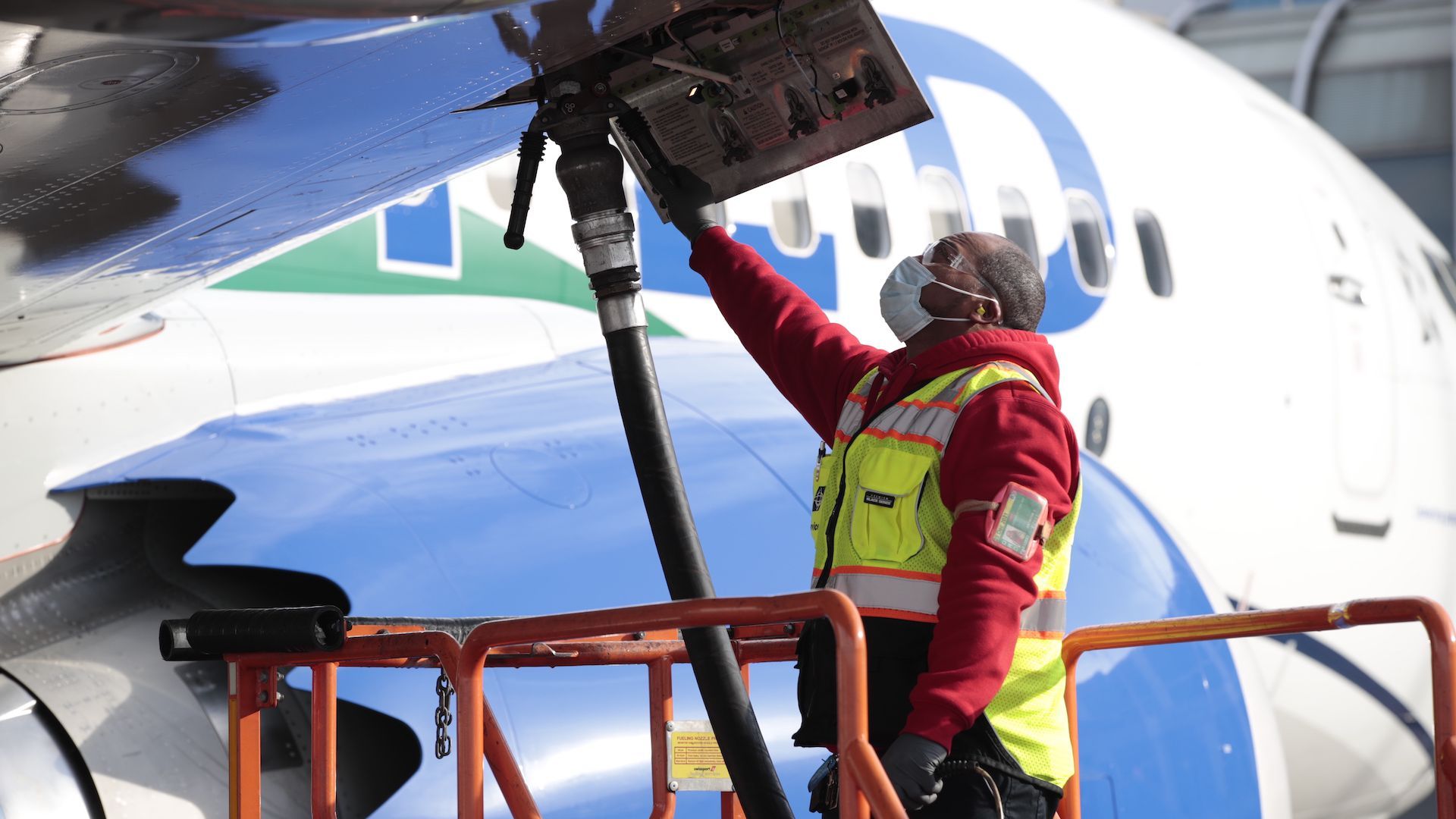
United Airlines flew the world’s first passenger flight powered by 100% sustainable aviation fuels (SAFs) Wednesday, from Chicago’s O’Hare International Airport to Reagan Washington National.
Driving the news: The 737 MAX 8 flew with a high-ranking delegation aboard, including members of Congress, United CEO Scott Kirby, and partners in the newly expanded Eco-Skies Alliance, which includes companies such as Siemens, Palantir and Salesforce.

Your electric car could become a virtual power plant
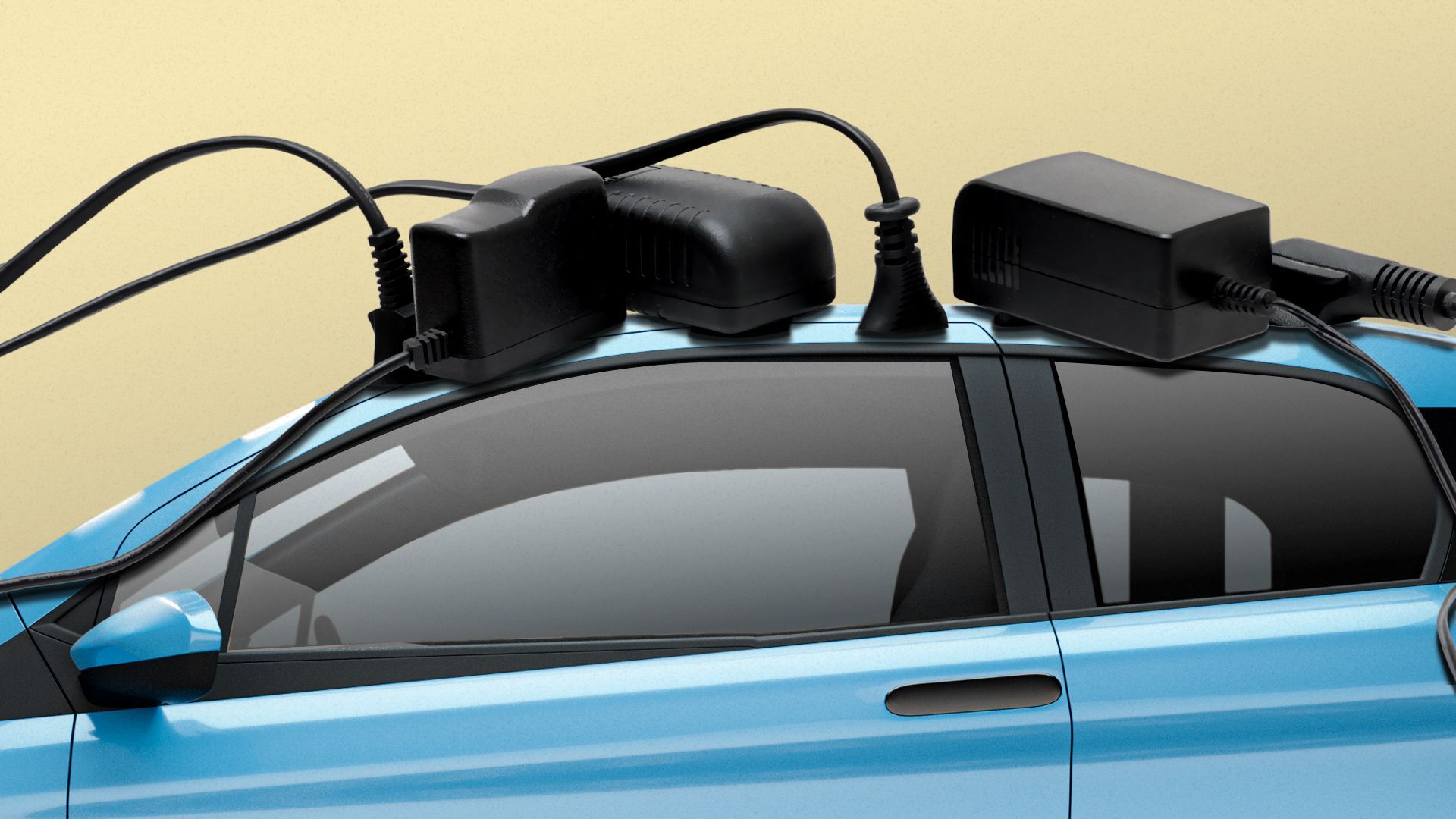
That electric car parked in your driveway may soon be more than a fun, emissions-free ride. When lashed together in the cloud with other EVs in your neighborhood, it could help utilities manage electricity demand in your community.
Why it matters: Massive growth in electric vehicle adoption — which is widely expected — means that more car owners will be plugging in at home, putting pressure on America's electric grid but creating power-sharing opportunities at the same time.
- Emerging smart-charging technologies aim to build in more flexibility so grid upgrades aren't needed and EV owners will have all the juice they need.
What's happening: EV owners can earn rebates and cash rewards from smart-charging programs by letting utilities control when their car is charged based on overall electricity demand.
- In Texas, for example, about 1,000 EV owners participate in a smart-charging project with the Electric Reliability Council of Texas (ERCOT).
- Together, those cars serve as a cloud-based "virtual power plant" that ERCOT can use to suck or store energy during demand peaks and valleys.
- In Wisconsin, Madison Gas and Electric shifts charging times for 200 EVs to off-peak hours so they can soak up renewable energy generated overnight by wind farms.
- Both utilities license the smart-charging technology from a London-based company called ev.energy, which has offices in Palo Alto.
The big picture: EV owners do more than 80% of their charging at home, according to a BloombergNEF analysis of ev.energy data from more than 1 million at-home charging sessions in the U.S., U.K. and Europe.
- Most of them plug in after work, start charging right away, and stay plugged in overnight, often setting the departure time for their morning commute.
Yes, but: The typical charging session requires just a little top-off — 2.5 hours of charging — which means most EVs are drawing energy in the early evening when residential demand is at its peak and electricity rates are highest.
Smart-charging technology can delay charging until demand has gone down, and greener, cheaper energy is more readily available.
- That lets utilities balance electricity demand while also maximizing the use of renewable energy and putting more money in EV owners' pockets.
- An EV owner in California could save an estimated $600 per year charging at off-peak times, BNEF found.
How it works: EV owners plug in their car, set a departure time using ev.energy's app, and let the utility figure out the ideal charging time based on a 24-hour forecast of energy demand.
- If necessary, the software will pause charging at the utility's request, then resume later.
- Car owners' flexibility earns them rebates or cash rewards of $5 or $10 a month.
The utility will never drain the car's battery, says Joseph Vellone, head of North America for ev.energy. "Your departure time is the holy grail."
- "The electricity system is incredibly complex. EV buyers can’t be bothered to immerse themselves in this complexity. We ask them one question: What time do you need your car charged by?"
Editor's note: This story has been corrected to show that Madison Gas and Electric shifts charging times for 200 EVs to off-peak hours for maximum efficiency, not 2,000 EVs. A partner company, ev.energy, reached out to say there was a numerical mistake in the report it shared with Axios.