ExxonMobil reported Friday a $610 million first-quarter loss, down 126% from the same period last year, reflecting a $2.9 billion write-down linked to lower commodity prices.
Why it matters: Exxon is the largest U.S.-based multinational oil-and-gas company, and the loss underscores how the decline in oil price and demand from the coronavirus pandemic is hitting producers of all sizes.
Democratic and Republican lawmakers have lined up on opposing sides of the Federal Reserve's decision to expand its $600 billion Main Street Lending Program and give loans to a wider range of businesses suffering from the economic effects of the coronavirus.
The big picture: The changes, urged by oil state Republicans like Sens. Kevin Cramer of North Dakota, Ted Cruz of Texas, and Alaska’s Lisa Murkowski, will allow oil and gas companies to qualify for the aid, Bloomberg reports.
Texas energy regulators will decide on Tuesday whether to mandate oil production cuts in the state.
Why it matters: Demand for oil has crashed as the pandemic-hit world locks down. That dynamic is already forcing some U.S. producers to cut back. The Texas measure, if passed, would force any stragglers to do likewise.
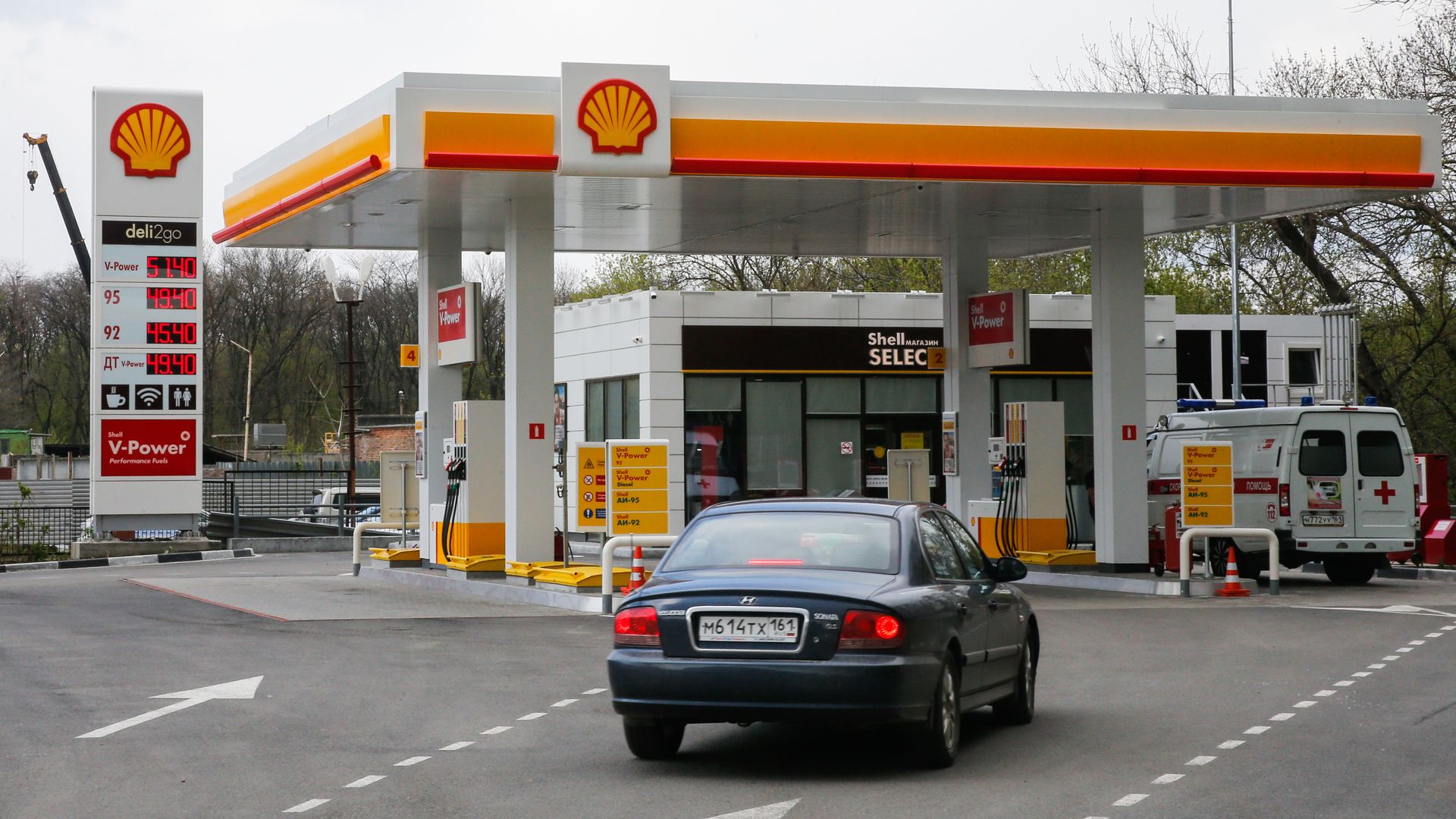
Royal Dutch Shell said Thursday that it's cutting shareholder dividends for the first time since World War II as the company reported a steep drop in quarterly profits.
Why it matters: The decision underscores how the coronavirus-fueled collapse in prices and demand is upending the oil landscape and forcing even the most powerful companies to scramble to protect their finances.
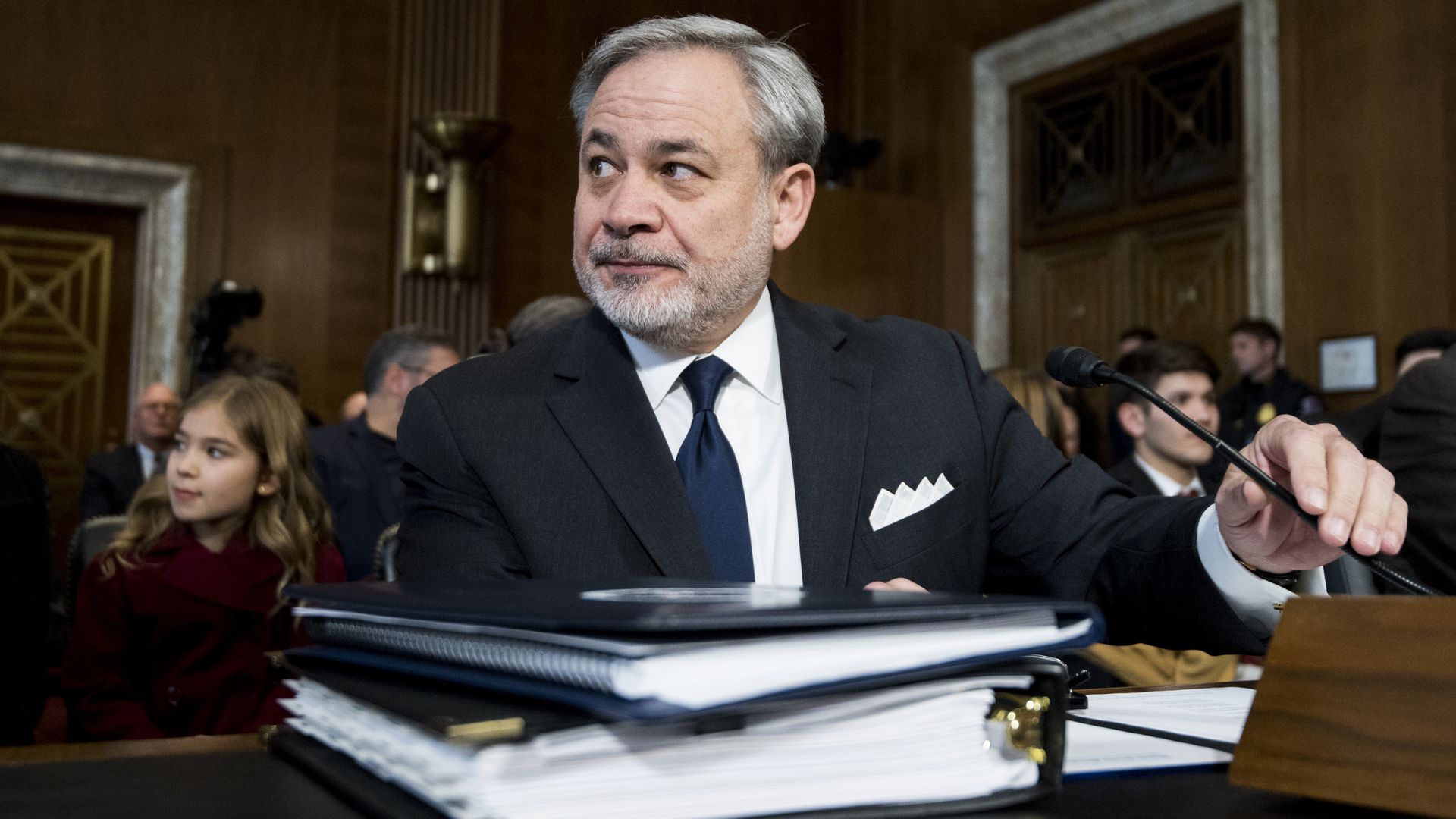
Energy Secretary Dan Brouillette said in a Tuesday conference call that Treasury Secretary Steven Mnuchin is considering loans and emergency lending through the Federal Reserve for small- and medium-sized oil producers, Bloomberg reports.
Why it matters: The collapse in oil prices as the coronavirus pandemic crushes demand is creating financial jeopardy for many independent companies and industry layoffs are mounting.
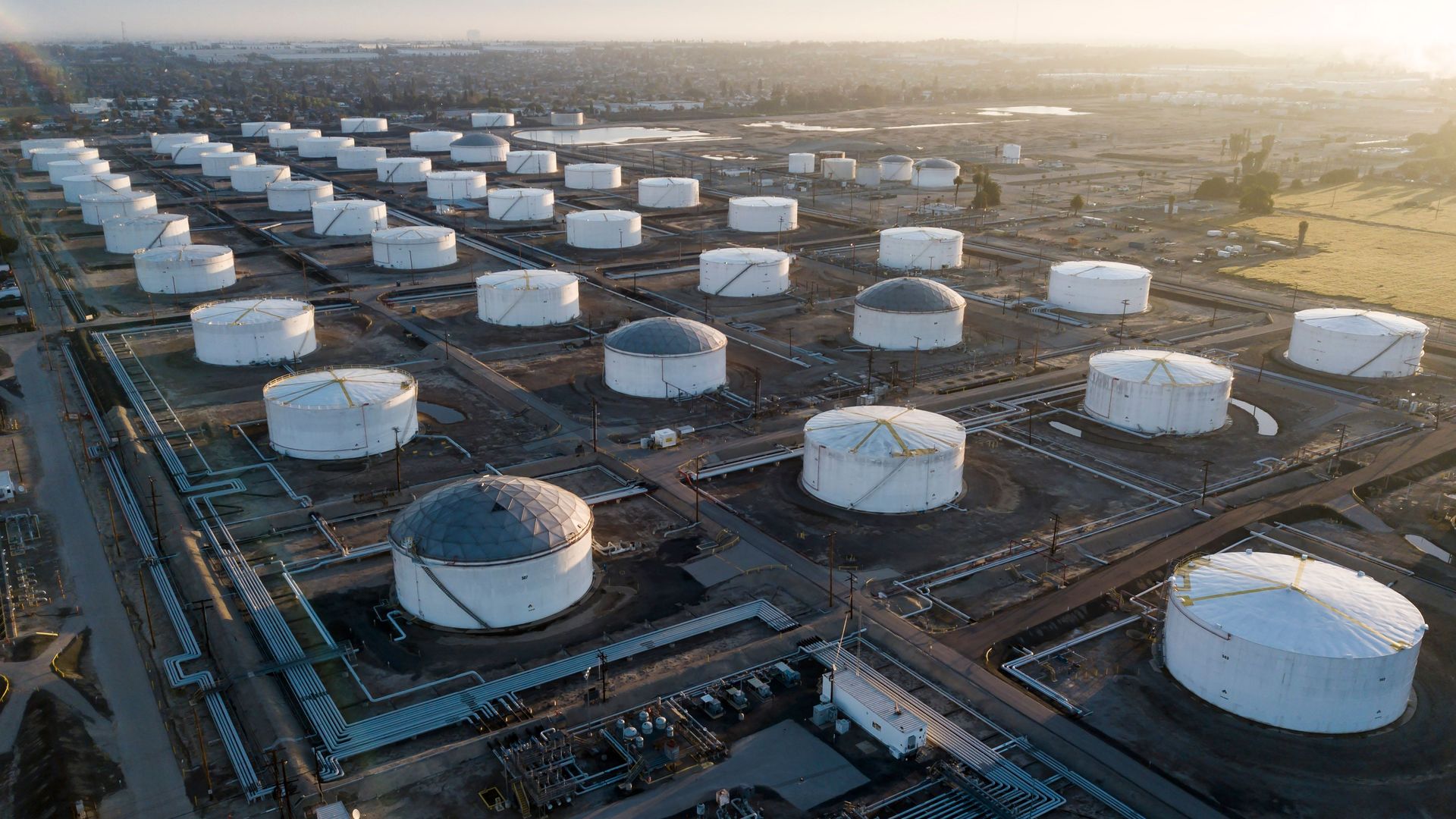
There is so much crude oil in the world and so little demand for it that owners of the oil are asking companies storing other liquid products — ranging from ethanol to vegetable oils — if they can rent their tanks.
The big picture: The odd development reveals how the novel coronavirus pandemic is upending the logistics running and feeding America. It’s not easy to convert storage, but it’s likely happening or will happen soon, experts say.
The American Petroleum Institute wants to avoid political baggage that could come from any special government program helping the beleaguered sector.
What they're saying: "Once you invite the government into these businesses, there are long-term repercussions for that, and I think that has weighed heavily on this industry's mind," said Mike Sommers, API president and CEO.
The COVID-19 pandemic is the "biggest shockto the global energy system in seven decades," the International Energy Agency said Thursday in unveiling a report that estimates big drops in energy use and carbon emissions this year.
What they found: IEA projects (with caveats because the whole thing is still unfolding) that global CO2 emissions will decline by 8% in 2020, or by nearly 2.6 gigatons.
Tesla CEO Elon Musk launched into a mini-tirade about government stay-at-home orders during the coronavirus pandemic, calling them "fascist" and "an outrage" on an earnings call Wednesday.
What he said: [T]he extension of the shelter-in-place or, frankly, I would call it, forcibly imprisoning people in their homes against all their constitutional rights — in my opinion — breaking people's freedoms in ways that are horrible and wrong and not why people came to America or built this country What the f--k?"



/2020/04/30/1588271583309.gif?w=3840)