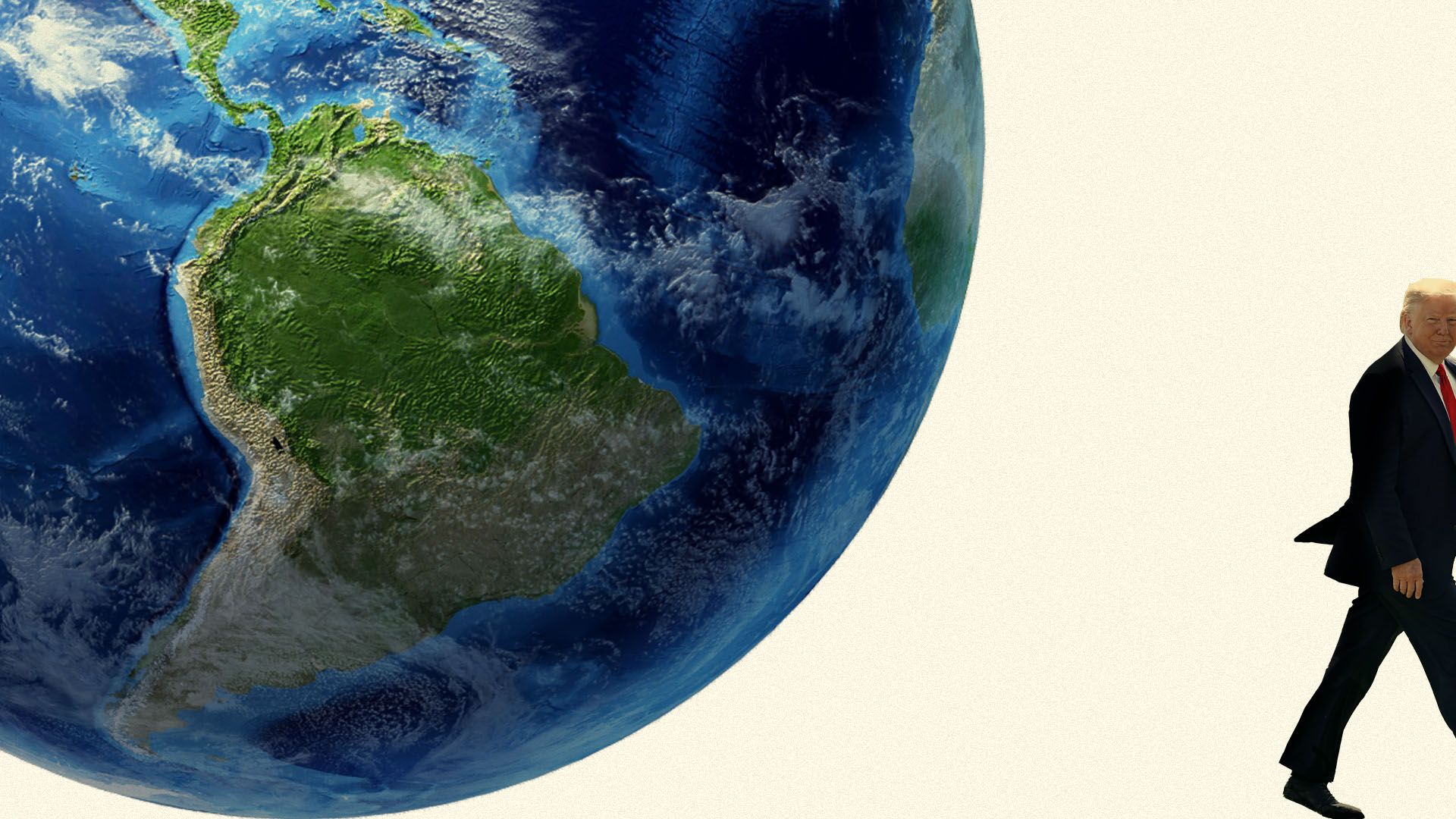
The Trump administration's formal notice of its intent to withdraw from the 2015 Paris Climate Agreement drives another nail in the coffin of U.S. ambitions to fight climate change and pushes the world closer to a less stable future.
Why it matters: Because the U.S. ranks as the second-largest contributor to greenhouse gas emissions, its retreat from the global battle against climate change exacts a heavy toll. This decision weakens pressure on other countries to reduce emissions at a time of peak global temperatures and atmospheric carbon concentrations higher than at any point in human history.
It's tough to think about long-term investments in Saudi Aramco, the world's biggest oil producer, without climate change entering the equation.
The state of play: A huge number of brain cells are devoted to gaming out when global oil demand may peak and what future climate policies mean for the sector. Some forecasters, like the International Energy Agency, don't see a peak before 2040 absent far stronger climate efforts. Others think it could be sooner.
One big question: Will the U.S. move affect other big polluters' climate efforts, especially as new national pledges under the pact come due next year?
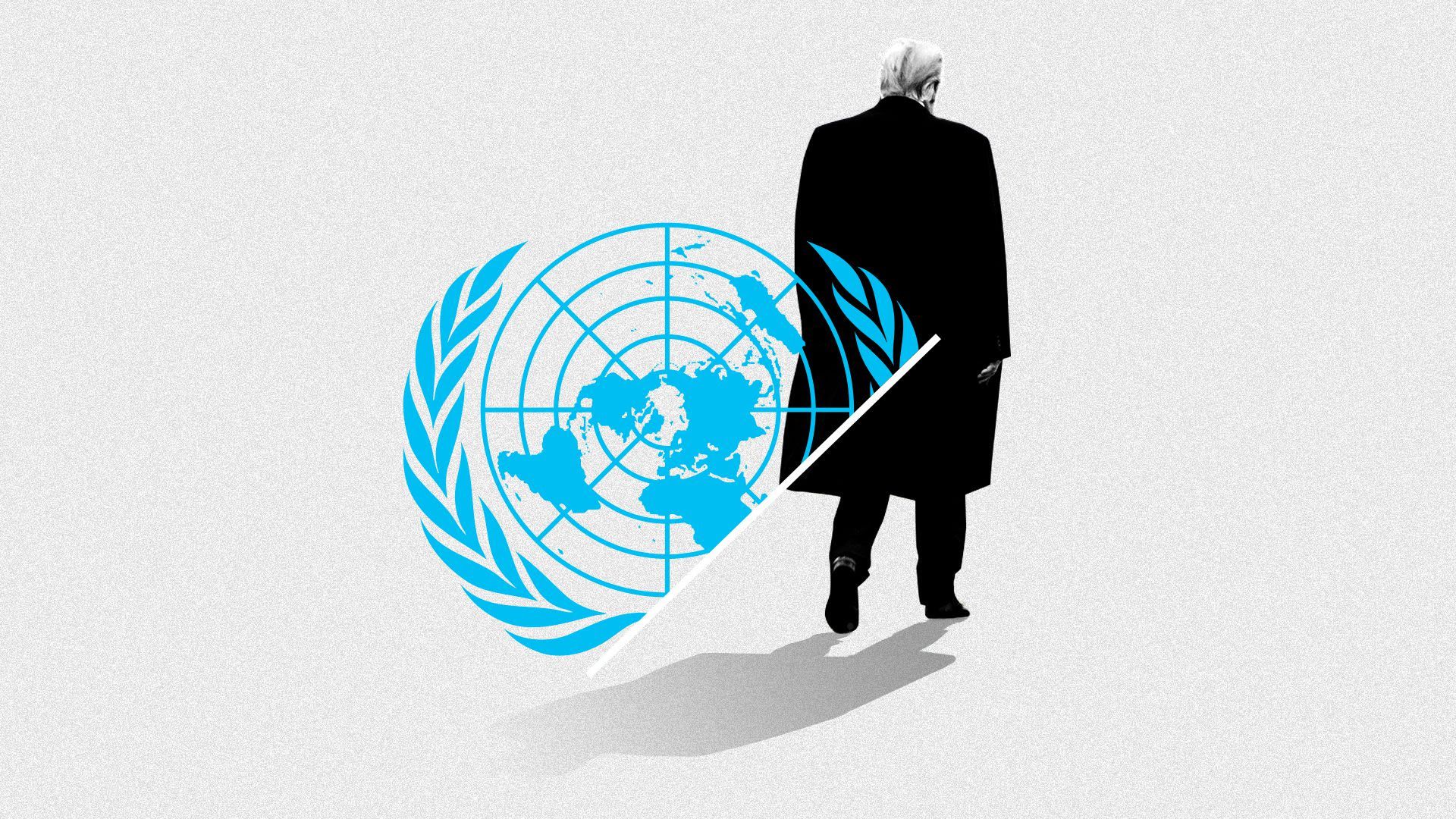
President Trump got a step closer to pulling America out of the Paris Climate Agreement by sending a withdrawal letter to the United Nations, Secretary of State Mike Pompeo announced in a statement Monday.
Driving the news: While Trump indicated this intention in June 2017, today marks the first day his administration could begin the formal process, which will be completed on Nov. 4, 2020 — a day after the 2020 presidential election.
The federal government should take new steps to help oil-producing regions navigate boom-and-bust cycles and diversify their economies, two nonpartisan think tanks say in a new report.
Why it matters: The decade-long oil boom has transformed the U.S. into the world’s largest producer. But that growth has increased the number of communities vulnerable to market volatility.
I cover energy and climate change, and yet even I do little to reduce my own environmental footprint.
Why it matters: Because most people don't! Recent polling and research show that most of us don't act virtuously to lessen our impact on the planet, beyond turning off lights when we’re not using them — but even then, many of us do that to save money on our electricity bills.
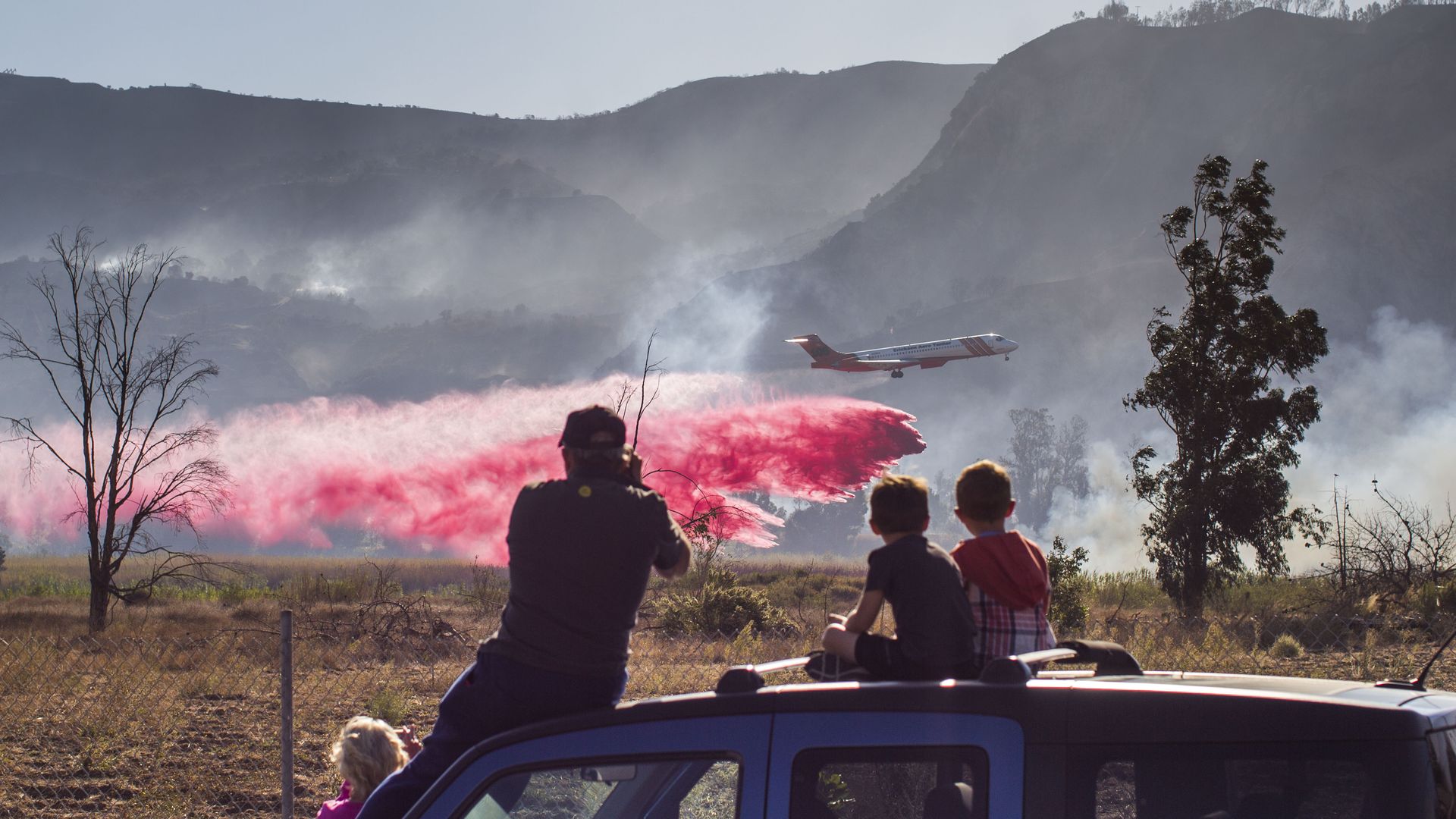
California firefighters have spent days battling wildfires in challenging, dry conditions that have forced the evacuation of tens of thousands of people.
The big picture: Firefighters have even faced hurricane-strength winds in some places. California's governor has declared a state of emergency, and some 3 million people have been affected by power shut-offs, per the New York Times. This is what firefighters have been up against, in photos.
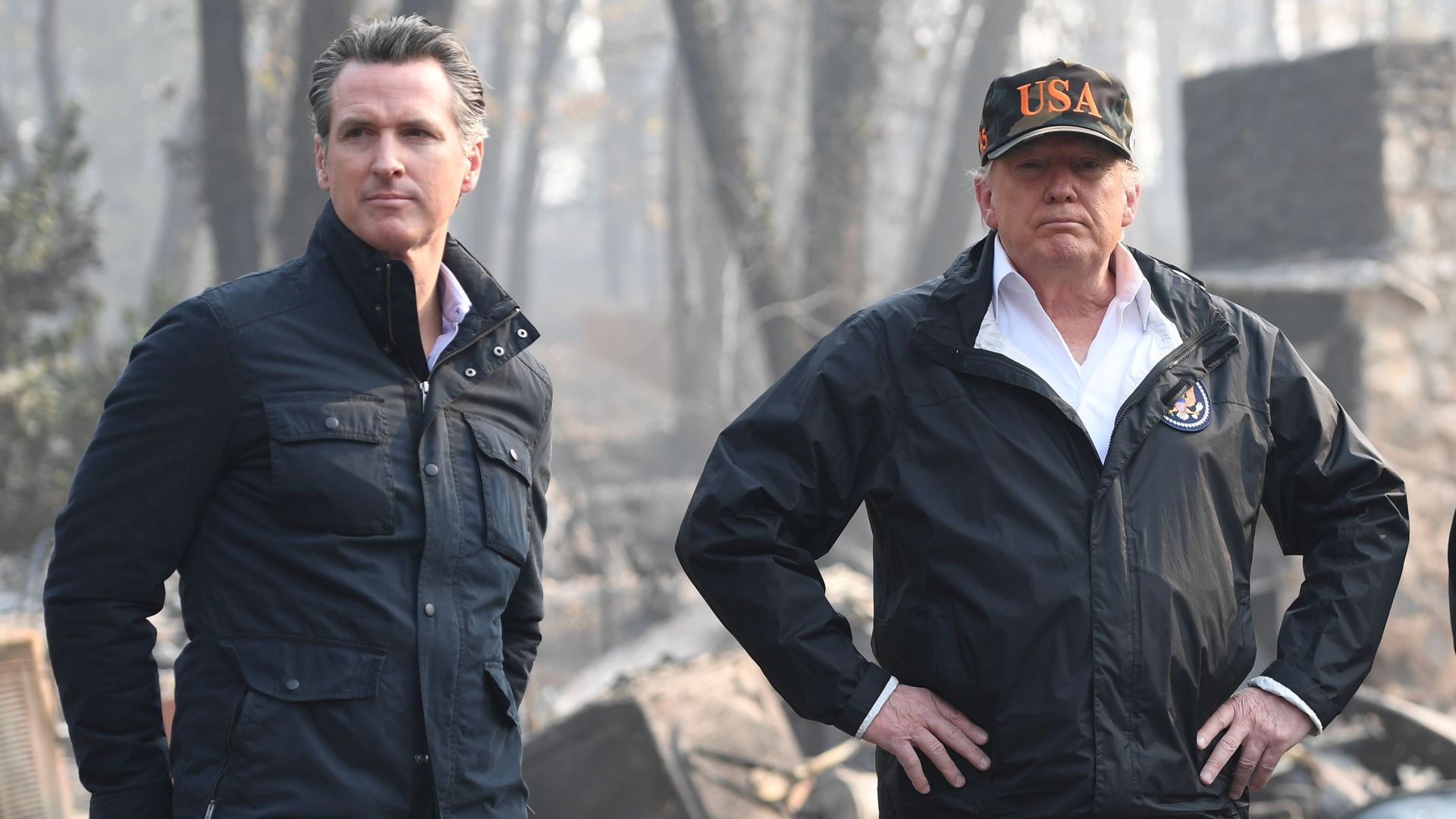
President Trump lashed out at California Gov. Gavin Newsom (D) Sunday in a series of tweets in which he threatened to cut U.S. funding to California for the wildfires that have engulfed the state this fall.