High temperatures and fast-acting dry spells in the South reported last week have boiled over into a "flash drought" blasting 56 million people with dry heat, AP reports.
What's happening: Parts of Georgia, Texas, Alabama and South Carolina are currently in extreme drought zones, while most of the South is in an abnormally dry or moderate to severe drought. Farmers are concerned "that cattle, cotton and corn are suffering after a summer of record highs and very little rain," per AP.
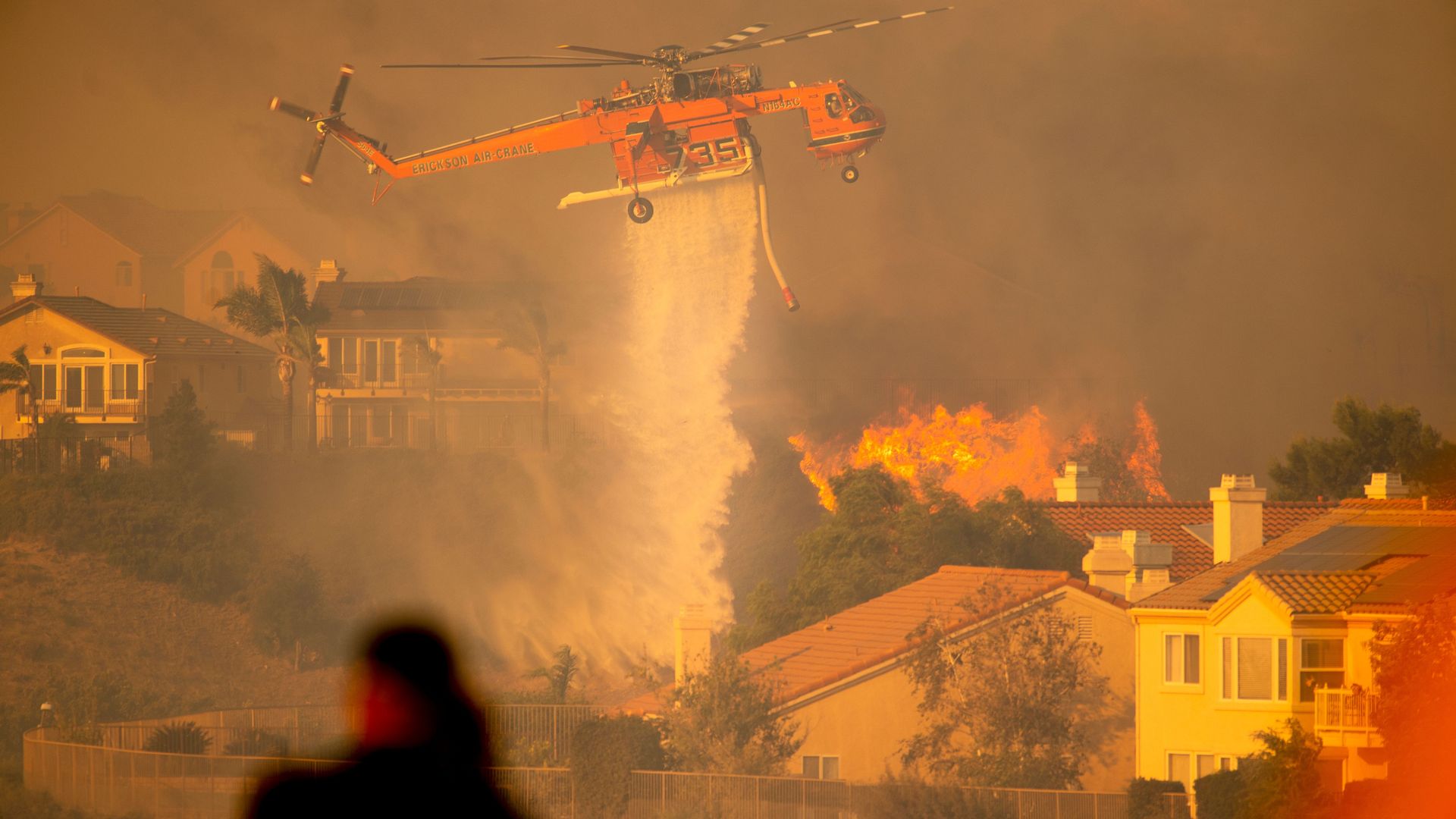
A swiftly moving wildfire in Los Angeles County's San Fernando Valley has destroyed at least 25 homes and prompted evacuation orders for more than 100,000 people throughout Friday, the Washington Post reports.
The state of play: The Saddleridge fire erupted in Sylmar, the northernmost part of the valley, around 9 pm on Thursday, as forceful Santa Ana gusts swept through Southern California, AP writes. The flames are engulfing an estimated 800 acres per hour, and the original cause of the fire remains unknown.
Toyota gave birth to the hybrid movement with the U.S. introduction of the Prius in 2000. Sales have been fairly slow, but are expected to take off in the next 5 years as automakers strive to meet higher fuel efficiency standards, according to LMC Automotive.
Driving the news: Hybrids are still more expensive than gasoline-powered cars, but battery prices have fallen enough that it's easier for carmakers to pass along the higher cost to consumers, especially if it's buried among other premium features, says Loehr.
Two pieces of news this morning distill the competing forces acting on oil markets these days.
The big picture: Geopolitical risks in the vital oil producing and transit region can cause short-lived price spikes, but at the same time, a drumbeat of bearish economic news is preventing a sustained price rise.
The International Monetary Fund is calling on major greenhouse gas-emitting countries to implement carbon taxes that reach $75-per-ton by 2030 to bolster today's "inadequate" responses to climate change.
Why it matters: Their new report says the window for keeping temperature rise to manageable levels is "closing rapidly" and that "limiting global warming to 2°C or less requires policy measures on an ambitious scale."