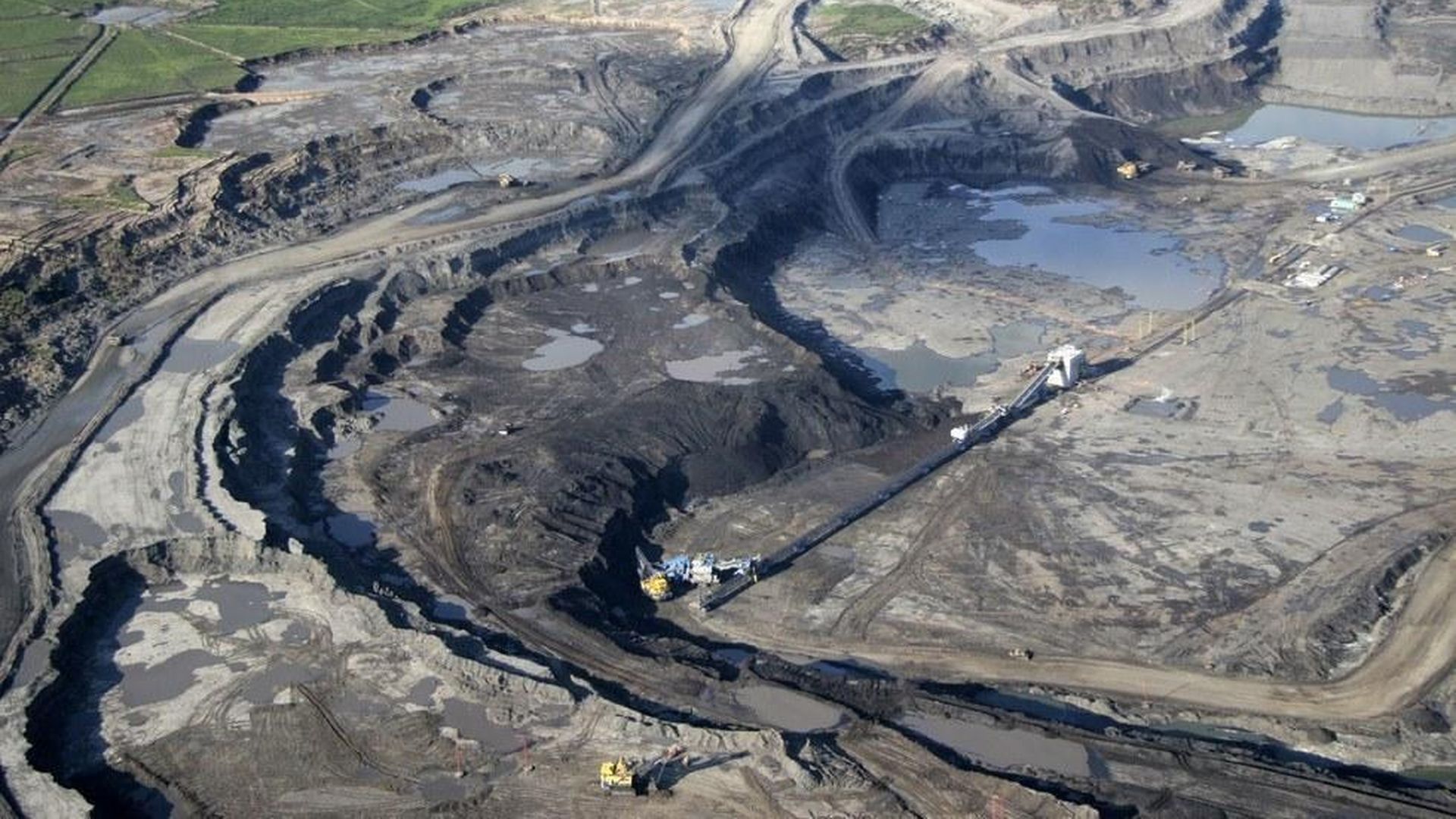
Now it's really a trend. ConocoPhillips announced Wednesday that it's selling most of its Canadian oil sands assets (as well as some Canadian gas holdings) to Cenovus Energy in a $13.3 billion deal. ConocoPhillips said the deal will help to "rapidly reduce debt" and lower the average production costs in its portfolio.
Joining the club: ConocoPhillips' deal comes after global oil giants Statoil and Shell have retreated from their oil sands positions in recent months, and Marathon Oil recently divested from the Alberta heavy oil projects too.
Reuters notes that international oil companies are pulling back from the region because "high costs and low crude prices have made it hard for large companies to make an acceptable return."
Development of the oil sands is increasingly consolidating into the hands of big Canadian companies.
The Department of Energy's Office of International Climate and Clean Energy has been directed not to use the phrases "climate change," "emissions reduction," and "Paris Agreement" in any official written communications, per Politico.
The office is the only one with "climate" in its name at the Department of Energy and is an artifact of the Obama administration's clean energy initiatives, which have been largely cast aside under President Trump.
A Department of Energy spokesperson denied there was a formal ban on language, but one of Politico's sources said their office had consciously been choosing to use words like "jobs" and "infrastructure" to better represent the Trump administration's priorities.
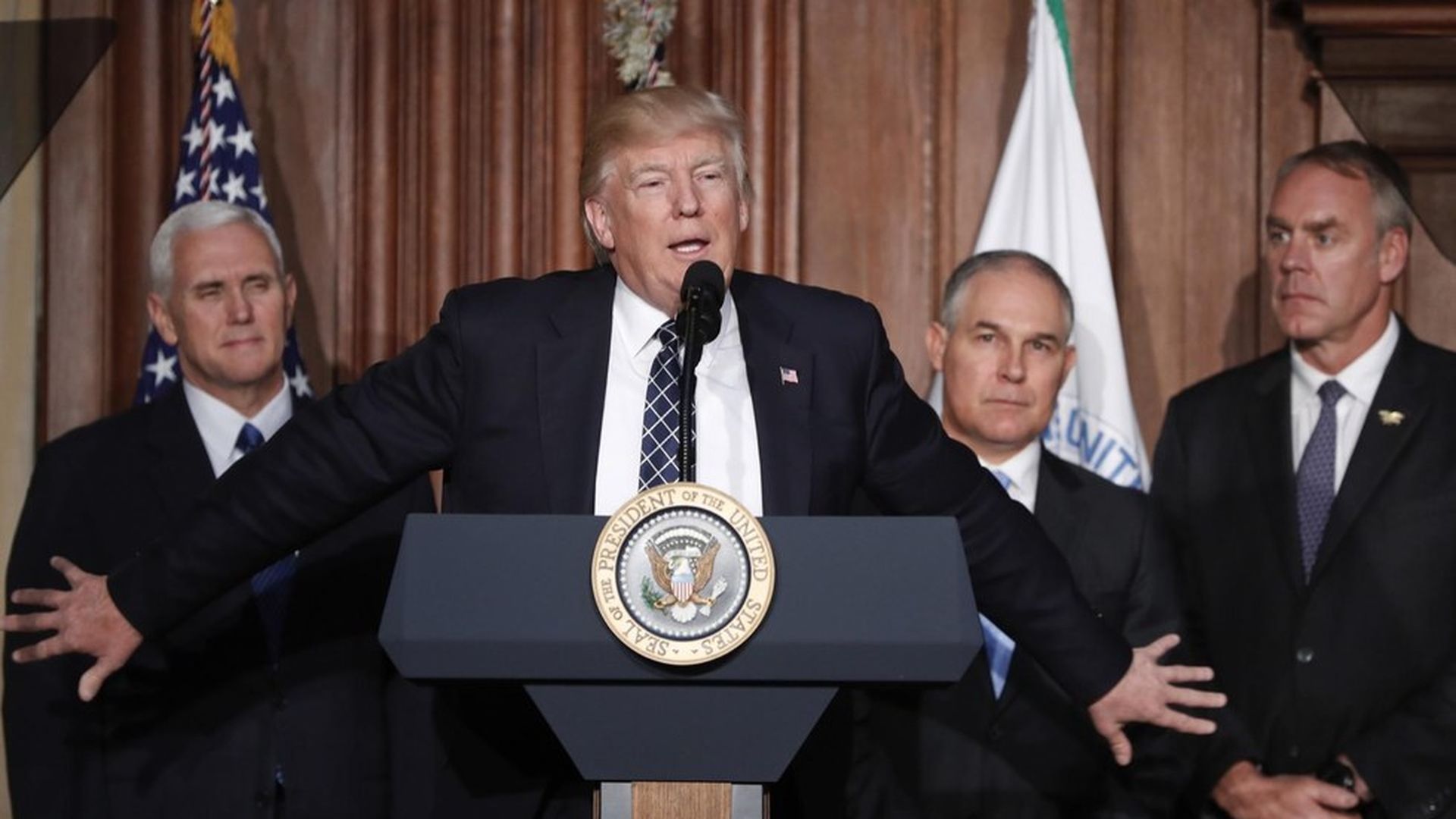
The Chinese government said it is moving forward with its promise to pull back on carbon emissions following the signing of Trump's executive order that rolls back Obama-era climate change policy, per AP.
A foreign ministry spokesman, Lu Kang, said Wednesday that curbing climate change is a "challenge faced by all mankind" and reiterated that Beijing was committed to following through on its pledges under the Paris agreement.