Tuesday's energy & climate stories

Russian troops reportedly spotted in Egypt
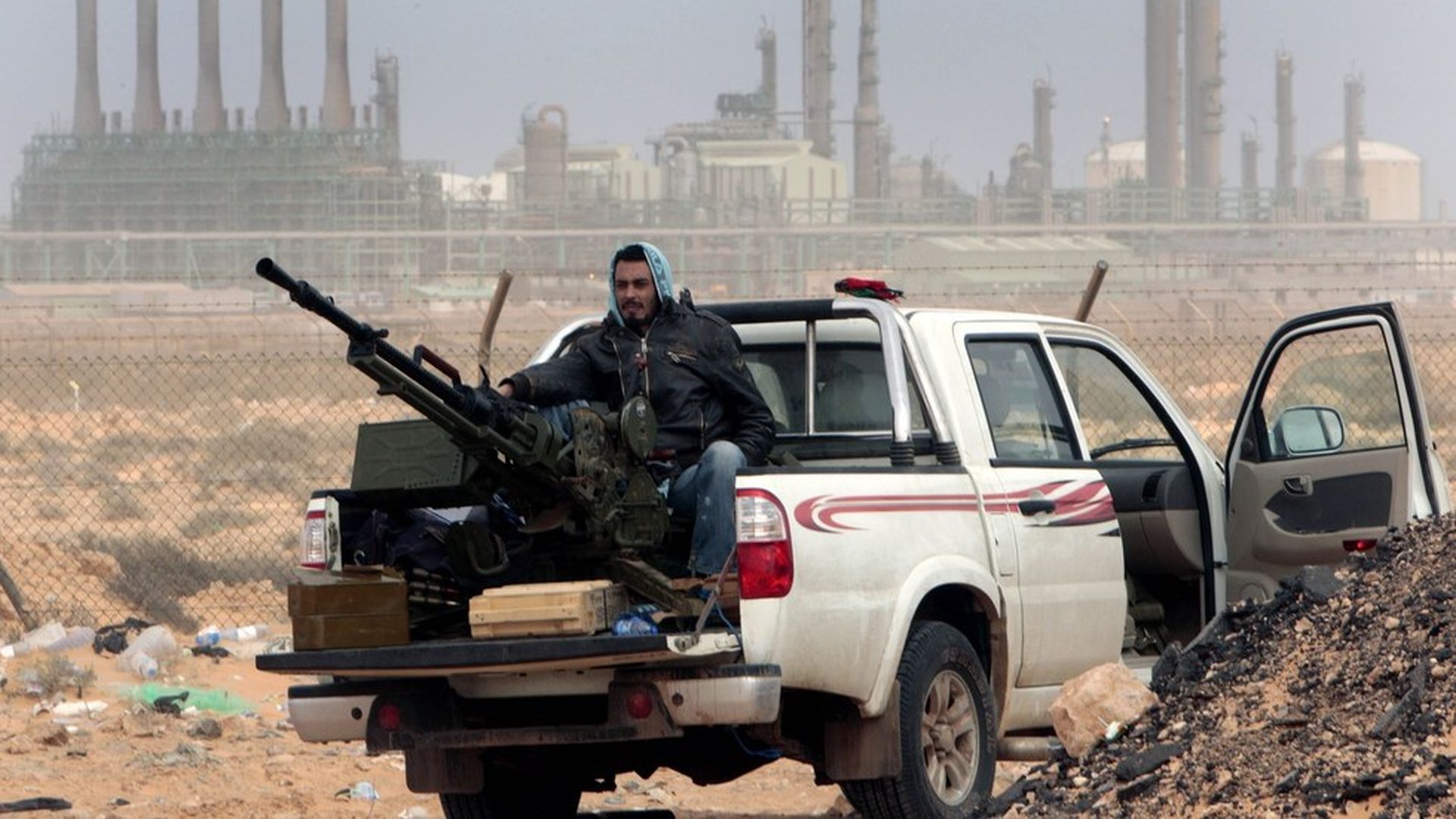
Russia "appears to have deployed" special forces to an airbase in Egypt 60 miles from the border with Libya in the past few days, according to U.S., Egyptian, and diplomatic sources, per a Reuters report.
Last week the U.S. military commander who oversees U.S. operations in Africa, Marine General Thomas Waldhauser, told the Senate Armed Services Committee that Russia is trying to once again "exert influence" in the country, which used to be its client state. Waldhauser said a good way to characterize what appears to be happening between Russia and Libya is how Russia has been trying to support Bashar al-Assad in Syria.
Why it matters: Russia might be planning to prop up Libyan military commander Khalifa Haftar, which would not be in the best interests of the U.S., according to Waldhauser. That's because Haftar is in a deadlock with the U.N.-backed government in Tripoli.
The Russian defense ministry and the U.S. military did not provide comment for Reuters. Egyptian army spokesman Tamer al-Rifai said "There is no foreign soldier from any foreign country on Egyptian soil. This is a matter of sovereignty."

The world's oil thirst isn't peaking anytime soon.
The latest podcast from Columbia University's energy think tank has an interesting chat with Eirik Wærness, the chief economist at Norwegian oil giant Statoil. But if you don't have 34 minutes to spare...
A big takeaway: Even if carbon emissions are controlled enough to hold the global temperature rise to 2 degrees celsius above preindustrial levels (that's the difficult goal of the Paris accord), oil companies will still need to find lots of crude to meet global demand.
"Even in a world where demand is declining significantly some decades from now towards a 2 degree scenario . . . we need the equivalent of three to six new Saudi Arabias, or three to six United States', if you like, in new oil production by 2040 … to offset decline from existing fields if we were to stop investing today," Wærness said on the Center on Global Energy's latest podcast.
Why it matters: We're hearing a string of warnings from industry officials and experts that even with the U.S. production surge, global investments in new production could lag behind what's needed. The world's oil thirst isn't peaking anytime soon despite better efficiency and new technologies, according to forecasts from the International Energy Agency and big companies.
Oil prices are down but oil execs are optimistic
Although oil prices are down 10 percent in the past month Bloomberg finds that oil executives are optimistic and increasing capital expenditures this year. The optimism may indicate their faith in Trump to deregulate the industry and boost U.S oil and gas explorations and production.
Here's what some CEOs had to say about the coming year's outlook:
- Halliburton: "In 2Q...customer animal spirits were back in North America. Last quarter...these animal spirits were alive but somewhat caged up. Now these animal spirits have broken free and they are running."
- BP: "2017 is one of the largest years for commissioning new major projects in our history."
- Ecopetrol: "Investing in exploration will be more than doubled...from $250 million last year to $650 million. [This] will get reflected in a total of 17 exploratory wells to be drilled vs. seven last year."
- Schlumberger: "Recovery is on its way in all markets.''

Bill Gates on Trump, VR and his role at Microsoft

Bill Gates is known for being a "glass half-full" kind of guy. And when it comes to Donald Trump he's sticking to that, even though Trump has vowed to cut foreign aid and gut environmental regulation, two areas of particular importance to Gates.