23.6 million viewers watched the Oscars award ceremony on Sunday, a 20% drop from last year and its lowest rating ever, Variety reports.
The big picture: Award show viewership overall has been in decline for years. ABC's broadcast, which went without a host for the second consecutive year, was only facing competition from reruns on other major networks on Sunday night.
The FDIC has given Varo Money its official seal of approval, according to Varo CEO Colin Walsh.
Why it matters: It's the crucial second step for Varo to become a national bank, following the Office of the Comptroller of the Currency granting its own preliminary approval back in October.
North American rail traffic continuedto decline in January, with U.S. rail carloads dropping by 5.9%, or 73,110 carloads, year over year, according to the latest report from the Association of American Railroads (AAR).
Why it matters: It was the 12th straight month of decline, and both major rail shipments — coal (down 13.8%) and grain (down 11.6%) — had what AAR termed "lousy Januarys," accounting for a decline of 68,790 carloads for the month.
The U.S. economy added 225,000 new jobs last month and more workers came into the labor force. But data showed wages again failed to rise meaningfully, and there's reason to worry that growth may have peaked at this relatively low level.
What's happening: Average hourly earnings grew by 3.1% over the last 12 months, according to the January jobs report, and have stayed within the narrow range of 2.9% to 3.2% for much of the past year and a half.
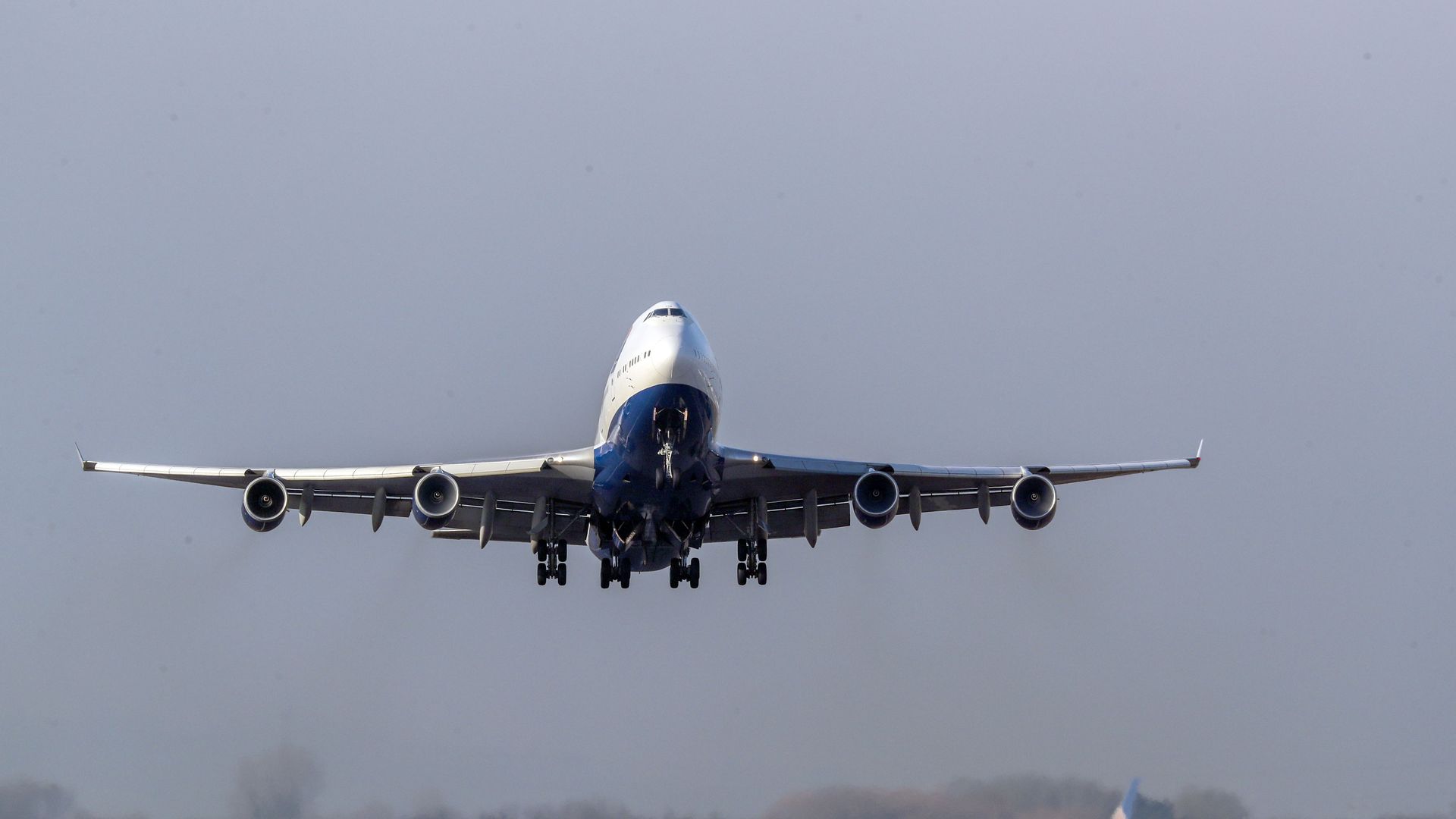
British Airways on Sunday flew the fastest-ever New York to London subsonic flight, completing the 3,451-mile trip in 4 hours and 56 minutes as Storm Ciara barreled toward the U.K., according to Flightradar24, a flight-tracking service.
The big picture: The Boeing 747 aircraft arrived at Heathrow airport in Longford, England, almost two hours earlier than scheduled, and reached a top speed of 825 mph during the flight.