Searching for smart, safe news you can TRUST?
Support safe, smart, REAL journalism. Sign up for our Axios AM & PM newsletters and get smarter, faster.
Searching for smart, safe news you can TRUST?
Support safe, smart, REAL journalism. Sign up for our Axios AM & PM newsletters and get smarter, faster.
Denver news in your inbox
Catch up on the most important stories affecting your hometown with Axios Denver
Des Moines news in your inbox
Catch up on the most important stories affecting your hometown with Axios Des Moines
Minneapolis-St. Paul news in your inbox
Catch up on the most important stories affecting your hometown with Axios Minneapolis-St. Paul
Tampa-St. Petersburg news in your inbox
Catch up on the most important stories affecting your hometown with Axios Tampa-St. Petersburg
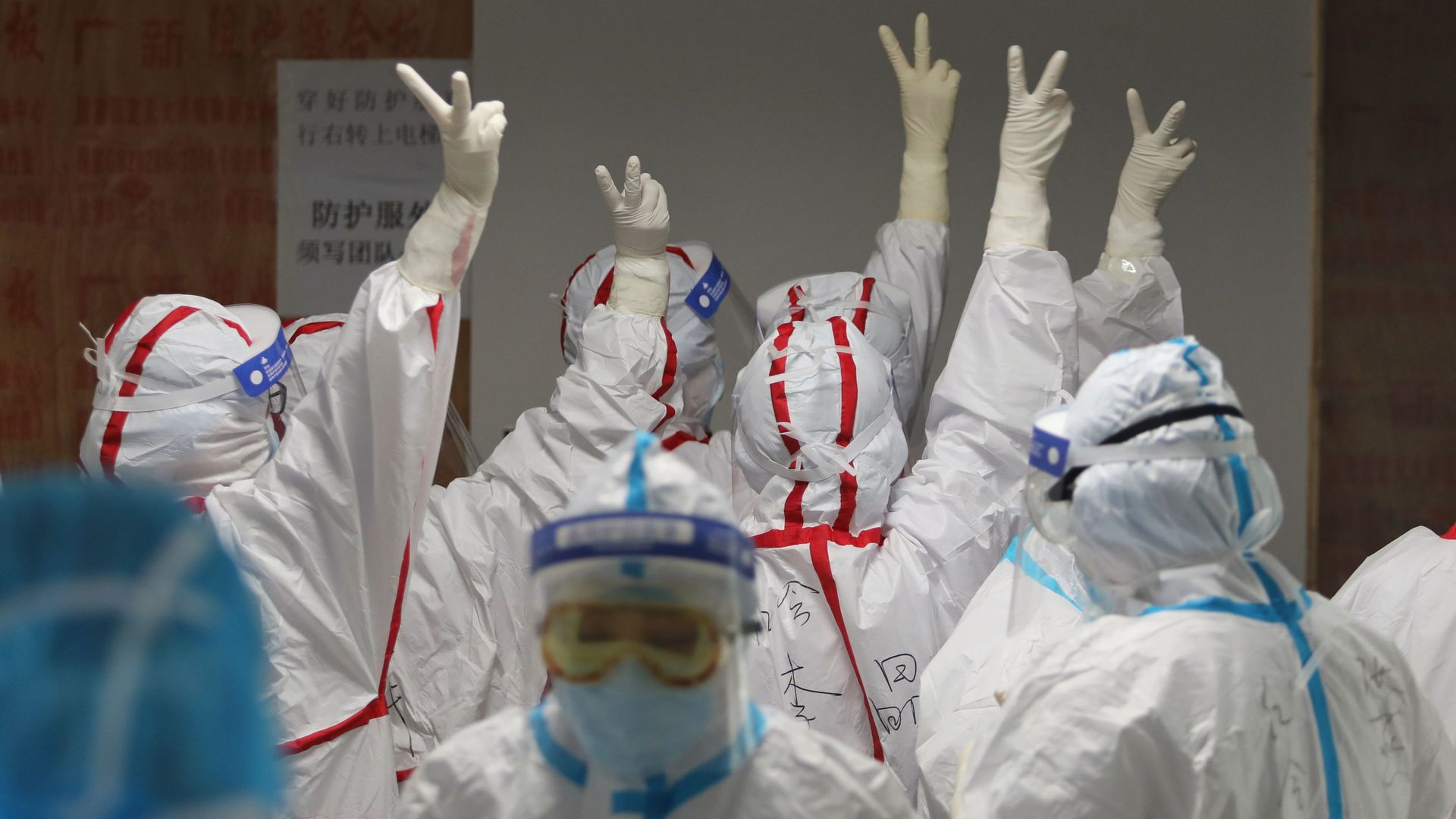
Medical staff cheer before going into an ICU ward for coronavirus patients at the Red Cross Hospital in Wuhan in China's central Hubei province on Monday. Photo: STR/AFP via Getty Images
There were no new cases of the novel coronavirus in the past 24 hours in Hubei province, China, including the city of Wuhan, where COVID-19 was first discovered, per a post on the local health department's website Wednesday.
Why it matters: Chinese authorities introduced unprecedented measures in January in an effort to contain the virus, including suspending all travel in and out of all cities in Hubei province and preventing the province's 59 million people from leaving home.
- The report of zero cases is the strongest indication yet that such extreme measures can help contain the virus, as cases soar globally to more than 217,000.
Of note: China's National Health Commission reported later there were a total of 34 new infections in the country Wednesday, mostly in Beijing (21 cases). All of the new cases were patients who had returned from travel in other countries.
The big picture: Health officials are still trying to trace the source of the outbreak of the new strain of the coronavirus. The first known case to have been reported appeared in Wuhan in early December, according to a study published in the peer-reviewed medical journal The Lancet last month.
Editor's note: This article has been updated with new details throughout.