Why coronavirus could help stalled efforts to expand voting options

Add Axios as your preferred source to
see more of our stories on Google.
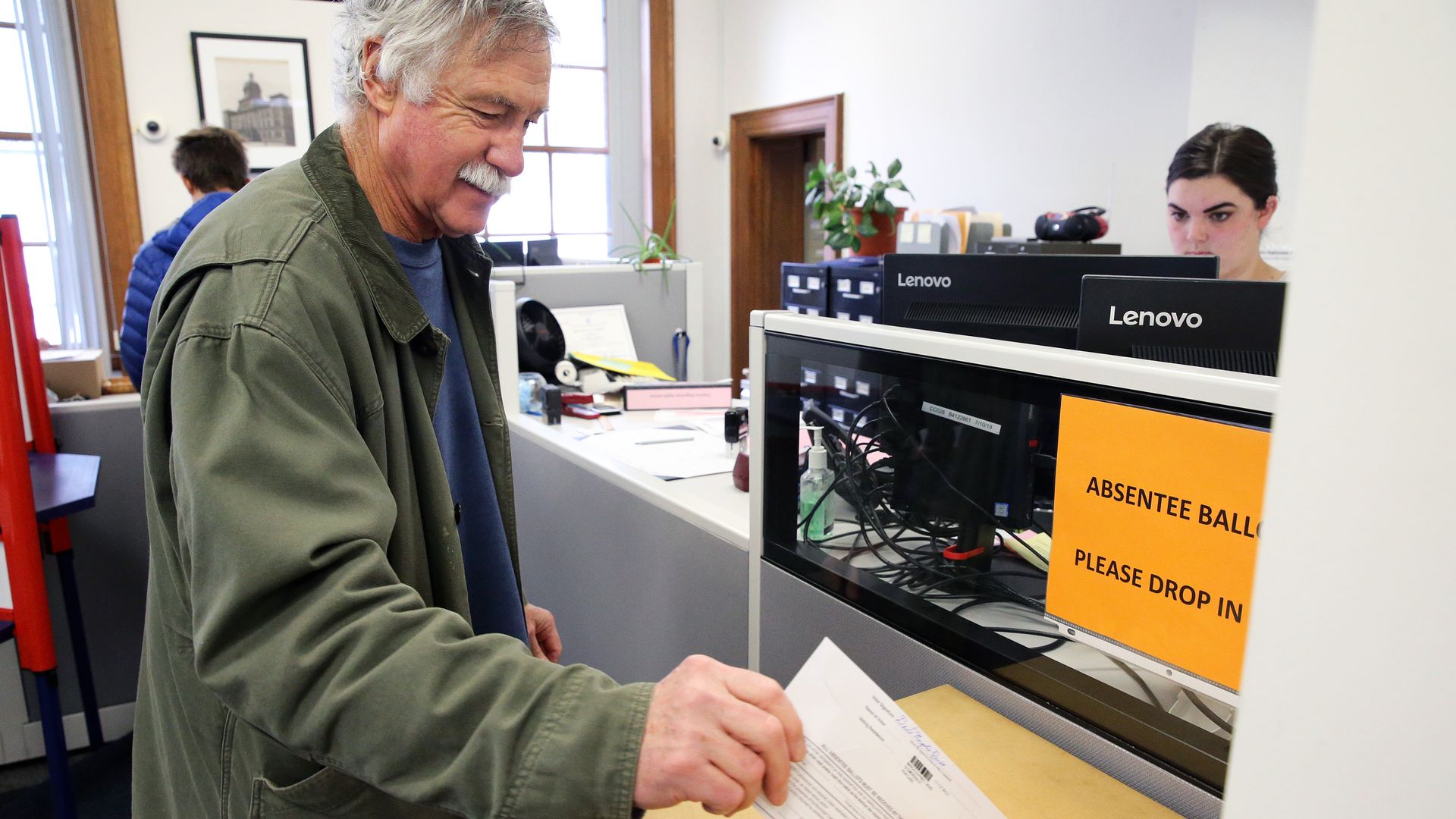
Photo: Ben McCanna/Portland Press Herald via Getty Images
The coronavirus could make it harder for some U.S. voters to cast ballots this year, but that threat can be a catalyst for election changes that have previously met partisan resistance, elections law expert Trevor Potter said in an interview with "Axios on HBO."
Why it matters: Congress and state and local elections officials are looking for ways to protect voters in remaining primaries and even the general election.
The big picture: Primaries can be changed easily, but not the Nov. 3 general election.
- Arizona, Florida, Illinois and Ohio have primaries on March 17, with large populations of high-risk voters 65 and older.
- Louisiana and Georgia will delay their primary elections.
- Election officials are adjusting, from providing hand sanitizer at voting booths, to moving polls from senior centers to alternate locations, to expanding early, mail-in and drive-up voting.
- Some state legislatures and governors may need to change laws or take other actions to provide more options.
What he's saying: "There's been a view that making it easier to vote, encouraging people to vote, somehow would help Democrats rather than Republicans," said Potter, who is president of the Campaign Legal Center and was Stephen Colbert's super PAC lawyer and a former chairman of the Federal Election Commission.
- "I personally think that's about a 25-year-old view, and that if you look at the Trump election, there were many people who came out and said they were voting for Trump who were not normal voters. So increased turnout in some states helped the Trump campaign rather than the Democrats."
- "There are allegations that in Republican red states, there is an attempt to suppress minority voters. And we've seen examples where laws were passed to make it harder to vote on Sundays or to require a particular form of voter ID that minorities might not have. And you can see there's a partisan element to that and a partisan dispute."
- "Here, I think the good news is, it is not thought that this crisis hurts or helps voters of one party. So both parties ought to be able to get together on this and say we need to make it easier to vote in the face of this health crisis."
- "There are plenty of elderly people in both parties."
- "In this crisis, we move away from the 'is it going to help us or hurt them' mentality that you see in some of the barriers to voting. And instead, we have the possibility that it will hurt both parties in unpredictable ways. So both of them should be looking at how to make it easier to have a range of methods to vote on an election day in the middle of a public health crisis."
