Scoop: Lab for coronavirus test kits may have been contaminated


Add Axios as your preferred source to
see more of our stories on Google.
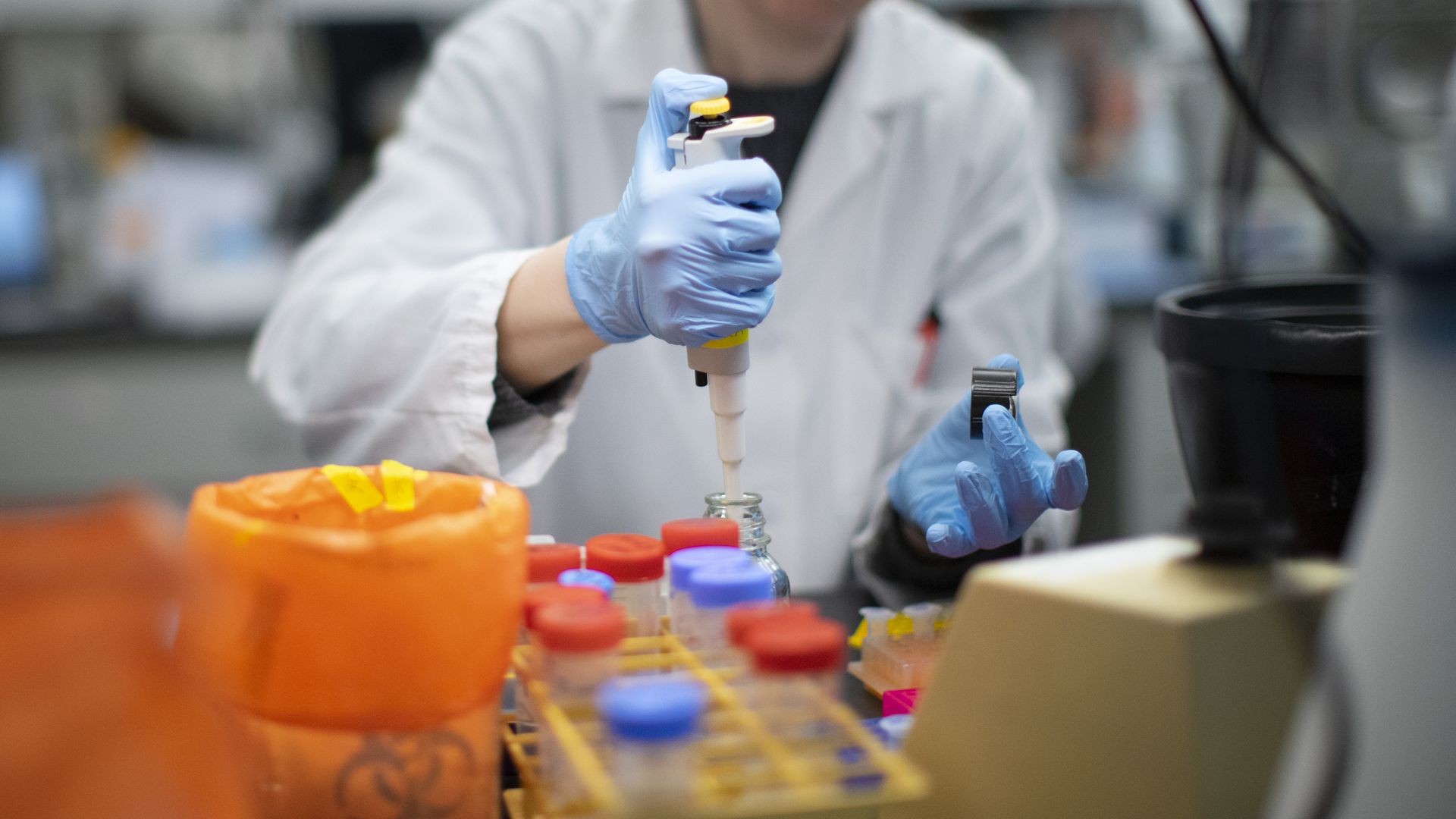
A researcher works in a laboratory developing testing for the coronavirus. Photo: Kena Betancur/Getty Images
A top federal scientist sounded the alarm about what he feared was contamination in an Atlanta lab where the government made test kits for the coronavirus, according to sources familiar with the situation in Atlanta.
Driving the news: The Trump administration has ordered an independent investigation of the Centers for Disease Control and Prevention lab, and manufacturing of the virus test kits has been moved, the sources said.
Why it matters: At the time the administration is under scrutiny for its early preparations for the virus, the potential problems at the lab became a top internal priority for some officials. But the Trump administration did not talk publicly about the Food and Drug Administration’s specific concerns about the Atlanta lab.
- Senior officials are still not saying exactly what the FDA regulator found at the Atlanta lab.
- The CDC lab in Atlanta developed the testing formula for the coronavirus test — which the government says works — and was manufacturing relatively small amounts of testing kits for laboratories around the country. This is where the lab ran into problems, per sources familiar with the situation.
FDA Commissioner Stephen Hahn said, in a statement to Axios, that government agencies have already worked together to resolve the problems with the coronavirus tests.
- “Upon learning about the test issue from CDC, FDA worked with CDC to determine that problems with certain test components were due to a manufacturing issue,” he said.
- “We worked hand in hand with CDC to resolve the issues with manufacturing. FDA has confidence in the design and current manufacturing of the test that already have and are continuing to be distributed. These tests have passed extensive quality control procedures and will provide the high-level of diagnostic accuracy we need during this coronavirus outbreak.”
The big picture: The FDA says it now has full confidence in the coronavirus diagnostic kit, but a slew of new cases announced over the weekend suggest the virus has spread throughout the country while the U.S. government tested only a narrow subset of the population for it.
- The U.S. government had admitted to problems with its diagnostic tests — which have put the U.S. well behind China and South Korea in doing large-scale testing of the American public for the coronavirus.
- But the U.S. has now tested more than 3,600 people for the virus, according to the Department of Health and Human Services.
The big question: It was not immediately clear if or how possible contamination in the Atlanta lab played a role in delays or problems with testing. Nor was it clear how significant or systemic the contamination concerns may be; whether it was a one-time issue that’s easily resolved, or a broader concern involving protocols, safeguards or leadership.
Behind the scenes: The FDA official who visited the Atlanta lab, Timothy Stenzel, is the director of the Office of In Vitro Diagnostics and Radiological Health.
- About a week ago, when the Secretary of Health and Human Services Alex Azar was under extreme pressure over the delays in getting coronavirus testing kits to market, Stenzel traveled to Atlanta to help troubleshoot whatever technical problems might have been occurring with the tests.
- Stenzel was alarmed by the procedures he witnessed in the Atlanta laboratory and raised concerns with multiple CDC officials, per a source familiar with the situation in Atlanta.
- Stenzel is a highly-regarded scientist and diagnostics expert. He was on the ground in Atlanta to deal with technical issues and happened to stumble upon the inappropriate procedures and possible contaminants. He is not a laboratory inspector and thus was not charged with producing an inspection report on the lab conditions.
- But he raised the concerns and they have been taken seriously and risen to the highest levels of the U.S. government.
On Thursday afternoon, the concerns about the Atlanta laboratory were raised in a conference call that included senior government officials from multiple agencies including the Department of Health and Human Services, the Food and Drug Administration, the Centers for Disease Control and Prevention, and the National Institutes of Health.
- The call’s purpose was to figure out ways to mass produce the testing kits and get them to market quickly.
- The Trump administration says it’s now figured out how to get over those hurdles. An HHS spokesperson promised that by the end of this week, “we will have the capacity to test up to 75,000 individuals” for the coronavirus
What's next: The FDA’s manufacturing concerns — which include the possible contamination of testing kits — have also resulted in the Trump administration ordering an independent investigation of the CDC’s Atlanta laboratory, according to senior officials.
- “HHS has launched an investigation and is assembling a team of non-CDC scientists to better understand the nature and source of the manufacturing defect in the first batch of COVID-19 test kits that were distributed to state health departments and others,” said an HHS spokesperson.
- “HHS/CDC have been transparent with the American people regarding the issue with the manufacturing of the diagnostic and will be transparent with the findings of this investigation.” (But the administration was not transparent about the senior FDA official's concerns about the conditions and procedures in the Atlanta laboratory.)
- A senior administration official added that the government also moved the manufacturing of the coronavirus tests out of the Atlanta laboratory of CDC.
- The official said that the CDC engaged with a third party contractor on Feb. 20 to help manufacture the testing kits. The official added that the FDA regulator, Stenzel, visited the Atlanta laboratory on Feb. 22.
Between the lines: Until Thursday, the CDC’s guidance was to only test Americans for the coronavirus if they’d recently traveled to China — or had close contact with someone known to have the virus — and were symptomatic.
- Under this policy, the CDC initially refused to test a California patient who didn’t fit this criteria but had the coronavirus, although the CDC disputes that it denied doctors’ testing request.
- As of Friday, South Korea had tested 65,000 people for the coronavirus; the U.S. had tested only 459, per Science Magazine. China can reportedly conduct up to 1.6 million tests a week.
- Although the World Health Organization has sent testing kits to 57 other countries, the U.S. decided to make its own.
There have also been problems with the tests themselves. On Feb. 12, the FDA announced that health labs across the country were having problems validating the CDC's diagnostic test, Science reports in an in-depth account of what went wrong with the tests.
- The FDA announced yesterday that public health labs can create their own diagnostic test. Scott Becker, the CEO of the Association of Public Health Laboratories, told Science that he expects that public health labs will be able to do 10,000 tests a day by the end of the week.
Editor's note: This story has been updated with new details about how many people in the U.S. have been tested for the virus.
