GTA VI hijacks America


Add Axios as your preferred source to
see more of our stories on Google.
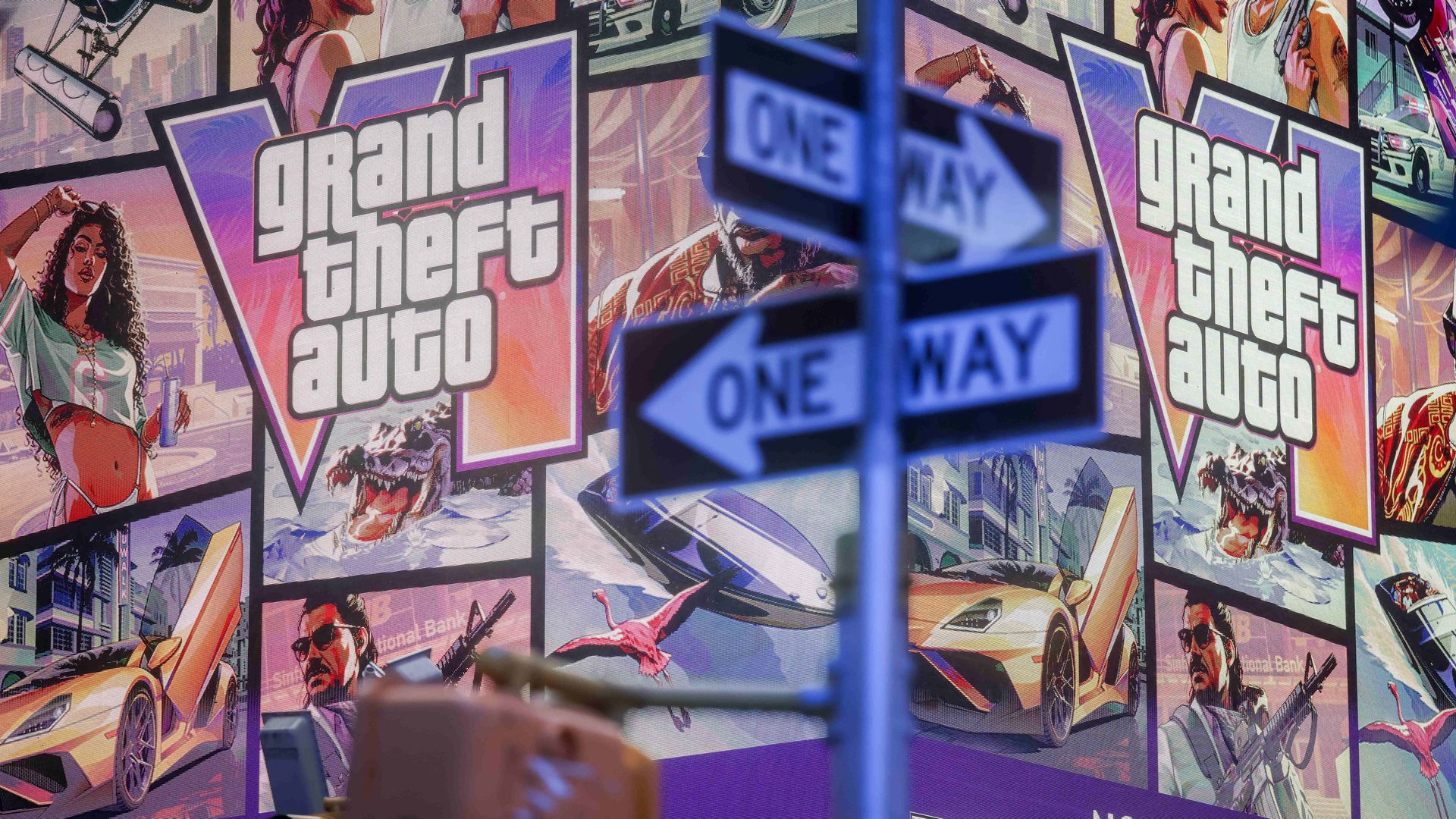
An advertisement for "Grand Theft Auto VI" in New York City's Times Square on Nov. 12. Photo: Michael Nagle/Bloomberg via Getty Images
The internet's warring tribes converged Thursday for the loud, lawless debut of "Grand Theft Auto VI," as 13 years of anticipation culminated in one of the great viral spectacles of all time.
Why it matters: In a media landscape splintered into dozens of distinct realities, the GTA launch gave Americans a rare common obsession — refracted through vastly different platforms, personalities and worldviews.
- By Thursday night, GTA VI had generated an estimated $2.36 billion in sales from nearly 25 million copies — almost triple the first-day revenue of its record-breaking predecessor in 2013, according to Sensor Tower.
The irony is rich: Amid political rancor and mounting technological anxiety, millions of people sought refuge in a virtual America gone gloriously, spectacularly off the rails.
Zoom in: GTA VI drops players into Vice City, a fictionalized Miami that serves as a sprawling digital fever dream of violence, celebrity, corruption and distinctly American absurdity.
- Players can rob banks, steal planes, wrestle alligators and wreak havoc — or pass the afternoon fishing, shopping, working out and tending to the relationship between the game's central characters.
- The astonishingly detailed world teems with influencers, conspiracy theorists, criminals and social-media parodies, offering limitless opportunities for the outrageous encounters now flooding the internet.
Zoom out: GTA's return has revived decades-old arguments about whether violent video games encourage real-world aggression, while igniting a far stranger debate over masculinity.
- On Fox News, commentators warned that the game's carjackings and shootouts could desensitize young players to crime. One contributor likened giving children the game to handing them a gun.
- Meanwhile, corners of the online "manosphere" expressed outrage over missions that reward players for buying flowers, running errands and showing affection toward their girlfriends.
Between the lines: GTA VI was an internet phenomenon long before anyone could play it — the most expensive video game ever made, with years of delays that became memes in their own right.
- A vast economy of streamers, influencers and professional clippers mobilized around its historic debut, churning out viral entertainment for millions who may never touch a controller.
- At its peak, nearly 8 million people worldwide watched GTA livestreams simultaneously. Gameplay clips have already amassed tens of billions of views across X, TikTok, YouTube and other platforms.
The GTA frenzy has spilled into the real world, upending work schedules and drawing corporations, politicians and even the military into the spectacle.
- A GameSquare survey found that 30% of employed U.S. gamers were considering taking time off to play.
- At Fort Stewart, Georgia, 43 soldiers committed to another two to six years of Army service after a four-day GTA gaming pass was included as a reenlistment incentive.
- Prediction market Kalshi received more than 33,000 applications for a job paying up to $135,000 to play GTA and study its virtual economy.
Even the White House got in on the act, releasing a GTA-inspired Trump montage dubbed "WELCOME TO MAGA CITY XLVII" — turning a franchise long vilified by politicians into another viral marketing tool.
The bottom line: GTA offers a glimpse of what monoculture looks like in 2026. For one extraordinary day, the internet had a common story — and a thousand different ways of telling it.
