Clocks are still falling back despite Trump's daylight saving push

Add Axios as your preferred source to
see more of our stories on Google.
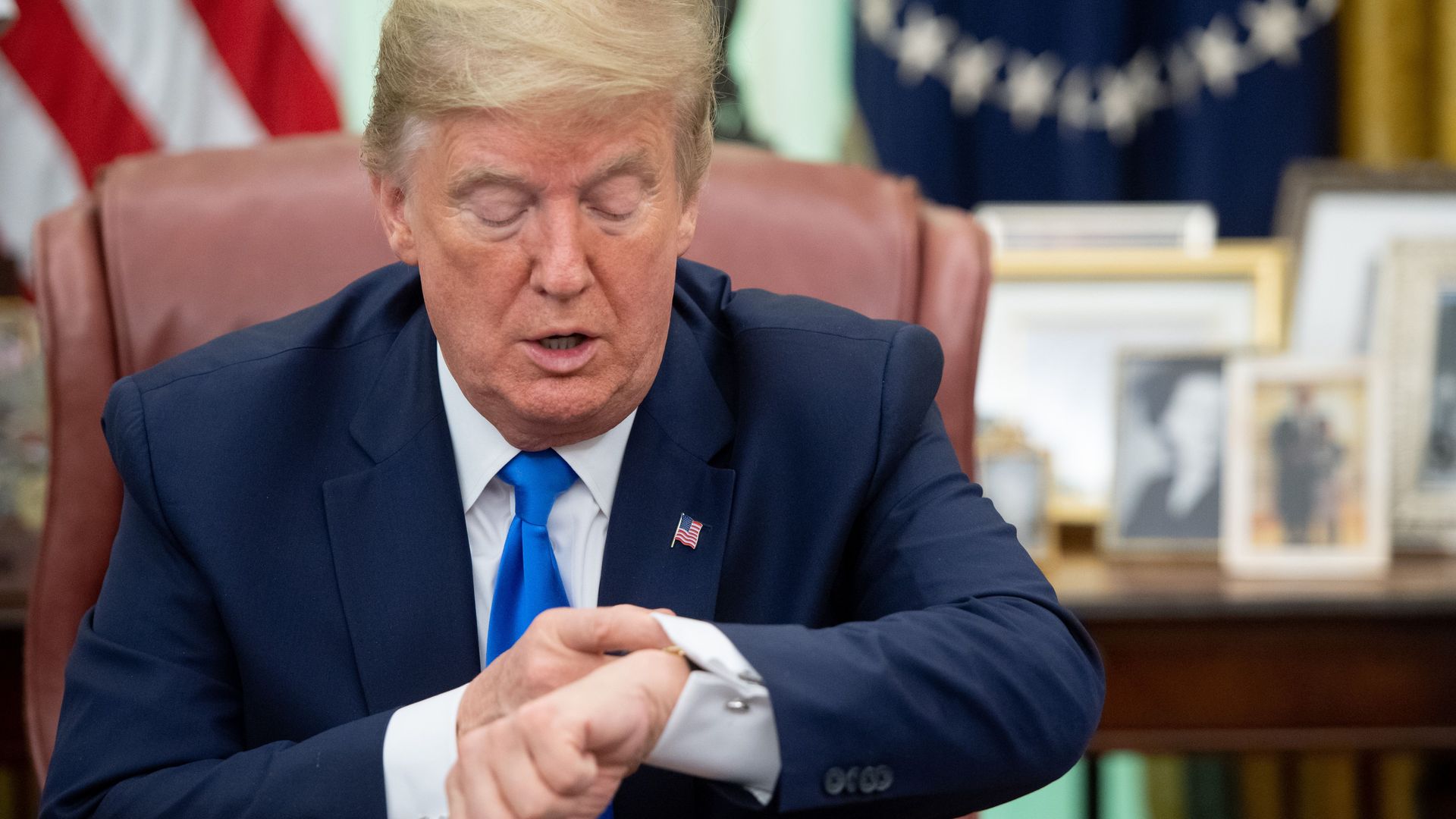
President Trump checks his watch during remarks about COVID-19 after signing a National Nurses Day proclamation at the White House on May 6, 2020. Photo: Saul Loeb/AFP via Getty Images
Most Americans will turn their clocks back early Sunday morning, following Halloween night, despite President Trump's push to end the practice and his public feud with a key Senate Republican over the issue.
Why it matters: Many Americans want to end the twice-yearly clock change in some way, but Congress remains deadlocked about how to make that happen.
Driving the news: The clocks are falling back despite a bipartisan House vote in July to make daylight saving time permanent and Trump's subsequent push for Senate action.
- In July, the House approved the Sunshine Protection Act, which would make daylight saving time permanent, leading to later sunrises and sunsets during the winter months.
- But the legislation has stalled in the Senate, where Sen. Tom Cotton (R-Ark.) has emerged as a leading opponent.
Trump's battle over daylight saving time
Pushing for permanent daylight saving time has been one of the under-the-radar moves by the Trump administration since retaking the White House.
- Trump has made it a midterm campaign talking point, urging the Senate to vote in favor of keeping DST permanent.
- The dispute escalated in October when Trump publicly accused Cotton of blocking the legislation. Trump shared Cotton's cellphone number on social media, urging constituents to pressure him into passing the bill.
What they're saying: "The President has been clear: He wants the Senate to pass the Sunshine Protection Act and send it to his desk to be signed into law expeditiously," Davis Ingle, a White House spokesman, tells Axios.
Yes, but: While most Americans want to end the twice-yearly clock changes, they don't necessarily favor Trump's solution.
- Gallup found 48% of Americans support permanent standard time the entire year, compared with 24% who prefer permanent daylight saving time, as Trump wants.
What time to change clocks on Sunday
The official switch happens on Sunday, Nov. 1, at 2am.
- Clocks will be set back by one hour.
- Smartphones update automatically, while many appliances like ovens, microwaves and car dashboards need their own manual reset.
- Hawaii and most of Arizona don't observe daylight saving time, so their clocks won't change.
The debate over daylight saving time
The debate over permanent daylight saving time has raged for decades.
- In 1974, the U.S. experimented with year-round daylight saving time but reversed course amid concerns about children going to school in the dark.
Experts still debate whether permanent DST is good for people.
- Supporters argue that permanent daylight saving time would provide more afternoon and evening sunlight, encouraging outdoor activities.
- But sleep experts warn that darker mornings and lighter evenings can disrupt sleep cycles, while permanent daylight saving time could force millions of children to travel to school in the dark.
The bottom line: The American Academy of Sleep Medicine says it prefers permanent standard time because it better aligns with natural sleep cycles.
Will the time change in spring 2027?
What's next: Unless Congress changes the law, most Americans will spring forward again on March 14, 2027.
- Trump recently reignited his push to make daylight saving time permanent, though it still faces opposition in the Senate and isn't expected to be considered by the end of the year.
- The upcoming midterms could change the balance of power in Congress, potentially shifting the debate.
