Trump, WHO pressure Russia over plague case. Where the mystery stands

Add Axios as your preferred source to
see more of our stories on Google.
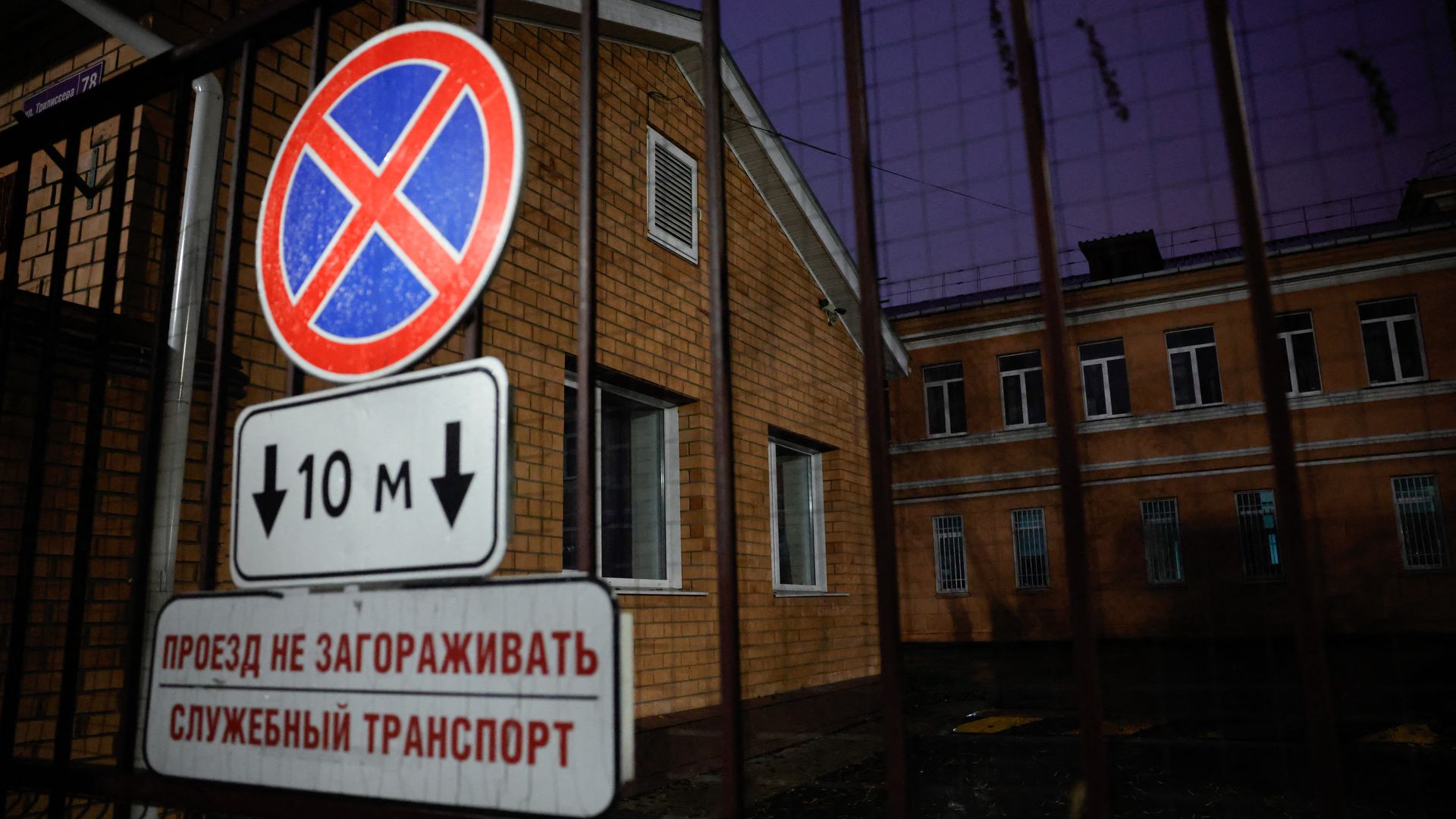
The entrance to the Irkutsk Anti-Plague Research Institute in Irkutsk, Russia, on Oct. 7. Photo: Tatyana Makeyeva/AFP
Pressure continues to mount on Russia to release information about the suspected pneumonic plague case, which remains shrouded in uncertainty nearly a week after reports first surfaced.
Why it matters: Russia says there's no pneumonic plague outbreak or broader public health risk, but international officials say they have insufficient information to assess what happened.
Catch up quick: Darya Shipilova, a worker at a Russian anti-plague institute, died after reportedly being exposed to plague bacteria at the Research Anti-Plague Institute of Siberia.
- Russian authorities say testing shows that she did not die from the plague or pathogens related to her work.
- Hospitals in Russia were placed under quarantine following the incident, with dozens of people under medical observation, CNN and AP report. It's unclear how many hospitals or patients remain under quarantine or medical observation, if any.
Here's where the mystery stands.
WHO seeks answers on lab worker's death
What they're saying: Maria Van Kerkhove, WHO director for epidemic and pandemic threat management, said at a media briefing Wednesday that the health agency doesn't know what caused Shipilova's death amid concerns about a possible plague case.
- She said WHO doesn't know the "causative agent" behind Shipilova's death and "this is why we need more information."
The WHO says after asking Russia for more information, Moscow said it had detected no plague cases.
- WHO officials have requested more information, including lab tests on Shipilova, more details on public health protocols and the health status of people who had contact with the lab worker.
The intrigue: The WHO is also trying to verify reports that a second institute employee developed pneumonia.
Trump, U.S. press Russia for answers
The WHO's comments come as Trump presses Russia to share more information about the lab worker's death.
- On Tuesday, President Trump told reporters that he planned to speak with Russian President Vladimir Putin "very soon" on the subject.
- He said Monday that the U.S. was willing to help Russia with the matter: "We'll help them," Trump said. "We'll help them as much as we can."
U.S. agencies and officials urged Russia to share more information.
- CDC director Erica Schwartz said Wednesday the U.S. is coordinating across government agencies to monitor incoming travelers from Siberia amid concerns about the suspected case.
The State Department made a formal diplomatic request, known as a démarche, seeking information from Russia. It has also been communicating with other countries about the matter.
- The department also re-shared its travel advisory to Russia, which was issued in December 2025, amid the plague concerns.
- The Wall Street Journal reports that the State Department warned Moscow that withholding health information would violate international health rules.
Russia denies plague case
The other side: Russia continues to say it has not detected plague cases.
- Russia's public health agency, Rospotrebnadzor, says that Shipilova died from "pneumonia of unknown etiology" and that the country's epidemiological situation remains stable.
On Wednesday, Rospotrebnadzor said the death did not create a risk of an epidemic in Siberia, per Reuters.
- The agency says it is winding down its precautionary measures after 5,000 tests found no dangerous pathogens.
- The Kremlin has called media reporting on the topic "false" and said it was unaware of any U.S. request for information.
