5 ways Iran's economy is wilting under Trump's pressure

Add Axios as your preferred source to
see more of our stories on Google.
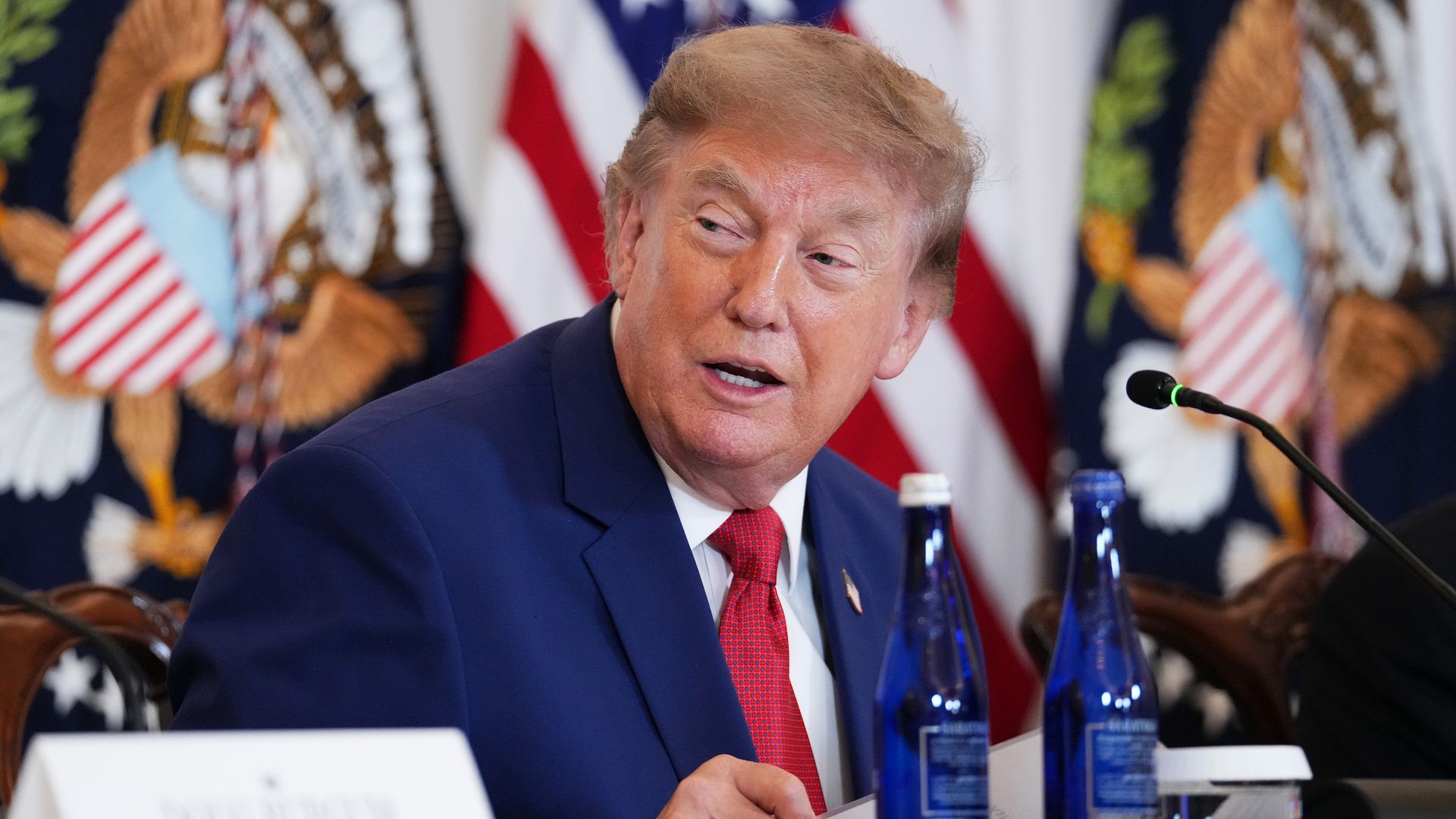
President Trump speaks during a roundtable on the American mining industry at the State Department. Photo: Eric Lee/Getty Images
President Trump is escalating economic pressure on Tehran more than six months into the Iran war, aiming to squeeze Iranian leaders into submission.
Why it matters: Trump's campaign could test how much economic pain Iran is willing to take before its leaders tap out.
Driving the news: Trump declared last week that Iran would face an "economic D-Day" amid the ongoing war. The president has been adamant that Iran's economy is "COMPLETELY COLLAPSING!!!"
- Treasury Secretary Scott Bessent unveiled a plan Monday to cripple Iran's economy in what he called the "single greatest financial offensive ever."
State of play: Iran previously raised significant revenue from oil exports transported through Hormuz. But that source of income was severely curtailed by the U.S. blockade that began in April.
- Iran is now relying on domestic taxes, non-oil exports and pre-war oil revenue to fund war efforts.
- Though it's shown no signs of surrender, some Iranian officials have said the country should look to end the war rather than try to endure months or years of economic strain.
- Some experts believe Iran may lash out militarily before conceding. "Just because the U.S. has decided to pause its full-blown military operation doesn't mean Iran will follow suit," Chris Kennedy, the economic statecraft lead at Bloomberg Economics, told Bloomberg.
What they're saying: Experts say Iran could face severe economic hardship within months that could damage its war efforts and threaten domestic stability.
- "Iran's financial lifeline has been cut by the U.S. blockade," William Jackson, a chief emerging markets economist at Capital Economics, wrote on Monday.
- Jackson suggested the big question is how much "economic pain" Iran is "willing to bear to achieve its military and geopolitical objectives."
Here's how Trump's economic headlock is affecting Iran's economy:
Iran's currency is crashing
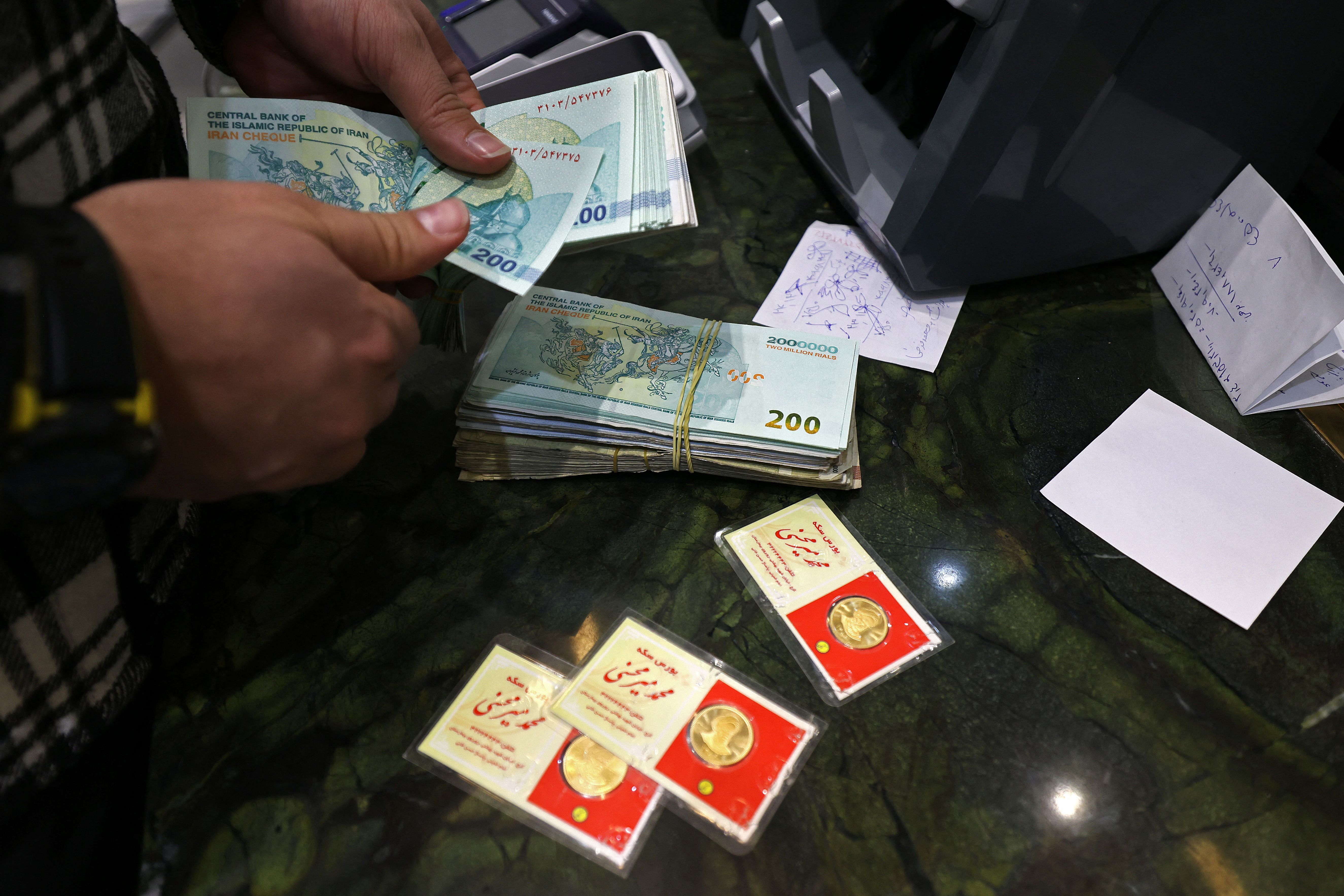
Zoom in: The country's main form of currency, the rial, fell to 2.02 million per dollar Monday, per the Associated Press, largely due to the economic toll of the war.
- The rial was worth 1.65 million per dollar just before the war (a record low at the time).
- This means it now takes 22% more rials to buy one dollar.
Inflation is devouring paychecks
By the numbers: The International Monetary Fund (IMF) estimated in June that Iran's inflation will hit 68.9% in 2026, the highest figure since 1979, according to the Center for Strategic and International Studies.
- Iran's own Statistical Centre reported that July consumer prices rose 87.9% compared to last year, with food and beverage inflation alone jumping more than 128%.
- The report attributed the jump to economic sanctions and regional conflicts.
Iranians are facing financial hardships
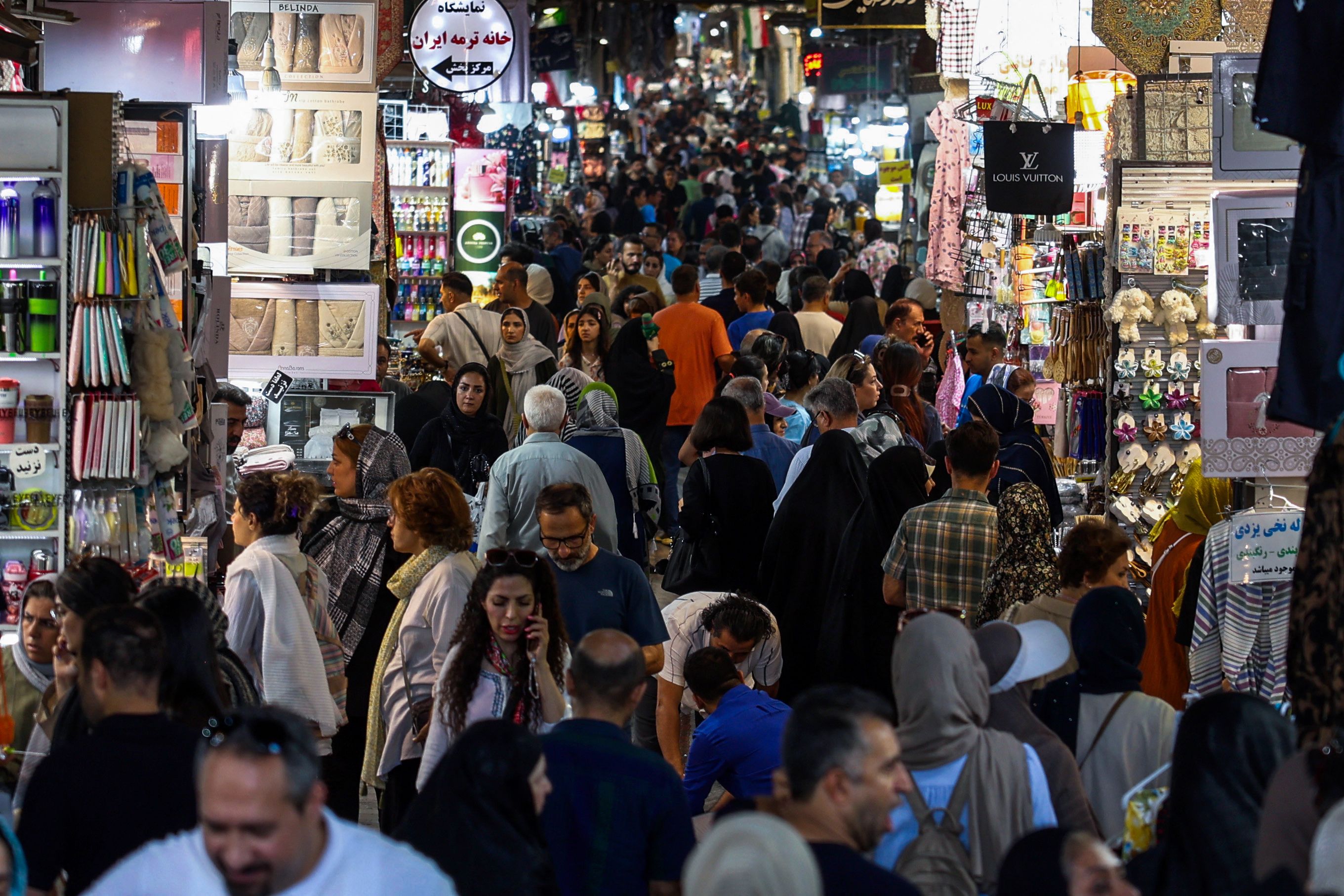
What they're saying: The devalued rial and high inflation are making it harder for Iranians to afford basic needs.
- Ahmad Karimi, a taxi driver, told AP: "We're cutting out fruit, we're cutting out protein, we've given up leisure, we even work on weekends."
- Iranians, already hurting from the country's economic downturn, have recently been posting grievances on social media.
Oil exports have collapsed
The big picture: Iran's economic crisis stems largely from the collapse in oil exports caused by the blockade.
- Iran Central Bank Governor Abdolnaser Hemmati said in August the country, like others in the region, is essentially no longer exporting oil.
Flashback: Axios in May reported the U.S. blockade had cost Iran at least $4.8 billion, and its oil reserves have plummeted.
The latest: China, normally a major buyer of Iranian oil, said Monday that it is closely monitoring the situation, with a desire to avoid escalation.
Jobs are disappearing as recession fears rise
Before the war, Iran's economy was expected to grow by 1.1% in 2026, according to the IMF.
- Iran's GDP is now expected to shrink by 5.4% this year, per the IMF's July forecast.
The forecast switch came amid rising unemployment, disappearing jobs, and declining business activity, fueling fears of recession.
Pressure mounts to concede
What's next: Iranian President Masoud Pezeshkian said last week it might be better for Iran to "end the war today while we are in a position of strength and dignity" as the country endures economic pressure.
Yes, but: There's little evidence Tehran is close to capitulating, according to an analysis from the Institute for the Study of War and The Critical Threats Project at the American Enterprise Institute.
- Iranian officials blame the U.S. for the failure of the U.S.-Iran memorandum of understanding (MOU) last month. That makes them believe any concession won't provide economic relief, the analysis says.
- "Regime decisionmaking may therefore take a long time to react to economic deterioration, even as the economy gets much worse," per the analysis.
The bottom line: Trump wants to crush Iran with punishing sanctions. But the country has shown before it has a high tolerance for economic pain.
Go deeper: 5 scenarios for how the Iran war could end
