2026 is turning into a bloodbath for safe-seat House Democrats

Add Axios as your preferred source to
see more of our stories on Google.
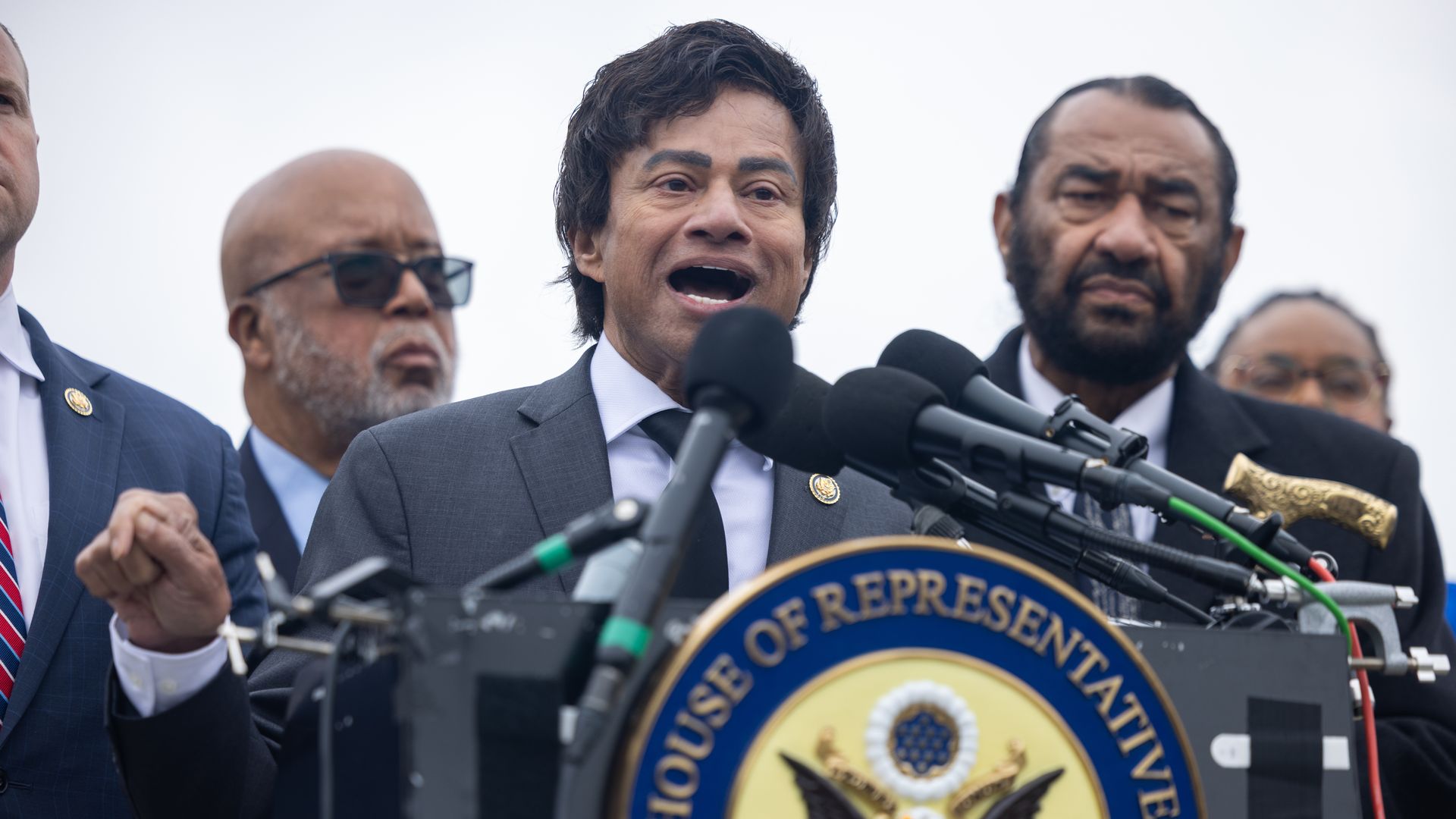
Rep. Shri Thanedar speaks at a press conference outside the U.S. Capitol on Jan. 14. Photo: Nathan Posner/Anadolu via Getty Images
A half dozen House Democrats in safe districts have lost their primaries so far this election cycle — and many more could soon follow suit.
Why it matters: Many of these losses are the result of growing restlessness among the Democratic grassroots that has increasingly morphed into anger towards the party establishment.
- "I expected a lot of people to run because they didn't know how to respond to Trump without just being active," Rep. Mark Pocan (D-Wis.) told Axios.
- He added: "We're seeing that and all the primary electorate voting right now."
Driving the news: Rep. Shri Thanedar (D-Mich.) on Wednesday became the latest incumbent to fall short in his primary, losing to state Rep. Donavan McKinney despite a heavy spending advantage.
- Thanedar — like nearly all Democratic incumbents — was backed by House Democratic leadership, as well as the Congressional Progressive Caucus and the center-left New Democrat Coalition.
- McKinney had support from Sen. Bernie Sanders (I-Vt.), Rep. Rashida Tlaib (D-Mich.) and left-wing groups including Justice Democrats, the Democratic Socialists of America and the Working Families Party.
Yes, but: While that primary was, on the surface, a battle between the establishment and the left, House Democrats cautioned not to read too much into the result.
- Thanedar "didn't do his job," said one senior House Democrat, speaking on the condition of anonymity to give candid comments about a colleague.
- "He didn't deliver constituent services. All he did was talk about himself."
The big picture: Thanedar joins Reps. Adriano Espaillat (D-N.Y.), Diana DeGette (D-Colo.) and Dan Goldman (D-N.Y.), who were all unseated by challengers running to their left.
- Freshman Rep. Christian Menefee (D-Texas) defeated longtime Rep. Al Green (D-Texas) after the two were drawn into a district together.
- And Rep. Julie Johnson (D-Texas) lost her primary to former Rep. Colin Allred.
By the numbers: This is one of just four election cycles since 1994 in which at least half a dozen House Democrats have lost their primaries.
- The other three cycles — 2002, 2012 and 2022 — all came after congressional reapportionment, which often pits incumbent House members against one another.
- Only one Democratic primary ouster this year — Green's loss to Menefee — has been the result of mid-decade redistricting.


What's next: Plenty more hurdles await Democratic incumbents, particularly those 70 and older who have had lengthy tenures in Congress.
- Rep. John Larson (D-Conn.) is trying to fend off a serious challenge from former Hartford Mayor Luke Bronin, while Rep. Stephen Lynch (D-Mass.) is facing a challenge from attorney Patrick Roath.
- Rep. Ed Case (D-Hawaii) is facing a spirited challenge from state Sen. Jarrett Keohokalole.
- Reps. Doris Matsui (D-Calif.) and Mike Thompson (D-Calif.) are both facing Democratic challengers in their November runoffs.
The left is also hoping to unseat Reps. Jimmy Gomez (D-Calif.) and Jared Moskowitz (D-Fla.), as well as Rep. Debbie Wasserman Schultz (D-Fla.), who is facing criticism for running in a plurality Black district.
The bottom line: Pocan said the Democratic primary electorate's anti-incumbency energy is "a good thing ultimately, because people will be ready for November and ready for change."
- "If we are talking to [voters] and respecting them," he added. "I think that's yet to be figured out if people are doing it correctly."
