Why Kharg Island is central to Trump's escalating Iran threats

Add Axios as your preferred source to
see more of our stories on Google.
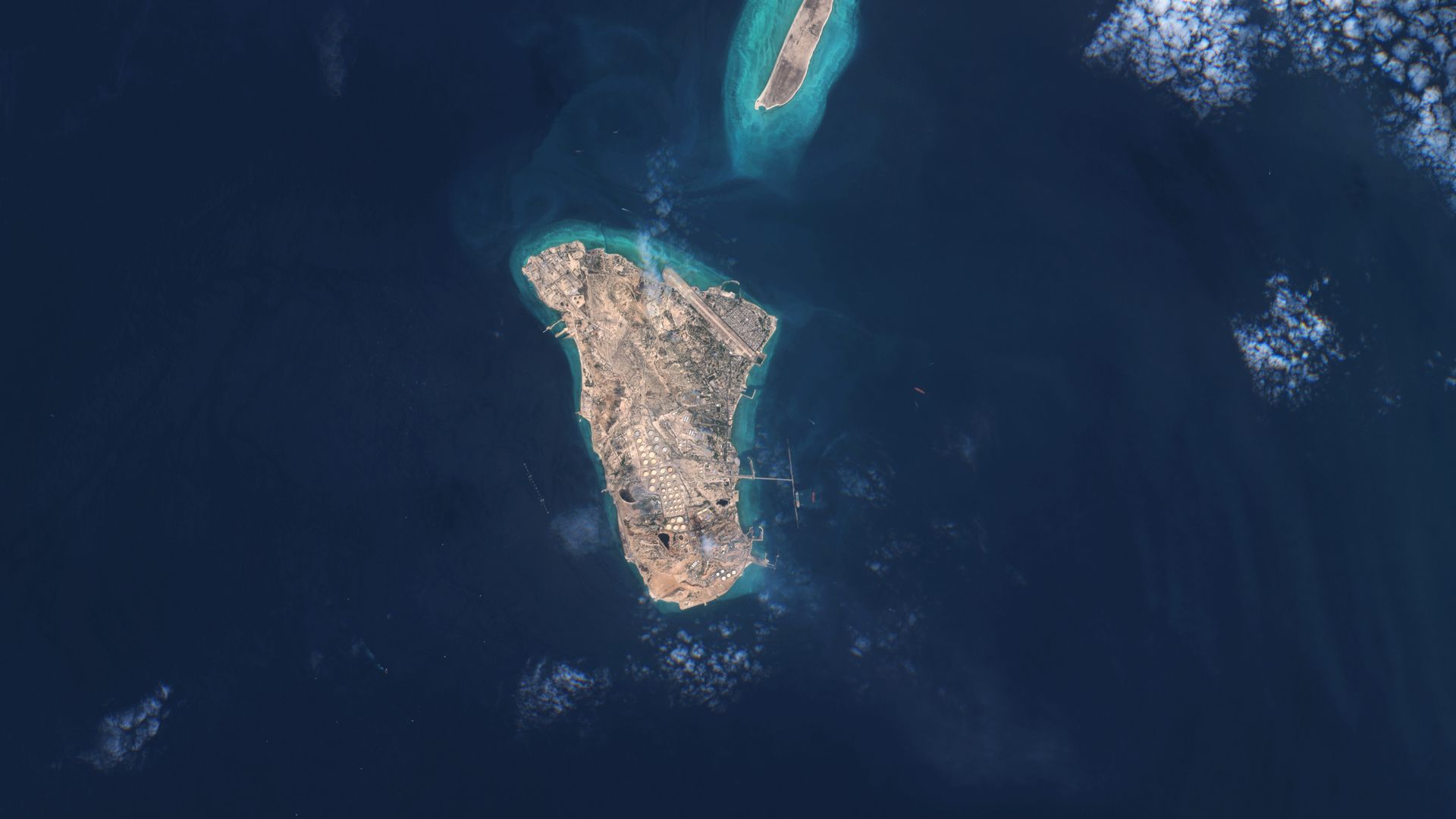
Satellite view of Kharg Island, located in the Persian Gulf off the coast of Iran, in 2024. Photo: Gallo Images/Orbital Horizon/Copernicus Sentinel Data 2024
President Trump is once again threatening to seize Kharg Island, Iran's main oil export hub and a high-value target in the months-long war.
The big picture: Attacks on the small island's oil infrastructure — or a full-blown takeover — could choke Iran's revenue, but there's no guarantee the stark escalation would persuade Iran to accept Trump's terms.
Driving the news: Trump wrote in a Thursday morning Truth Social post that "[a]t some point in the not too distant future, we will be taking Kharg Island, and other oil infrastructure points."
By the numbers: Kharg sits some 15 miles off Iran's coast in the Persian Gulf and handles roughly 90% of its crude exports.
- Oil exports are Iran's lifeline. By squeezing the Strait of Hormuz and hitting regional facilities, Iran has driven up gas prices and inflation — fueling the political pressure the president faces at home.
- Targeting Kharg and shutting off its revenue could expose Tehran's vulnerabilities, but it also introduces new risks to global markets and communities in the region.
Why is Kharg Island so important?
Kharg Island, colloquially known to Iranians as the "Forbidden Island," has long been recognized as home to the most vital facilities in Iran's oil system.
- Unlike Iran's shallow coastline, Kharg's deep waters enable large oil tankers, called supertankers, to dock. The terminal can reportedly load roughly 7 million barrels of oil per day.
- It holds three major energy sites, including the country's largest oil-producing entity, Falat Iran Oil Company, per The New York Times.
- Even under sanctions, Iran produced about 4% of the world's oil in 2023.
Kharg is also one of the few islands in the Persian Gulf with freshwater.
Flashback: Iraqi forces targeted Kharg during the Iran–Iraq war in the 1980s, damaging its oil infrastructure.
- Trump also had his eyes on the island even then, telling The Guardian more than three decades ago, "One bullet shot at one of our men or ships and I'd do a number on Kharg Island. I'd go in and take it."
What role has it played in the war so far?
The U.S. military has already struck the strategic hub.
- After a major attack in March, Trump said the U.S. spared Kharg's oil infrastructure for "reasons of decency."
Between the lines: Soon after, Axios reported that the administration was considering plans to occupy or blockade the island to pressure Iran into reopening the Strait of Hormuz — a possible "final blow" to the fighting.
- Iran has again said the strait is closed after fresh strikes this week, though U.S. Central Command disputes that.
Balancing reward and risk
A strike on Kharg's oil infrastructure would ripple through global energy markets, especially in China — the primary buyer of Iranian oil.
- Taking the island could also trigger retaliatory Iranian strikes against oil facilities and pipelines across Gulf countries.
Threat level: Putting American boots on the ground there would also leave U.S. forces vulnerable to missiles and drones, given how close the island sits to the mainland.
- Back in March, a U.S. official told Axios' Marc Caputo and Barak Ravid, "There are big risks. There are big rewards."
Go deeper: How the Iran war aftershocks are hitting oil, coal, climate
