Feds move to formally allow sports "trading" on prediction markets

Add Axios as your preferred source to
see more of our stories on Google.
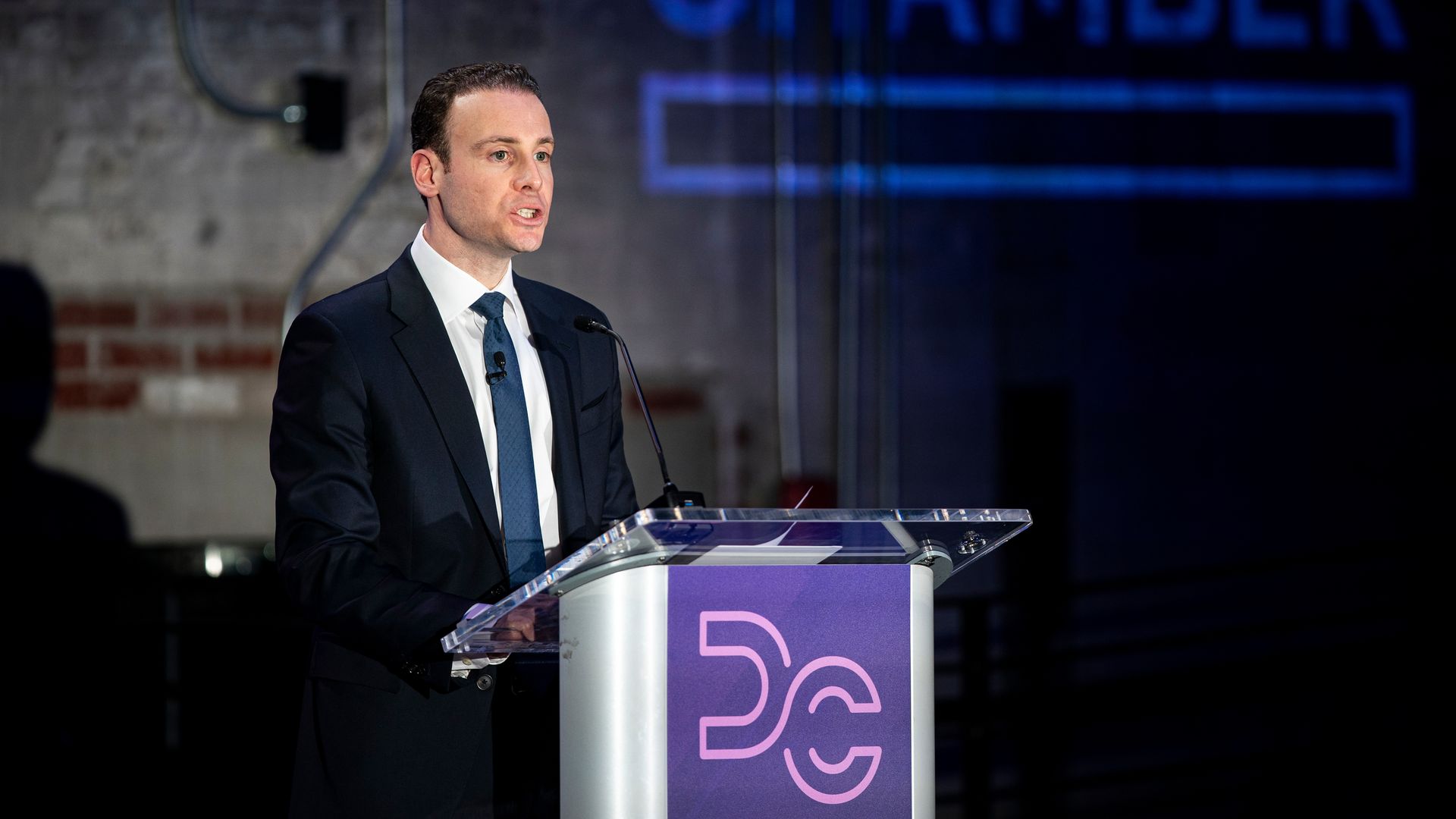
Michael Selig, chair of the Commodity Futures Trading Commission, speaks during the D.C. Blockchain Summit in Washington, D.C., on March 17. Photo: Al Drago/Bloomberg via Getty Images
A federal commission moved Wednesday to formalize rules allowing prediction markets to offer the equivalent of sports betting nationwide — with some specific types of trades disallowed.
Why it matters: Prediction markets like Kalshi and Polymarket have been surging in popularity, allowing users to risk money on sports, politics, news, financial markets and entertainment.
- Critics say it's no different than gambling and should be regulated on a state-by-state basis.
Driving the news: The Commodity Futures Trading Commission (CFTC) released a 267-page notice of proposed rulemaking signaling that it will allow sports event contracts.
- That would include "final scores, point differentials, win-loss results, tournament advancement, individual or team statistical performance or season long performance metrics," according to the notice.
- It would disallow trades on a "specific play called for or executed by a specific player or team," such as a single pitch in baseball, a single shot in hockey or a single foul in basketball.
Zoom in: The commission would also not allow trades on physical fights during games, injuries, officiating decisions or "pre-collegiate sports events" such as high school games.
- Trades on casino-style games involving entirely luck — like roulette — would not be allowed. But trades on games involving chance that "can also be significantly affected" by the participant's skill — "like poker" tournaments — might be allowed, according to the notice.
- The commission, as expected, said it would not allow event contracts "involving terrorism, assassination, or war," saying those trades "can present significant national security risks and therefore raise public interest concerns."
The intrigue: The commission currently only has one sitting member —chair Michael Selig, who was recently appointed by President Trump — and he's been largely supportive of prediction markets.
- Selig told Axios in May that he views traditional sportsbooks and prediction markets as "different models."
- "The conventional sportsbooks and casinos are entertainment and they have a lot of authority to be able to kick people out when they keep winning," Selig said in an interview.
The other side: The American Gaming Association — which represents the casino industry — argues that prediction markets offer gambling "outside the state and tribal regulatory frameworks that protect consumers."
- "They override voter decisions, bypass key consumer protections, ignore state and tribal laws, and avoid licensing and taxes," the AGA says.
- Mick Mulvaney, executive director of Gambling is Not Investing, a group that is opposing sports event contracts, said in a statement that the CFTC has no rightful role as "a national gaming regulator."
"Congress never intended for federal derivatives law to become a backdoor for unsafe sports gambling," said Mulvaney, a former Trump White House official and budget director.
Many experts expect the dispute over the regulation of prediction markets to eventually be decided by the Supreme Court.
Selig's CFTC argued in the rulemaking notice that "categories of sports event contract markets may serve price discovery functions and provide meaningful information."
- The commission said the information can be used in "commercial decision-making, including by sports broadcasters, sponsors, advertisers, fantasy sports operators, sports analytics firms, and other commercial participants in sports-adjacent industries."
What they're saying: "We are fully supportive of the CFTC's initiative to provide clarity for prediction markets and remain committed to working toward a federal framework that protects the public and supports innovation — we look forward to commenting on the Commission's proposed rule," a Polymarket spokesperson said in a statement.
- A spokesperson for Kalshi said the company is still reviewing the notice, while a representative for the Coalition for Prediction Markets did not immediately respond to requests for comment.
What's next: The CFTC will accept comments for 90 days before finalizing rules.
Editor's note: This story was updated with a statement from Polymarket.
