Earthquake in Hungary: Orbán defeated after 16 years in power

Add Axios as your preferred source to
see more of our stories on Google.
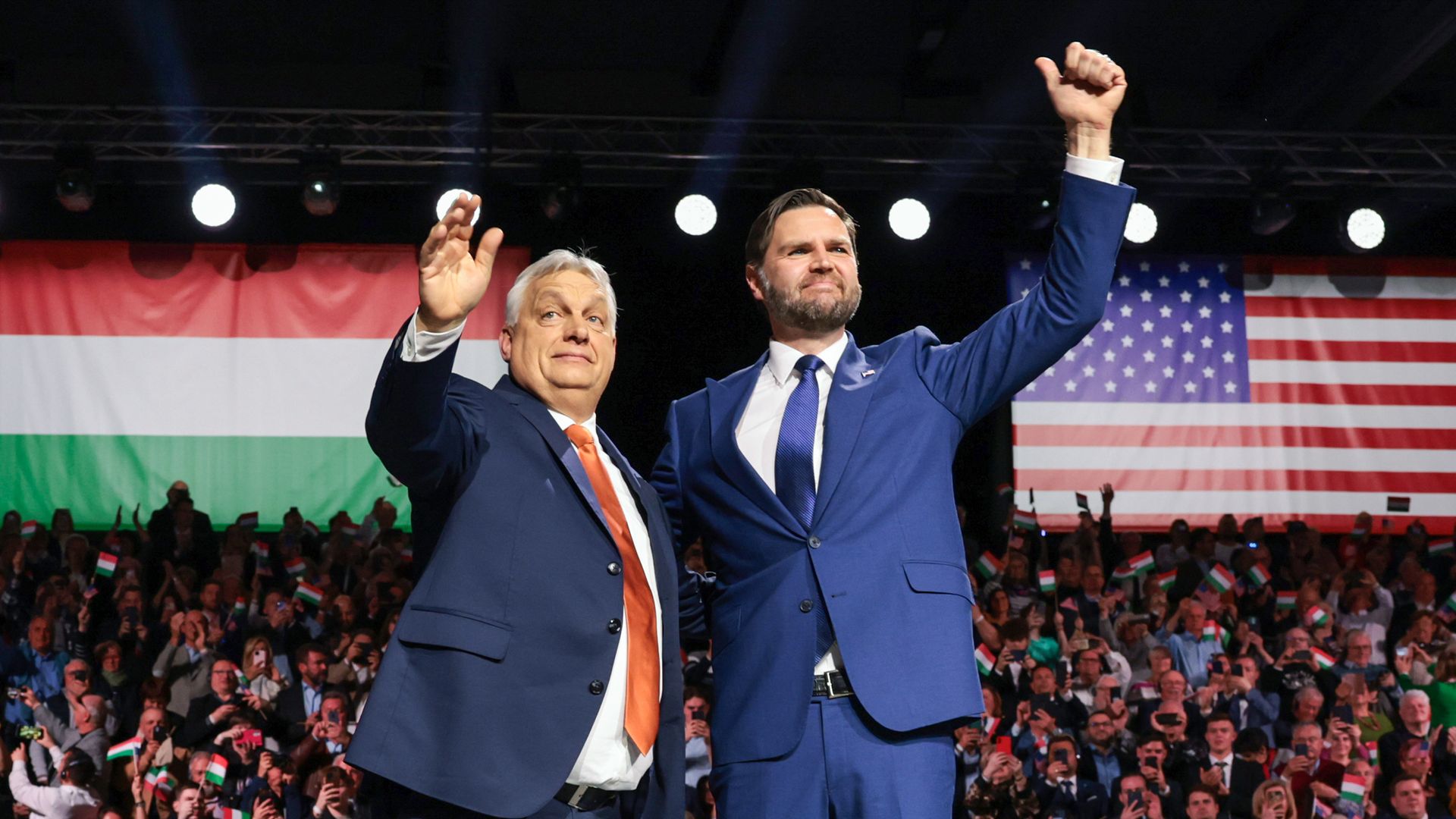
Photo: Jonathan Ernst-Pool/Getty Images
Hungarian voters have ousted Prime Minister Viktor Orbán after 16 years in power, delivering a stunning rebuke to one of the Western world's most entrenched populist leaders.
Why it matters: The political earthquake in Hungary, where Vice President Vance was dispatched to campaign for Orbán in the final days of the election, will ripple far beyond Budapest.
State of play: Péter Magyar, a 45-year-old former Fidesz insider who broke with Orbán two years ago and built the upstart Tisza party into a political juggernaut, claimed victory Sunday night.
- With early results showing a dominant victory, Orbán congratulated Magyar and vowed to continue serving Hungary from the opposition, despite the "painful" defeat.
Between the lines: With 99% of votes counted, Magyar's Tisza party won 138 of 199 parliamentary seats, a two-thirds supermajority, to Fidesz's 55.
- Magyar's two-thirds supermajority gives his government the power to amend the constitution Orbán rewrote to consolidate power, a tool Orbán himself used to reshape the judiciary, state media and electoral system after winning his own supermajority in 2010.
- Undoing Orbán's changes will be central to unlocking roughly €17 billion in frozen EU recovery funds, which Brussels withheld over rule-of-law concerns. Magyar has pledged to restore independent institutions.
It was an extraordinary end to a vicious campaign — one that featured allegations of fraud and foreign interference, AI deepfakes, leaked recordings, and an alleged Kremlin-style honeypot operation targeting Magyar.
- Orbán's swift concession was welcomed in Europe, surprising observers who had feared he might contest the result with Russian backing.
Zoom in: Voters turned out at their highest levels since the end of Communist rule, reflecting both deep fatigue with Orbán and a newly unified opposition capable of mounting a serious challenge.
- Magyar built a cross-ideological coalition that pulled support from disillusioned conservatives as well as traditional opposition voters.
- Years of corruption allegations, economic strain and strained ties with the European Union fueled a broader sense that Hungary had drifted off course under Orbán's illiberal rule.
Zoom out: The stakes of Sunday's election were remarkably high for a Central European country of under 10 million people.
- United States: Orbán has been a close ally of President Trump, whose MAGA movement has openly embraced Hungary's anti-migration, Christian nationalist rule as a governing model. Trump personally intervened in the final days of the campaign, sending Vance to Budapest and vowing to use "the full Economic Might" of the U.S. to strengthen Hungary's economy if Orbán won.
- Russia: Orbán was Vladimir Putin's closest partner inside the EU, maintaining warm ties even after the invasion of Ukraine. His ouster comes despite active Russian attempts to interfere in the election, stripping the Kremlin of a key ally and complicating Moscow's ability to divide Europe from within.
- Ukraine: Orbán repeatedly blocked or delayed EU aid to Kyiv and opposed deeper military support. He turned Ukraine into a central campaign foil, accusing President Volodymyr Zelensky of conspiring with Magyar and the EU to drag Hungary into the war.
- EU: Orbán spent years clashing with Brussels over rule-of-law concerns, migration and democratic norms. His defeat opens the door to a reset in Hungary's relationship with the EU — and could strengthen unity on major issues from sanctions to security.
