White House downplays reports Iran rejected Trump peace proposal

Add Axios as your preferred source to
see more of our stories on Google.
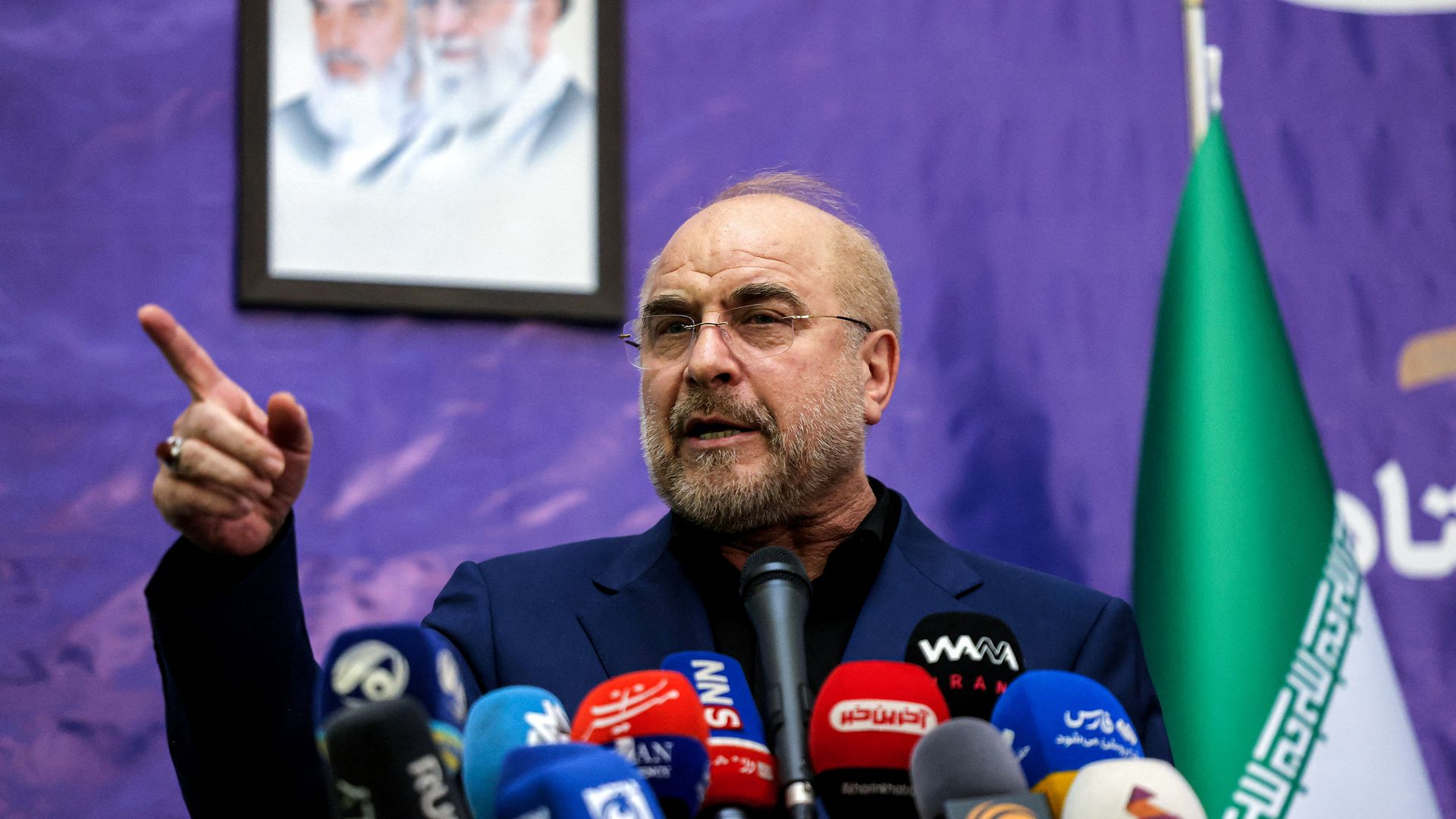
Iran's Parliament Speaker Mohammad Bagher Ghalibaf, who is seen by the U.S. as a key potential interlocutor, speaks at a campaign rally in 2024. Photo: Atta Kenara/AFP via Getty
Negotiations between the U.S. and Iran remain "productive," White House press secretary Karoline Leavitt claimed on Wednesday after Iranian state media reported that Tehran had rejected Trump's 15-point plan to end the war.
Why it matters: Leavitt rejected the idea thay talks were at a dead end — a scenario that raised fears of imminent escalation.
Breaking it down: The U.S. offer includes many elements Tehran has repeatedly opposed, but rejecting it outright could increase the risk of a major escalation — including the possibility Trump will revive his threat to destroy Iranian power plants.
- The Iranian position, which was reported in several Iranian and pro-Iran media outlets in the region, could take the U.S. push for in-person peace talks this week off the table for now.
- "Nothing should be deemed official until it is announced formally by the White House. I would not get ahead of our skis reporting on any talks this weekend until you hear it directly from us," Leavitt said.
What they're saying: A senior Iranian official told Iran's english-language Press TV the U.S. terms were "excessive" and the war would only end "on Tehran's own terms and timeline."
- The Iranian official told Press TV that Tehran saw the latest proposal by the Trump administration to hold negotiations "as a ploy."
- Axios reported overnight that Iran had told the mediators it suspected Trump's push for peace talks was a ruse, given the U.S. is currently sending thousands of troops to the region.
Press TV reported that Iran has five conditions for a ceasefire and ending the war:
- Complete halting of attacks and assassinations by the U.S. and Israel.
- The establishment of mechanisms to ensure the war doesn't resume.
- Compensation for damages caused during the war.
- Halting all U.S. and Israeli attacks against Hezbollah in Lebanon and pro-Iranian militias in Iraq.
- Receiving international recognition and guarantees for Iran's authority over the Strait of Hormuz.
Between the lines: It's not entirely clear how much of the Iranian position is posturing vs. actually closing the door on negotiations. A U.S. official said the Trump administration had yet to receive any messages from Iran rejecting the offer.
The other side: Leavitt told reporters the US. was "close to achieving its core objectives" in the war and claimed Iran was looking for an "exit ramp" because of U.S. military pressure.
- She said Iran approached the U.S. last weekend after President Trump's ultimatum and asked to hold talks. "President Trump is willing to listen," Leavitt added.
- The Iranians have claimed just the opposite — that Trump is desperate to claim progress on diplomacy to calm the markets, but they're not in the mood to negotiate.
- Leavitt added that Trump's preference is peace "but if Iran fails to accept the reality and fails to understand that they have been defeated, President Trump will ensure they will be hit harder then they have ever been hit before."
- "The President doesn't bluff and he is ready to unleash hell. Iran shouldn't miscalculate again... any violence beyond this point will be because the Iranian regime... refuses to come to a deal," Leavitt said.
This is a breaking news story and will be updated.
